
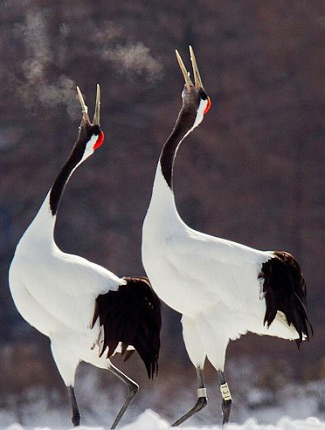
A beautiful image of 'dancing' Red-crowned Cranes in the cold Hokkaido winter by Francesco Veronesi.
- Tall, elegant Red-crowned Cranes 'dancing' in the snow
- Thousands of Hooded and White-naped Cranes
- Hundreds of Steller's and White-tailed Eagles, the former easily outnumbering the latter
- Some of Asia's and the world's other most spectacular birds including Black-footed and Laysan Albatrosses, Harlequin and Mandarin Ducks, Baikal Teal, Blakiston's Fish Owl, Crested Kingfisher and Asian Azure-winged Magpie, plus world rarities such as Black-faced Spoonbill
- And a chance of Ural Owl, Bohemian and Japanese Waxwings, and seabirds such as
the rare Short-tailed Albatross - As well as 'Snow Monkeys' bathing in hot springs
- And an outside chance of Sea Otter
- All in some scenic snowy terrain
- During the cold, snowy winters on the island of Hokkaido in Japan several hundred five-foot-tall handsome black-and-white Red-crowned Cranes gather at traditional ‘dancing’ grounds to reinforce their pair bonds with fanciful runs, leaps, wing-flaps and loud duets. These long-billed, long-necked and long-legged birds usually present one of natures’ best ‘ballets’ on a stage made of snow, and the whole performance, calls and all, is one of the finest wildlife shows on Earth. The birds’ stronghold in Japan is Kushiro Shitsugen National Park, the largest wetland left in Japan, where a small group of rare ‘tanchos’, as they are known locally, were discovered starving to death during the famous winter of 1952. Since then they have been saved from extinction in Japan and their numbers have risen to about 600. This population is stable but the world population of just 1830 mature individuals or so is not, making a mockery of the high esteem in which they are held in the other countries where they occur. On Hokkaido though, local people still provide buckwheat and corn for the birds during the harsh winters and there are several feeding stations near Kushiro which attract numerous photographers from all over the world. The birds usually fly to the feeding stations from a roosting site on a nearby river (where they can also be seen at dawn) at about ten o’clock in the morning, after which the ‘show’ may take place at any time, often in front of a large human audience.
- Just a few hours by road from Tokyo in the wooded, snowy mountains of the island of Honshu, lie Jigokudani hot springs where Japanese Macaques, also known as ‘Snow Monkeys’ but perhaps more appropriately called ‘Hot Springs Monkeys’, wallow in the 50 degrees centigrade waters to warm themselves up during Japan’s freezing cold winters. Sometimes huddled together, with their thick fur often encrusted with ice and snow, and their deep red faces standing out, in the steaming hot springs, they make an extraordinary sight, one that is unique to this small part of the planet, for these are the only monkeys that can withstand such cold temperatures. Eating tree buds and bark in between luxuriating in their hot tubs they manage to live further north than any other non-human primate. Jigokudani is a steep-sided, rocky, river valley which the sun reaches late in the morning so most visitors wait until after breakfast to walk along the gently contoured mile-and-a-half long trail to the viewing area. Up to a hundred or so bold and sometimes lively macaques from two local troops visit the springs and the hours can pass very quickly while watching and photographing their entertaining antics.
- This account deals with the middle of the northern winter in northern Japan, a cold and snowy time of the year. A couple of weeks is enough to cover the large northern islands where the mammals and birds listed below occur, but a longer trip could include the small southern islands where most of the endemic bird species reside, including Okinawa Rail, Amami Woodcock and Amami (Lidth's) Jay. During the northern summer these endemics are joined by summer visitors such as White-throated Needletail, Ruddy Kingfisher, Fairy Pitta, Japanese Paradise-flycatcher, Siberian Blue Robin, Japanese Robin and Grey Bunting, and on the main northern islands additional summer visitors include Latham's Snipe, Japanese Thrush, Narcissus Flycatcher, Marsh Grassbird, Middendorf's and Pleske's (Styan's) Grasshopper-warblers, Japanese Leaf-warbler, Chestnut-cheeked Starling and (Japanese) Yellow Bunting, hence two trips to Japan may be the best option as far as birders are concerned.
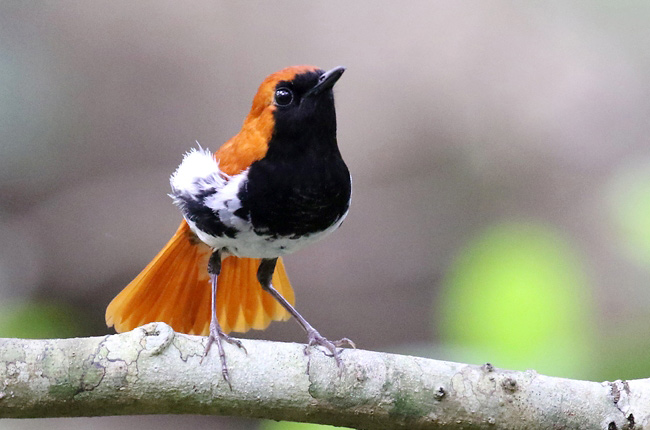
Ryukyu Robin on the island of Amami by Paul Noakes.
- Since 2008 the extremely rare Asian Crested Ibis has been reintroduced to its former stronghold of Sadogashima (Sado Island) off the west coast of Honshu. By late 2018 327 birds had been released and 175 were confirmed to be alive in the wild, with more at the Sado Japanese Crested Ibis Conservation Center. Most have been reared in captivity but birds have been breeding in the wild since 2012 (the first chicks hatched 'in the wild' in Japan since 1976, on the same island), and in 2016 the first chicks were hatched by a pair that had themselves been born in the wild.
Best Birds and other wildlife in Japan
Birds
Endemics 20
Mainland 3 Copper Pheasant, Green (Common) Pheasant and Japanese (Green) Woodpecker.
Mainland and Ryukyu Islands, Nansei-Shoto Archipelago 1 Ryukyu Minivet.
Ryukyu Islands, Nansei-Shoto Archipelago 3 Ryukyu (Whistling) Green-pigeon, Ryukyu Robin and Ryukyu (Narcissus) Flycatcher.
Amami-Oshima, Ryukyu Islands, Nansei-Shoto Archipelago 4 Amami Woodcock, Amami (Owston's/White-backed) Woodpecker, Amami (Lidth’s) Jay and Amami Thrush.
Okinawa, Ryukyu Islands, Nansei-Shoto Archipelago 3 Okinawa Rail, Okinawa (Pryer's) Woodpecker and Okinawa (Ryukyu) Robin.
Iriomote, Ryukyu Islands, Nansei-Shoto Archipelago 1 Iriomote (Varied) Tit.
Ryukyu Islands and Izu Islands 1 Izu Thrush (present on Miyake-jima, a short ferry ride from Tokyo, at Tairo).
Izu Islands 2 Izu (Owston’s/Varied) Tit (present on Miyake-jima, a short ferry ride from Tokyo, at Tairo) and Izu (Japanese) Robin.
Bonin Islands 1 Bonin White-eye.
Bonin Islands and Volcano Islands 1 Bannerman’s (Tropical) Shearwater.
Near-endemics
Japan and Russia 4 Long-billed Murrelet, Spectacled Guillemot, Japanese Accentor (only on the southern Kuril Islands and the south end of Sakhalin Island) and Grey Bunting.
Japan, Russia and China 2 Blakiston’s (Fish) Owl and Japanese Robin.
Japan, Russia, China, North Korea and South Korea 2 Varied Tit and Japanese Waxwing.
Japan, Russia, North Korea and South Korea 1 Steller’s Sea-eagle.
Japan and South Korea 3 Japanese (Black) Woodpigeon (small islands. Rare, perhaps extinct in China), Japanese Murrelet and Japanese Wagtail.
Japan, Taiwan and Philippines 3 Black-chinned Fruit-dove, Ryukyu Scops-owl (Nansei-Shoto Archipelago, Lanyu Island off southeast Taiwan, and the Batanes and Babuyan Islands off northern Luzon, Philippines) and Ijima’s Leaf-warbler (Izu and Tokara Islands, Japan, in summer, migrating south via Taiwan to the Philippines during the winter when rarely seen).
Japan and Philippines 1 (Japanese) Yellow Bunting.
The birds listed below occur on the northern islands during the northern winter.
Other specialities
Mandarin Duck, Baikal Teal, Black-footed and Laysan Albatrosses, Streaked Shearwater, Tristram's Storm-petrel, Black-faced Spoonbill, Hooded, Red-crowned
and White-naped Cranes, Black-tailed, Kamchatka, Saunders's and Slaty-backed Gulls, Pigeon Guillemot, Japanese Pygmy and White-backed Woodpeckers,
Long-tailed Rosefinch and Asian Rosy-finch.
Also a chance of Lesser White-fronted Goose, Short-tailed Albatross, Red-faced Cormorant, Eastern Water Rail, Demoiselle and Siberian Cranes, Solitary Snipe, Grey-headed Lapwing, Brunnich's Guillemot (Thick-billed Murre) and Ochre-rumped (Japanese Reed) Bunting.
Others
Bewick's and Whooper Swans, Greater White-fronted and Taiga Bean Geese, Falcated and Harlequin Ducks, Black and Stejneger's Scoters, Smew, Pacific Diver
(Loon), Pelagic and Temminck's (Japanese) Cormorants, White-tailed Eagle, Japanese (Common/Eastern) Buzzard, Long-billed Plover, Glaucous, Glaucous-winged,
Lesser Black-backed (Heuglin's) and Vega Gulls, Ancient Murrelet, Crested and Least Auklets, Crested Kingfisher, Bull-headed Shrike, Asian Azure-winged
Magpie, (Oriental) Rook, (Oriental) Crow, Japanese Tit, Chinese Penduline-tit, Brown Dipper, Brown-eared Bulbul, Red-flanked Bluetail, Daurian Redstart,
Dusky and Pale Thrushes, White-cheeked Starling, Meadow and Yellow-throated Buntings, Hawfinch, Japanese Grosbeak and Russet Sparrow.
Also a chance of Tundra Bean Goose, Ruddy-breasted Crake, Common and Sandhill Cranes, Ural Owl, Black Woodpecker, Daurian Jackdaw, Bohemian Waxwing, Brown-headed Thrush, Pallas's Rosefinch and other buntings.
Mammals
'Snow Monkey' (Japanese Macaque) and Sika Deer. Also a chance of Japanese Sable, Sea Otter, Japanese Serow, Racoon
Dog, Japanese Giant Flying Squirrel, Red Squirrel, Pacific White-sided Dolphin, Dall's Porpoise, and Common (Harbour) and Largha (Spotted) Seals.
Other Natural Wonders of Japan
Mount Fuji An almost perfectly symmetrical and currently inactive volcanic cone usually at least partly covered in ice and snow about 100 km (60 miles) from Tokyo, rising to 3776 m (12,388 ft).
Best Sites for Birds and other wildlife in Japan
- Honshu
- Kasai Seaside Park, Tokyo Asian Azure-winged Magpie, and the chance of Brown-headed, Dusky and Pale Thrushes.
- Tone River, near Sasagama A chance of over-wintering Ochre-rumped Bunting.
- Choshi Fishing harbour famous for gulls including rare species.
- Tokyo-Miyakejima Ferry Black-footed and Laysan Albatrosses, Streaked Shearwater and Tristram's Storm-petrel. Also a chance of Short-tailed Albatross.
- Karuizawa yacho-no-mori (wild bird forest) Copper and Green Pheasants, Asian Azure-winged Magpie, Varied Tit, Brown Dipper, Dusky Thrush and Long-tailed Rosefinch. Also a chance of Japanese Accentor, Japanese Waxwing, Japanese Serow and Japanese Giant Flying Squirrel.
- Toden Lake and River Falcated and Mandarin Ducks, Long-billed Plover and Japanese Wagtail.
- Jigokudani, Nagano Prefecture 'Snow Monkey'.
- Katano Kamo-ike Reserve Bewick's Swan, Baikal Teal, Falcated Duck and Smew. Also a chance of Taiga Bean, Tundra Bean and Lesser White-fronted Geese, and Grey-headed Lapwing.
- Nagayo (Honshu)-Tomakomai (Hokkaido) Ferry Laysan Albatross, Streaked Shearwater and Ancient Murrelet. Also a chance of Tristram's Storm-petrel.
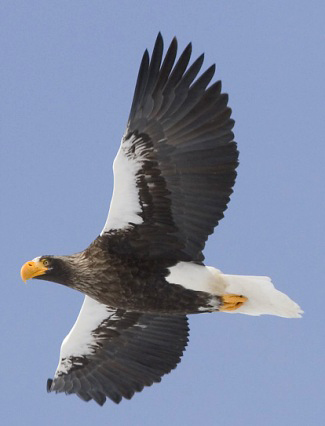
Steller's Sea-eagle by Ian Merrill.
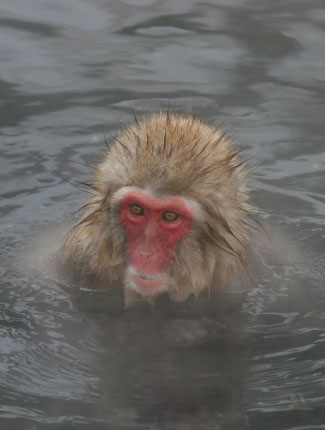
'Snow Monkey' by Brian Field.
- Hokkaido
- Crane Roosting Site - Otowabashi Bridge, Setsurui River Red-crowned Crane, along with hundreds of bird photographers!
- Crane Feeding Sites - Akan International Crane Center, Tsuruimidai and Ito Sanctuary Red-crowned Crane, White-tailed Eagle and hundreds of bird photographers!
- Ryokan Fujiya, Yoroushi Blakiston's Fish Owl. Also a chance of Solitary Snipe.
- Daiichi Hot Springs Lodge, Yoroushi Blakiston's Fish Owl. Also a chance of Japanese Sable and Red Squirrel.
- Washi-no-Yado (small minshuku) Blakiston's Fish Owl at floodlit feeding site.
- Lake Kussharo Whooper Swans and hundreds of bird photographers!
- Rausu Steller's and White-tailed Eagles (both on boat trips during which fish are thrown overboard for the birds), Harlequin Duck, Long-tailed Duck, Black and Stejneger's Scoters, and Glaucous-winged Gull. Also a chance of Sea Otter, Red-faced Cormorant, Spectacled Guillemot, Ancient Murrelet and Least Auklet.
- Lake Furen Feeding site for Steller's and White-tailed Eagles.
- Kiritappu, Nemuro, Nosappu and Notsuke Capes and Peninsulas (including some with seawatching hides) Steller's and White-tailed Eagles, Harlequin and Long-tailed Ducks, Black and Stejneger's Scoters, Glaucous-winged Gull, Pigeon and Spectacled Guillemots, Ancient Murrelet, Crested and Least Auklets (all 'alcids/auks' and other seabirds more likely when pack-ice is close to shore (but not next to it!)), and Asian Rosy-finch. Also a chance of Red-faced Cormorant and Sea Otter.
- Kyushu
- Yatsushiro estuary Black-faced Spoonbill, and Black-tailed, Saunders's and other gulls.
- Arasaki Over 10,000 cranes during the northern winter, mostly Hooded and White-naped, as well as Chinese Penduline-tit, Dusky and Pale Thrushes, White-cheeked Starling and buntings. Also a chance of other cranes including Siberian, Black-faced Spoonbill, Eastern Water Rail and Ruddy-breasted Crake.
- Mi-ike A chance of Copper Pheasant, Japanese Pygmy and White-backed Woodpeckers, Ryukyu Minivet, Varied Tit, and buntings including Grey and Yellow-throated.
- Hitotsuse estuary Black-faced Spoonbill and Saunders's Gull.
- Kogawa Dam Mandarin Duck.
- Kadogawa Japanese Murrelet (from harbour wall or on boat trips).
- Hyuga, near Kadogawa A chance of Japanese Woodpigeon.
Best Times for Birds and other wildlife in Japan
To see Snow Monkeys and Red-crowned Cranes in snow, as well as hundreds of eagles and thousands of other cranes, it is necessary to visit Japan in the middle of the northern winter when the average temperature is 0°C. The very best time to go is the second half of February when the cranes are courting and the eagle numbers usually begin to peak. The best time to look for birds which are present during the northern summer only is the second half of May to early June. The wet season usually starts then, moving north to reach Honshu by July.
Recommended Bird Books etc. for Japan
Birds of Japan by M Brazil. Helm, 2018.
Birds of East Asia by M Brazil. Helm, 2009.
Birds of Japan and North-East Asia: A Photographic Guide by T Shimba. Helm, 2019 (Second Edition).
550 Birds of Japan by M Kirihara et al. Bun'ichi Sogo Shuppan, two volumes, 2000 and 2004.
Apps etc.
Japanese Birds.
Birds of Korea Pro.
Where to watch birds in Asia by N Wheatley. Helm, 1996.
Don’t know which country/countries/regions to visit in Asia? Then it may be worth considering taking a look at this book, written by this website’s author. It is many years old of course but it still provides a starting point, an overview and a guiding light to the best birds and the best places to look for them in the region, and could save hours of searching for similar information on the internet. However, it is important to check more up-to-date sources for sites which have been opened up, sites and species which have been discovered, lodges that have been built etc. since the book was published.
Birding and Wildlife Trip Reports for Japan
Many trip reports, some for Japan, are posted on the websites listed here. On some of these websites some reports are independent and some are posted by tour companies who organize tours to Japan. These tour companies and others also post their own reports on their websites, which are listed under 'Some Organized Tours to Japan' below.
- The best website for trip reports is CloudBirders
- but these are also worth a look
- Birdtours
- Fatbirder
- Jon Hornbuckle
- Mammal Watching
Local bird and wildlife guides in Japan
The costs of organized tours partly reflect the quality of the tour leaders. Some leaders are certainly better than others and many companies claim their leaders are the best but even the best rely at least to some extent on the exceptional skills of the local guides they employ. If you are travelling independently, employing such local guides will greatly increase your chances of seeing the wildlife you wish to see.
Accommodation for birders in Japan
Some Organized Tours for birds and other wildlife to Japan
There are many tour companies who organize tours to see mammals, birds, other wildlife and other natural wonders. The cost of these tours vary considerably according to such variables as the airlines used, the number of days the tours last, the number of sites visited, the number of people in the group (an important consideration if you wish to see such wildlife as rainforest mammals and birds), the number of tour leaders, the standard of accommodation and transport, and the percentage profit the company hopes to make. Generally, where the number of days tours last and the number of sites visited are similar, the cheapest tours are those that use the cheapest airlines, accommodation and local transport, that have the largest groups with the least number of leaders, and that make the least amount of profit. The most expensive tours tend to be those which are exceptionally long, use the most expensive accommodation (ridiculously lavish in some cases, even for single nights) and which make the most profit. Some tour costs partly reflect the quality of the tour leaders. Some leaders are certainly better than others and many companies claim their leaders are the best but even the best rely at least to some extent on the exceptional skills of the local guides they employ.
While tour companies organize tours with set itineraries many also organize custom tours for individuals and private groups who instead of taking a tour with a set itinerary want to follow their own itinerary to suit their own personal tastes, whether it be mammals, birds, other wildlife, other natural wonders or even man-made attractions, or a mixture of them all. Many organized tours with set itineraries are also fast-paced and target as many species as possible, whether they are mammals, birds or other wildlife or everything, which usually leaves little time to enjoy the best sites and individual species, but on a custom tour those taking part can specify the pace and the sites and species they wish to concentrate on. Custom tours also suit people who like to travel with people they already know, rather than with a group of strangers, and people with partners with different interests. Individuals and small groups will almost certainly have to pay more than the price of an organized tour with a set itinerary but a large group of friends may be able to travel for less than the price quoted for a set tour.
Tour companies who run organized tours or can arrange custom tours to Japan include the following.
