

A fabulous Saddle-billed Stork photographed in the Masai Mara by Steve Garvie.
- Possibly the best overall wildlife experience in Africa and the world
- Thanks to the presence of so many of Africa's and the world's most spectacular mammals, birds and coral reef fish
- Mammals including Lion, Leopard, Cheetah, African Elephant, Giraffe, Hippopotamus, White and Black Rhinoceroses, Spotted Hyaena, Blue Wildebeest and Black-and-white Colobus Monkey
- As well as localized species such as Grevy's Zebra, Beisa Oryx and Gerenuk
- Birds including flocks of Lesser Flamingos, in their most accessible largest concentrations in the world
- And Ostriches, African Fish-eagle, Secretary Bird, Black and Goliath Herons, Saddle-billed Stork, Hamerkop, Kori Bustard and Great Blue Turaco
- As well as localized species such as Vulturine Guineafowl, Crab Plover, Golden-winged Sunbird, Golden-breasted Starling and Golden Pipit, and other near-endemics including Sokoke Scops-owl and Somali Bee-eater
- Over 1000 bird species have been recorded in total and Kenya holds the world record of 330 birds seen in a day. It is possible to see over a hundred in a day at several sites, well over 500 in just two weeks and over 800 in a month, as well as over 60 species of mammal
- Over 1000 fish species have been recorded offshore including Whale Shark
- And there are nearly 1000 butterfly species as well
- All in some of the world's most wonderful settings, from the coral reefs offshore to the lakes of the Great Rift Valley and the African plains of Amboseli, below Kilimanjaro
- The previous world record for the number of birds recorded in 24 hours was set in Kenya in 1986 when, with the aid of a light aircraft, a total of 342 species was reached, of which an incredible 333 were seen! This record stood for nearly 30 years, until October 2014 when a total of 354 species (of which just 232 were seen) was posted along a transect from montane forest at Abra Patricia down to lowland Amazonian forest in Northern Peru. That record stood for just a year though, beaten on 8th of October 2015 by Dušan Brinkhuizen, Rudy Gelis, Mitch Lysinger and Tuomas Seimola in Ecuador where between the lowland Amazon rain forest near Tena in the east and the Quito area they recorded 385 species by dusk. The team then took a commercial flight to the Santa Elena peninsula on the Pacific coast in southern Ecuador and added many more species at roost and in their ringing nets to reach an incredible total of 425! The best total before 1986 was set in Southern Peru, at Cocha Cashu Biological Station in Manu National Park in 1982, and this is still arguably the most impressive, because Ted Parker and Scott Robinson recorded an incredible 331 species in a square mile!
- On a well-planned and/or well-led tour it is possible to see an astonishing variety of bird species. For example Rockjumper recorded 823 species (seeing 806 of them) in 26 days in April 2011 including 5 endemics, 8 storks, 60 raptors (including 14 falcons), 6 bustards, 10 turacos, 9 owls, 10 bee-eaters, 10 hornbills, 28 sunbirds and 23 starlings (as well as over 80 mammal species) while Birdquest saw 812 and recorded 817 in 29 days in October-November 2012 including over 600 in the west of the country alone and nearly 600 in the north and east! This is rather more impressive than in Uganda where Rockjumper recorded 550 species (seeing 540 of them) in 19 days in July 2016 (as well as 40 mammal species) while Birdquest amassed 602 species (seeing 590 of them) in 24 days in 2014 (as well as 53 mammal species). However, there are two countries where it is possible to record even higher numbers of species than in Kenya on such short trips and they are Ecuador and Colombia. In Ecuador Birdquest recorded an astonishing 891 species (825 of which were seen) in 25 days in October 2016 including 720 during the first 16 days before the Amazonia section, a list which included 77 hummingbirds, 21 nightbirds, 22 woodpeckers, 14 toucans, 18 cotingas and 107 tanagers and allies! In Colombia though over 1000 species are possible in a month and Rockjumper have managed this on three occasions, including 2014 when they recorded an incredible 1044 species in 29 days in January-February! A list which included 63 endemics, 36 parrots, 9 owls, 11 nightjars, 86 hummingbirds, 10 trogons, 15 puffbirds, 16 toucans, 27 woodpeckers, 60 antbirds, 14 antpittas, 14 cotingas, 12 manakins and 113 tanagers and allies.
- Water levels at most of the Rift Valley Lakes, including Naivasha, Nakuru, Bogoria and Baringo, rose by several metres during the early 2010s and have continued to rise and fall since, mostly rise, so that in August 2018 it was reported that the water mass of Baringo for example had increased by more than 80 per cent since 2015, displacing thousands of people, flooding farmland, toppling trees and even completely covering some waterside lodges, so visitors should carefully check the state of any accommodation near these lakes before planning a trip. In December 2018 The Standard reported that Naivasha, Nakuru, Bogoria and Baringo were all higher than the 2012-2013 records, and in May 2020 The Star stated that the level of Lake Naivasha was 1891 m above sea level, 11 metres higher than it was in December 2019.
Best Birds and other wildlife in Kenya
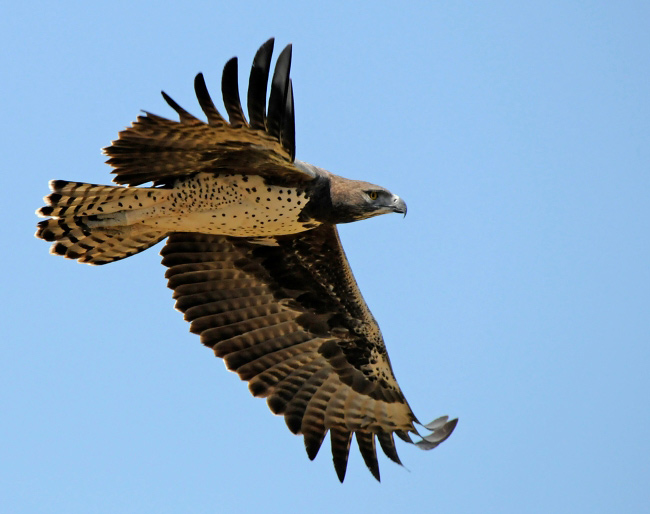
Martial Eagle, one of the numerous impressive raptors in Kenya, by Marie-France Grenouillet.
Birds
Endemics 13 Jackson’s Francolin (also recorded in Uganda), Brown-and-white (White-headed) Barbet, Williams’s Lark, Taita Apalis, Tana River Cisticola (virtually unknown in the field), Aberdare Cisticola, Taita White-eye, Kulal White-eye, Kikuyu White-eye, Hinde’s Babbler, Taita Thrush, Clarke’s Weaver and Sharpe’s Longclaw.
Near-endemics
Kenya, Ethiopia and Eritrea 1 Abyssinian (African) Citril.
Kenya, Ethiopia and Somalia 12 Somali Bee-eater, Red-naped Bushshrike, Collared Lark, Gillett’s Lark, Somali Short-toed Lark, Dodson’s (Common) Bulbul, Scaly Babbler, White-crowned Starling, Donaldson-Smith’s Sparrow-weaver, Golden Palm Weaver, Juba (Salvadori’s) Weaver and Northern Grosbeak-canary.
Kenya, Ethiopia, Somalia and Djibouti 1 Somali Sparrow.
Kenya, Ethiopia, Somalia and South Sudan 1 Chestnut-headed Sparrow-lark.
Kenya, Ethiopia, Somalia and Uganda 3 Yellow-vented Eremomela, Pale Prinia and Bristle-crowned Starling.
Kenya, Ethiopia, Somalia and Tanzania 10 Vulturine Guineafowl, Red-bellied (Orange-bellied) Parrot, Short-tailed Lark, Somali Crombec, Banded Warbler (Parisoma), Kenya (Pale) White-eye, Golden-breasted Starling, Fischer’s Starling, Bare-eyed Thrush and Black-bellied Sunbird.
Kenya and Ethiopia 3 Black-fronted Francolin, Grant’s (Violet) Woodhoopoe and Masked Lark.
Kenya, Ethiopia and South Sudan 1 Star-spotted Nightjar.
Kenya, Ethiopia, Uganda and South Sudan 1 Jackson’s Hornbill.
Kenya, Ethiopia and Democratic Republic of Congo (DRC) 1 African (Abyssinian) Long-eared Owl.
Kenya, Ethiopia and Tanzania 2 Friedmann’s Lark and Black-capped Social-weaver.
Kenya and Somalia 4 Manda (Coastal) Boubou, Violet-breasted Sunbird, Red (Red-headed) Weaver and Malindi Pipit.
Kenya, Somalia and Tanzania 10 Fischer’s Turaco, White-headed Mousebird, Mombasa Woodpecker, Eastern Black-headed Batis, Zanzibar Boubou (and Zanzibar), Long-tailed Fiscal, Coastal Cisticola, Little Yellow Flycatcher, Fire-fronted Bishop and Pangani Longclaw.
Kenya and Uganda 1 Elgon (Moorland) Francolin.
Kenya, Uganda and DRC 1 Chapin’s Flycatcher.
Kenya and DRC 1 Turner’s Eremomela.
Kenya, Uganda and Tanzania 3 Hartlaub's Turaco, Karamoja Apalis and Lynes’s (Wailing) Cisticola.
Kenya and Tanzania 26 Sokoke Scops-owl, Usambiro (D’Arnaud’s) Barbet, Fischer’s Lovebird, Grey-crested Helmetshrike, Forest (Short-tailed) Batis, Red-throated Tit, Buff-bellied (African) Penduline-tit, Athi Short-toed Lark, Stripe-faced Greenbul, Eastern Mountain Greenbul, Mbulu White-eye, Northern Pied Babbler, Hildebrandt's Starling, Abbott's Starling, Amani Sunbird, Eastern Double-collared Sunbird, Usambara Double-collared Sunbird, Gorgeous (Beautiful) Sunbird, Tsavo Sunbird, Rufous-tailed Weaver (only just in Kenya), Jackson’s Widowbird, Taveta Golden Weaver, Kenya (Rufous) Sparrow, Swahili (Grey-headed) Sparrow, Sokoke Pipit and Southern Grosbeak-canary.
Kenya, Tanzania and Malawi 1 Kenrick’s Starling.
Kenya, Tanzania and Mozambique 3 Kretschmer’s Longbill, Uluguru Violet-backed Sunbird and Zanzibar Red Bishop.
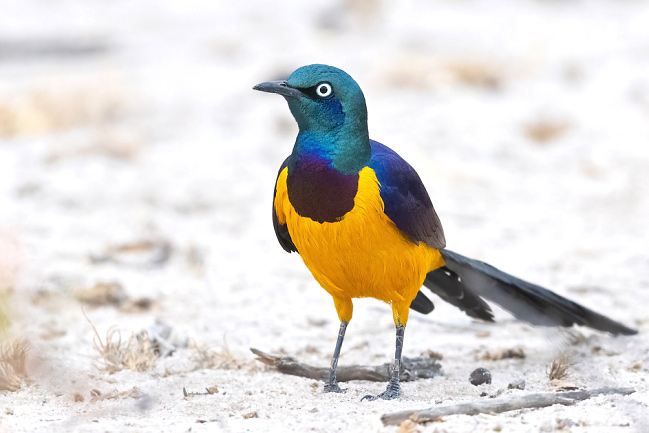
A stunning Golden-breasted Starling in Tanzania by Dubi Shapiro.
Other specialities
Somali Ostrich, White-spotted Flufftail, Crab Plover, Somali Courser, Madagascar Pratincole (mostly May-Aug), Sooty Gull, Forbes-Watson's Swift,
Blue-headed Bee-eater, Speckle-breasted Woodpeckers, Green-headed and Mountain Orioles, East Coast (Pale) and Pygmy Batises, Jameson’s and Yellow-bellied
Wattle-eyes, Papyrus Gonolek, Taita Fiscal, Fischer's Sparrow-lark, Pink-breasted Lark, White-browed Crombec, Basra Reed-warbler (mainly Nov-Mar), Kakamega
Greenbul, Black-collared and Chestnut-throated Apalises, Slender-billed, Magpie, Sharpe's and Stuhlmann's Starlings, Abyssinian Ground-thrush, Equatorial
and East Coast Akalats, White-throated Robin (mainly Nov-Mar), Little Rock-thrush, Plain-backed, Hunter's, Tacazze, Red-tufted (Scarlet-tufted Malachite),
Golden-winged and Red-chested Sunbirds, Northern Brown-throated and Northern Masked Weavers, Red-headed Bluebill, Abyssinian Crimsonwing, Grey-headed
Silverbill, Golden Pipit, Oriole Finch and Papyrus Canary. Also a chance of Olive) Ibis and Striped Flufftail.
Others
Common Ostrich, Black and Goliath Herons, Saddle-billed Stork, Hamerkop, Lesser and Greater Flamingos (numbers usually peak in Nov-Dec when 1-2 million
have been present at Lake Bogoria alone), Great White and Pink-backed Pelicans, African Darter, over 50 raptors including vultures, African Fish-eagle,
African Crowned, Martial and Verreaux's Eagles, Bateleur, Mountain Buzzard, Pygmy Falcon and Secretary Bird, Black Crake, bustards including Hartlaub's
and Kori, Grey Crowned Crane, many shorebirds including Spotted Thick-knee, Blacksmith and Chestnut-banded Plovers, African Jacana, Heuglin's and
Temminck's Coursers, sandgrouse, pigeons and doves, Red-bellied Parrot, Great Blue, Ross's and White-crested Turacos, owls including Verreaux's Eagle-owl,
mousebirds, Bar-tailed and Narina Trogons, kingfishers including Giant, bee-eaters including Northern Carmine and Madagascar (mostly Apr-Sep),
Lilac-breasted Roller, African Hoopoe, woodhoopoes, hornbills, Southern Ground-hornbill, barbets including Double-toothed and Red-and-yellow, honeyguides,
batises, wattle-eyes, Chestnut-fronted, Retz's and White-crested Helmetshrikes, Grey-headed, Sulphur-breasted and Four-coloured Bushshrikes, Black-headed
Gonolek, shrikes, African Paradise-flycatcher, larks, greenbuls, apalises including Black-throated, flycatchers, robin-chats, White-starred Robin,
scrub-robins, starlings including Superb, Red-billed and Yellow-billed Oxpeckers, sunbirds, Rosy-breasted and Yellow-throated Longclaws, Golden-breasted
Bunting, weavers, widowbirds, bishops, waxbills and whydahs. Also a chance of Rufous-bellied Heron, African Finfoot, Rock Pratincole, African Skimmer,
Grey Parrot, African Broadbill and Silverbird.
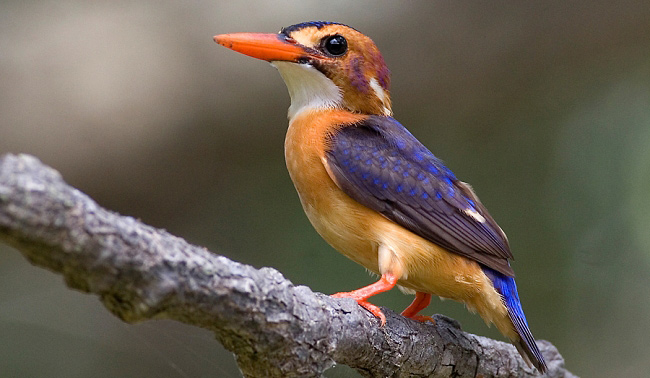
A stunning photograph of a stunning Pygmy Kingfsher by Martin Goodey.
Mammals
Lion, Leopard, Cheetah, African Elephant, (Maasai, Reticulated and Rothschild’s) Giraffes, Hippopotamus, White
(reintroduced) and Black Rhinoceroses, Spotted and Striped Hyaenas, Burchell's and Grevy's Zebras, Beisa Oryx, Gerenuk, Blue Wildebeest, African Buffalo,
(Angola/Eastern) Black-and-white Colobus Monkey, Olive and Yellow Baboons, Bat-eared Fox, African Wild Cat, Spring Hare, Golden-rumped Elephant Shrew,
Blotched and Small-spotted Genets, Bushbaby (Greater Galago), Southern Tree Hyrax, Eland, Greater and Lesser Kudus, Waterbuck, Topi, Hartebeest, Impala,
Grant's and Thomson's Gazelles, Sitatunga, Klipspringer and Yellow-winged Bat. Also a chance of Caracal, Serval, Aardvark, Aardwolf, Sable, Suni, Giant
Forest Hog, Crested Porcupine, Harvey's Duiker and African Civet, and an outside chance of Dugong and Ground Pangolin.
Reptiles, Amphibians and Fish
Nile Crocodile, Whale Shark (mostly Nov-Jan) and
many coral reef fish including angelfish, butterflyfish, parrotfish, groupers and wrasses.
Invertebrates
Nearly a thousand species of butterfly.
Other Natural Wonders of Kenya
Masai Mara-Serengeti The ultimate African plains, covering about 25,000 sq km (9650 sq miles), of which about 1500 sq km (580 sq miles) are in the Masai Mara in Kenya.
Kilimanjaro The 'mountain that glitters', the translation from Swahili to English, is the highest peak in Africa, rising imposingly over 4600 m (15,000 ft) from the surrounding plains to 5892 m (19,330 ft) above sea level. This huge inactive volcano covers an area of about 100 km (60 miles) by 65 km (40 miles) and dominates the landscape over a huge area. Massive, isolated and snow-capped it looks especially awesome from Amboseli NP in Kenya.
Best Sites for Birds and other wildlife in Kenya
- Nairobi NP Over 500 bird species recorded including Shelley's Francolin, Hartlaub's Bustard and Northern Pied Babbler. Also a chance of African Finfoot, and White and Black Rhinoceroses.
- Gatamaiyu Forest Bar-tailed Trogon, Mountain Oriole, Black-throated, Black-collared, Chestnut-throated and Grey Apalises, African Hill Babbler, Kikuyu White-eye and Thick-billed Weaver. Also a chance of Abbott’s Starling.
- Kinangop Plateau Sharpe's Longclaw.
- Great Sangana Resort Hinde's Babbler.
- Mount Kenya including Castle and Mountain Lodges Jackson's Francolin, African Crowned Eagle, Black Sparrowhawk, Red-fronted Parrot, Eastern Bronze-naped and Olive Pigeons, Montane (Abyssinian) Nightjar, Hartlaub's Turaco, Cinnamon-chested Bee-eater, Tullberg's Woodpecker, Mountain Oriole, Olive-breasted Mountain, Slender-billed and Yellow-whiskered Greenbuls, African Hill Babbler, Black-throated, Black-collared, Chestnut-throated and Grey Apalises, Brown-chested Alethe, White-starred Robin, Abyssinian Ground-thrush, Abbott's Starling, Red-tufted Sunbird, Brown-capped Weaver, Oriole Finch, Yellow-crowned Canary and Cape Wagtail. Also a chance of Olive Ibis and Kenrick’s Starling.
- Aberdare NP Jackson's Francolin, as well as Mountain Buzzard, Eastern Bronze-naped Pigeon, Aberdare Cisticola, Mountain Yellow Warbler, Alpine Chat, Golden-winged and Red-tufted Sunbirds, and Abyssinian Crimsonwing. Also a chance of Striped Flufftail and Giant Forest Hog (in the Salient - core forest and at The Ark).
- Quarry near Kiawara Cape (Mackinder's) Eagle-owl.
- Shaba, Samburu and Buffalo Springs GRs and NPs Somali Ostrich, Pygmy Falcon, Vulturine Guineafowl, Somali Courser, White-headed Mousebird, Somali Bee-eater, Grant’s (Violet) Woodhoopoe, Foxy (Fawn-coloured), Pink-breasted and Williams’s (lava-field plains at east end of Shaba) Larks, Acacia Tit, Pale Prinia, Yellow-vented Eremomela, Somali Long-billed Crombec, Golden-breasted Starling, Black-bellied, Eastern Violet-backed, Hunter’s and Shining Sunbirds, Golden Pipit, Parrot-billed and Somali (Archer’s Gate) Sparrows, Somali Golden-breasted Bunting, Lion, Leopard, Cheetah, (Reticulated) Giraffe, Grevy's Zebra, Beisa Oryx and Gerenuk. Also, on lava plains at east end of Shaba, a chance of Lichtenstein's Sandgrouse and Friedmann's Lark.
- Lake Elmenteita Flamingos. Also a chance of Aardvark.
- Hell's Gate NP Giraffe, African Buffalo, Klipspringer and Verreaux's Eagle.
- Lake Naivasha Over 450 bird species recorded including Black-lored Babbler as well as Black-and-white Colobus Monkey. Also a chance of Grey-crested Helmetshrike (at Crater Lakes Sanctuary).
- Lake Nakuru Over 450 bird species recorded including Hildebrandt's Francolin and the famous flamingos, as well as White Rhinoceros (reintroduced; best looked for in the Enderit River Mouth area). Also a chance of Leopard, Grey-crested Helmetshrike (watch out for hybrids with White-crested Helmetshrike), Pectoral-patch Cisticola and Reichenow’s Seedeater.
- Lake Bogoria Flamingos.
- Lake Baringo Over 450 bird species recorded including Verreaux's Eagle, Allen's Gallinule, Spotted Thick-knee, Heuglin's Courser, Greyish Eagle-owl, numerous waterbirds, Hemprich's and Jackson's Hornbills, Red-and-yellow Barbet, Lesser Honeyguide, Three-streaked Tchagra, Mouse-coloured Penduline-tit, Somali Tit, Brown-tailed (Yellow-breasted) Apalis, Bristle-crowned and Magpie Starlings, Beautiful and Eastern Violet-backed Sunbirds, White-billed Buffalo-weaver, Golden-backed, Little and Northern Masked Weavers, and Northern Red and Yellow-crowned Bishops. Also a chance of Black Heron.
- Kerio Valley White-crested Turaco, Gambaga Flycatcher and Boran Cisticola. Also a chance of Silverbird.
- Sawai Swamp Sitatunga, De Brazza's Monkey, Grey-winged Robin-chat, Black-throated Wattle-eye and Mountain Illadopsis.
- Kongelai Escarpment, near Mukutano Yellow-billed Shrike.
- Kakamega Blue-headed Bee-eater, Plain (Cameroon Sombre) Greenbul and Turner’s Eremomela, as well as Crowned Eagle, Great Blue Turaco, Bar-tailed Trogon, Grey-throated, Yellow-billed and Yellow-spotted Barbets, Brown-eared, Buff-spotted, Speckle-breasted and Yellow-crested Woodpeckers, Thick-billed Honeyguide, African Broadbill, Bocage’s and Luhder’s Bushshrikes, Pink-footed Puffback, Mackinnon’s Fiscal, Dusky Tit, Ansorge’s, Cabanis’s, Honeyguide, Joyful, Kakamega (Shelley’s), Little Grey, Toro Olive and Yellow-whiskered Greenbuls, Red-tailed Bristlebill, Scaly-breasted Illadopsis, Chubb's Cisticola, Black-collared and Buff-throated Apalises, Olive-green Camaroptera, Uganda Woodland-warbler, Green Hylia, Stuhlmann’s Starling, Equatorial Akalat, Brown-chested Alethe, Chapin’s Flycatcher, Blue-shouldered, Grey-winged and Snowy-headed Robin-chats, Green-headed Sunbird, Red-headed Bluebill, Black-billed and Vieillot’s Black Weavers, and Red-headed Malimbe. Also a chance of Chestnut, Jameson's and Yellow-bellied Wattle-eyes.
- Madende area, near border with Uganda Rock Pratincole and Compact Weaver.
- Lake Victoria shoreline Papyrus Gonolek, Papyrus Yellow Warbler, White-winged Swamp-warbler, Red-chested Sunbird and Papyrus Canary.
- Masai Mara Schalow's Turaco, Usambiro Barbet, Magpie Shrike (Siana Springs), Grey/Buff-bellied/Rungwe Penduline-tit (Siana Springs), Rosy-breasted Longclaw, Hildebrandt's Starling, Jackson's Widowbird (Musiara Swamp) and Rufous-tailed Weaver (recent coloniser from the Serengeti in Tanzania, which now breeds in a couple of small colonies), as well as Temminck's Courser, Lion, Cheetah, Giraffe, Spotted Hyaena and Blue Wildebeest. Also a chance of Serval, Aardvark, Aardwolf, Rufous-bellied Heron (Musiara Swamp) and Karamoja Apalis (Naiboisho Conservancy), and an outside chance of Ground Pangolin.
- Oloololo Escarpment, behind Kichwa Tembo, Masai Mara Southern Hyliota, Pale Wren-warbler, Rock-loving Cisticola, and Red-tailed and Sooty Chats.
- Loita Plains Karamoja Apalis.
- Lake Magadi Chestnut-banded Plover.
- Lukenya area Red-throated Tit, Buff-bellied Warbler, Yellow-bellied Eremomela, Red-faced Crombec, Banded Warbler, Speke’s Weaver and Southern Grosbeak-canary.
- Amboseli NP Kilimanjaro (the snowy top is most likely to be seen at dawn and dusk; it is often hidden by cloud during the rest of the day), Lion, Bat-eared Fox and Pangani Longclaw. Also a chance of Yellow-throated Sandgrouse.
- Tsavo West NP Red-naped Bushshrike, Tsavo Purple-banded Sunbird and Pangani Longclaw, as well as Pygmy Batis. Also a chance of Freckled Nightjar (Rhino Valley Lodge), Leopard and Crested Porcupine.
- Lumo Wildlife Sanctuary (bordering southwest corner of Tsavo West NP) Brown-breasted Barbet, Lion, Leopard, Cheetah, Serval, Oryx, Bat-eared Fox, Giraffe, African Elephant, Olive Baboon, Waterbuck, Hartebeest, Eland and Burchell’s Zebra. Also a chance of Aardwolf (on night drives), Spotted and Striped Hyaenas, and African Porcupine.
- Lake Jipe Black Heron and Taveta Golden Weaver.
- Hunter's Lodge African Golden Weaver and Jameson's Firefinch.
- Ngangao Forest, Taita Hills Endemic species/subspecies of thrush, apalis and white-eye, as well as Crowned Eagle, Mountain Buzzard, Hartlaub’s Turaco, Moustached Green Tinkerbird, Placid and Stripe-cheeked Greenbuls, Evergreen Forest-warbler, Yellow-throated Woodland-warbler, Abbott’s and Sharpe’s Starlings, Orange Ground-thrush, White-starred Robin, Striped Pipit and Green Twinspot.
- Tsavo East NP Gerenuk, Hirola (introduced), Somali Ostrich, Somali Courser, Black-faced Sandgrouse, Plain Nightjar, Somali Bee-eater, Red-and-yellow Barbet, Red-winged Lark, Pangani Longclaw, Golden Pipit, Pink-breasted Lark and Golden-breasted Starling. Also a chance of Vulturine Guineafowl.
- Shimba Hills Sable and Green-headed Oriole, as well as Crested Guineafowl, Sooty Falcon, Fischer's Turaco, Whistling Yellowbill, Narina Trogon, Brown-hooded Kingfisher, Brown-breasted, White-eared and Green Barbets, Eastern Green Tinkerbird, Black-bellied Starling, Uluguru Violet-backed Sunbird, Pangani Longclaw, Golden Palm Weaver, Dark-backed (Forest) Weaver and Black-and-white Colobus Monkey.
- Arabuko-Sokoke NP Sokoke Scops-owl, Sokoke Pipit and Amani Sunbird, as well as Fischer's Turaco, Green Tinkerbird, Pallid Honeyguide, Mombasa Woodpecker, Forest and Pale Batises, Chestnut-fronted and Retz's Helmetshrikes, Four-coloured Bushshrike, East Coast Akalat and Little Yellow Flycatcher. Also a chance of Clarke's Weaver, and Golden-rumped and Four-toed Elephant Shrews.
- Sabaki Rivermouth White-fronted Plover, Coastal Cisticola, Bare-eyed Thrush, Purple-banded Sunbird, Golden Palm Weaver and Zanzibar Red Bishop.
- Lake Chem Chem, near Malindi Black Heron, Allen's Gallinule and Zanzibar Red Bishop. Also a chance of African Pygmy Goose.
- Coast including Mida Creek Numerous waterbirds including Crab Plover, Madagascar Pratincole and Sooty Gull, and Malindi Pipit.
- Offshore including Chale Island Whale Shark and numerous coral reef fish. Also an outside chance of Dugong.
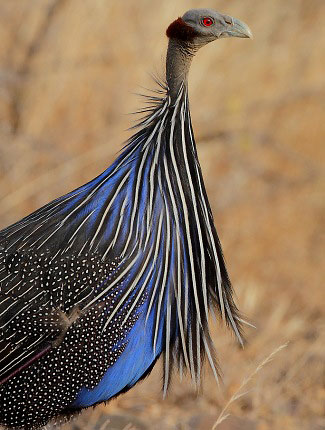
Vulturine Guineafowl in Samburu by Steve Garvie.
- North Coast
- Tana River Primate Reserve Tana River Crested Mangabey and Tana River Red Colobus Monkeys.
- Far North
- Chalbi and Dida Galgalla Deserts, far north Kenya Greater Kestrel, Heuglin's Bustard, Somali Courser, Star-spotted Nightjar, Masked and other larks, and White-crowned Starling.
Best Times for Birds and other wildlife in Kenya
The best time to visit in search of mammals is from June to November. The Blue Wildebeest migration depends on the rains but the largest gathering of ungulates (hoofed mammals) in the world takes place in the Serengeti in Northern Tanzania during the wet season which usually lasts from November to May. There are usually one to two million large mammals, mostly wildebeest, in the southeast Serengeti by January and they stay until April, usually calving in February-March when they attract numerous predators. In May-June there is a general movement of animals northwest through the central Serengeti, a time when herds of wildebeest up to 40 km (25 miles) long have been seen from the air. They are heading west toward Lake Victoria and north to the Masai Mara, and about half a million wildebeest as well as numerous Burchell's Zebras and Thomson's Gazelles usually reach the Mara and Talek Rivers in June and July (though sometimes as late as August when they may move back and forth across the Mara several times). Then, at several places along these rivers, they may be seen struggling across, desperately trying to avoid the crocodiles. The wildebeest, zebras and gazelles which make it usually remain in the Mara until October-November when they begin their return to the Serengeti.
Birding is so good almost any time of the year is worth considering but the peak times are April and November. April is usually the start of the main wet season (which usually lasts until July), a time when many resident birds nest and are therefore at their most active and attractive, whereas November is usually the start of the short wet season (which usually lasts until December), a time when many other resident birds nest, many migrant species are present and flamingo numbers usually peak.
Recommended Bird Books etc. for Kenya
Field Guide to the Birds of East Africa by T Stevenson and J Fanshawe. Helm, due 2020 (Second Edition).
Field Guide to the Birds of Kenya and Northern Tanzania by D Pearson et al. Helm, 2005.
Birds of Africa south of the Sahara by I Sinclair and P Ryan. C Struik, 2011 (Second Edition).
The Kingdon Field Guide to African Mammals by J Kingdon. Bloomsbury, 2015 (Second Revised Edition).
The Kingdon Pocket Guide to African Mammals by J Kingdon. Bloomsbury, 2016 (Second Edition).
Bradt Travel Guides: East African Wildlife by P Briggs. Bradt, 2015 (Second Edition).
Watching Wildlife: East Africa by M D Firestone et al. Lonely Planet, 2009 (Second Edition).
Apps etc.
The Kingdon Guide to African Mammals.
Audubon African Wildlife.
eGuide to Birds of East Africa.
Where to watch birds in Africa by N Wheatley. Helm, 1995.
Don’t know which country/countries to visit in Africa? Then it may be worth considering taking a look at this book, written by this website’s author. It is many years old of course but it still provides a starting point, an overview and a guiding light to the best birds and the best places to look for them on the continent, and could save hours of searching for similar information on the internet. However, it is important to check more up-to-date sources for sites which have been opened up, sites and species which have been discovered, lodges that have been built etc. since the book was published.
Birding and Wildlife Trip Reports for Kenya
Many trip reports, some for Kenya, are posted on the websites listed here. On some of these websites some reports are independent and some are posted by tour companies who organize tours to Kenya. These tour companies and others also post their own reports on their websites, which are listed under 'Some Organized Tours to Kenya' below.
- The best website for trip reports is CloudBirders
- but these are also worth a look
- Birdtours
- Fatbirder
- Jon Hornbuckle
- Mammal Watching
Local bird and wildlife guides in Kenya
The costs of organized tours partly reflect the quality of the tour leaders. Some leaders are certainly better than others and many companies claim their leaders are the best but even the best rely at least to some extent on the exceptional skills of the local guides they employ. If you are travelling independently, employing such local guides will greatly increase your chances of seeing the wildlife you wish to see.
Accommodation for birders in Kenya
Some Organized Tours for birds and other wildlife to Kenya
There are many tour companies who organize tours to see mammals, birds, other wildlife and other natural wonders. The cost of these tours vary considerably according to such variables as the airlines used, the number of days the tours last, the number of sites visited, the number of people in the group (an important consideration if you wish to see such wildlife as rainforest mammals and birds), the number of tour leaders, the standard of accommodation and transport, and the percentage profit the company hopes to make. Generally, where the number of days tours last and the number of sites visited are similar, the cheapest tours are those that use the cheapest airlines, accommodation and local transport, that have the largest groups with the least number of leaders, and that make the least amount of profit. The most expensive tours tend to be those which are exceptionally long, use the most expensive accommodation (ridiculously lavish in some cases, even for single nights) and which make the most profit. Some tour costs partly reflect the quality of the tour leaders. Some leaders are certainly better than others and many companies claim their leaders are the best but even the best rely at least to some extent on the exceptional skills of the local guides they employ.
While tour companies organize tours with set itineraries many also organize custom tours for individuals and private groups who instead of taking a tour with a set itinerary want to follow their own itinerary to suit their own personal tastes, whether it be mammals, birds, other wildlife, other natural wonders or even man-made attractions, or a mixture of them all. Many organized tours with set itineraries are also fast-paced and target as many species as possible, whether they are mammals, birds or other wildlife or everything, which usually leaves little time to enjoy the best sites and individual species, but on a custom tour those taking part can specify the pace and the sites and species they wish to concentrate on. Custom tours also suit people who like to travel with people they already know, rather than with a group of strangers, and people with partners with different interests. Individuals and small groups will almost certainly have to pay more than the price of an organized tour with a set itinerary but a large group of friends may be able to travel for less than the price quoted for a set tour.
Tour companies who run organized tours or can arrange custom tours to Kenya include the following.
- Birdfinders
- Birdquest
- Field Guides
- Rockjumper
- Shoebill Safaris
- Shoebill Safaris is one of the leading eco-tour operators for bird watching, gorilla tracking and safaris in East Africa. From swamps and tropical forest to the Rift Valley you are sure to record as many species as your eyes can see in Kenya, Rwanda, Tanzania and Uganda.
- Victor Emanuel Nature Tours
