
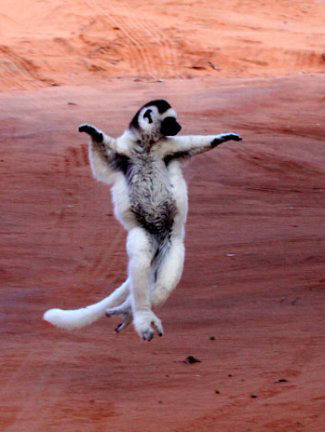
Verreaux's Sifaka in full flow, 'hopping' sideways, across the ground, between trees, by Coke & Som Smith.
- Nearly 120 endemic birds, 150 or so endemic mammals and six endemic plant families help make the island of Madagascar unique in the true sense of the word
- Four endemic bird families; three mesites, five ground-rollers, four asities and 11 tetrakas, as well as 11 couas and 17 vangas, and a sandgrouse, two flufftails, an ibis, a jacana, a fish-eagle, a lovebird, three rock-thrushes, two fodies, two weavers and a wagtail.
- While other more widespread spectacular birds include Red-tailed Tropicbird, Black Heron, Hamerkop and Crab Plover
- And over 100 species of lemur include the large and loud Indri, some beautiful sifakas
and the confiding Ring-tailed Lemur - While there are also over 80 chameleons
- And amazing insects such as the Giraffe-necked Weevil
- All in some of the strangest habitats on the planet
- Evolution has gone mad on Madagascar. During the 160 million or so years it has been separated from the nearest major landmass, Africa, a weird and wonderful flora and fauna, most of which is endemic, has evolved, making Madagascar an island-continent which is vastly different from any other island or continent. From the eastern rainforests full of fabulous birds and lemurs to the otherworldly spiny forests of the southwest where bulbous baobabs and spiky ‘Octopus Trees’ support flocks of birds called Sickle-billed Vangas, this is a strange land indeed, complete with most of the world’s chameleons and bizarre insects including Giraffe-necked Weevils, all fairly easy to see. It is the birds and the lemurs which turn most peoples’ heads. Half of the 200 or so species of bird which nest on the island are endemic and many are stunners, but even avid birders will probably agree that lemurs are at least as attractive, especially the pretty Ring-tailed Lemurs, sideways-hopping sifakas and the bright-eyed, woolly-coated, black-and-white Indris – listening to the incredibly loud, wailing groups of these beauties singing to each other first thing in the morning is one of the greatest wildlife experiences.
- It is compulsory to employ a local guide in parks and reserves. The best are usually booked years in advance by the major tour operators so visitors wishing to see a high percentage of the wildlife would be wise to join an organised tour run by an established company.
- Most of the mammals and birds can be seen in two weeks but to see those restricted to the north end of the island, such as Helmet Vanga, will require a third week.
- Visitors with even more time may wish to consider visiting nearby islands such as the Comoros where there are 24 endemic bird species, Mauritius where the eight endemic landbird species include Pink Pigeon, and Reunion where there are seven endemic bird species.
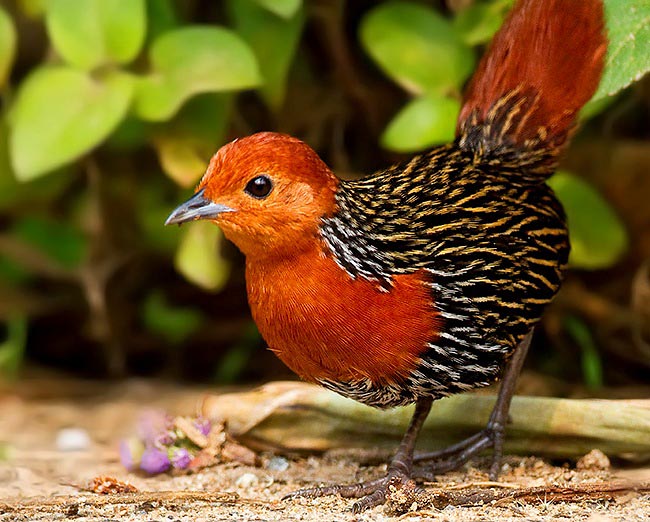
Madagascar Flufftail in Andasibe-Mantadia NP by Dubi Shapiro.
Best Birds and other wildlife in Madagascar
Birds
Endemics 117 (Four endemic families: mesites (3 species), ground-rollers (5), asities (4) and tetrakas (11), as well as 11 couas and 17 vangas) Madagascar Partridge, Madagascar Pochard (tiny range), Meller’s Duck, Madagascar (Bernier’s) Teal, Madagascar Grebe, White-breasted Mesite, Brown Mesite, Subdesert Mesite, Madagascar Green-pigeon, Madagascar Sandgrouse, Collared Nightjar, Giant Coua, Coquerel’s Coua, Red-breasted Coua, Red-fronted Coua, Running Coua, Red-capped Coua, Olive-capped (Red-capped) Coua, Crested Coua, Chestnut-vented (Crested) Coua, Verreaux’s Coua, Blue Coua, Madagascar Flufftail, Slender-billed Flufftail, Madagascar Wood-rail, Tsingy Wood-rail (small range), Madagascar Rail, Sakalava Rail, Madagascar Crested Ibis, Black-banded Plover, Madagascar Three-banded Plover, Madagascar Jacana, Madagascar Snipe, Madagascar Buttonquail (introduced to several nearby islands), Madagascar Red Owl, White-browed Owl, Torotoroka (Malagasy) Scops-owl, Rainforest (Malagasy) Scops-owl, Madagascar Long-eared Owl, Madagascar Cuckoo-hawk, Madagascar Serpent-eagle, Madagascar Harrier-hawk, Madagascar Sparrowhawk, Henst’s Goshawk, Madagascar Fish-eagle, Madagascar Buzzard, Madagascar Hoopoe, Short-legged Ground-roller, Scaly Ground-roller, Long-tailed Ground-roller, Pitta-like Ground-roller, Rufous-headed Ground-roller, Madagascar Pygmy-kingfisher, Banded Kestrel, Black (Lesser Vasa) Parrot, Grey-headed Lovebird, Velvet Asity, Schlegel’s Asity, Common Sunbird-asity, Yellow-bellied Sunbird-asity, Madagascar Cuckooshrike, Archbold’s Newtonia, Common Newtonia, Red-tailed Newtonia, Dark Newtonia, Tylas Vanga, Red-tailed Vanga, Red-shouldered Vanga, Nuthatch Vanga, Chabert Vanga, Madagascar Blue Vanga, Crossley’s Vanga, Ward’s Flycatcher, Hook-billed Vanga, Rufous Vanga, Helmet Vanga, Pollen’s Vanga, Lafresnaye’s Vanga, Van Dam’s Vanga, Bernier’s Vanga, Sickle-billed Vanga, White-headed Vanga, Madagascar Lark, Green Jery, Common Jery, Stripe-throated Jery, Subdesert (Stripe-throated) Jery, Subdesert Bush-warbler, Madagascar Swamp-warbler, Brown Emu-tail, Madagascar Grassbird (Grey Emutail), White-throated Oxylabes, Long-billed Tetraka, Wedge-tailed Tetraka (Jery), Thamnornis, Spectacled Tetraka, Appert’s Tetraka, Grey-crowned Tetraka, Dusky Tetraka, Madagascar Yellowbrow (Yellow-browed Oxylabes), Cryptic Warbler, Rand’s Warbler, Madagascar Plain Martin, Madagascar Starling, Pelzeln’s Magpie-robin, Madagascar Magpie-robin, Littoral Rock-thrush, Amber Mountain (Forest) Rock-thrush (far north), Forest Rock-thrush, Madagascar Stonechat, Long-billed (Madagascar) Sunbird, Red Fody, Forest Fody, Nelicourvi Weaver, Sakalava Weaver, Madagascar Munia and Madagascar Wagtail.
(Madagascar Pond-heron, Madagascar Pratincole and Mascarene Martin all range to east Africa during their non-breeding seasons)
Near-endemics
Madagascar and Comoros 12 Madagascar Spinetail (Grand Comoro), Madagascar Palm-swift, Madagascar Swift, Madagascar (Humblot’s) Heron, Madagascar (Marsh) Harrier, Frances’s Sparrowhawk, Cuckoo Roller, Madagascar Kingfisher, Madagascar Kestrel, Crested Drongo, Madagascar Paradise-flycatcher and Madagascar Brush-warbler.
Madagascar, Comoros and Seychelles 2 Madagascar Turtle-dove and Madagascar Bulbul.
Madagascar, Comoros, Seychelles and Mayotte 1 Madagascar White-eye.
Madagascar and Aldabra 2 White-throated Rail and Madagascar Sacred Ibis.
Madagascar and Seychelles 2 Souimanga Sunbird and Madagascar Cisticola.
Other specialities Crab Plover, and Eleonora's and Sooty Falcons (both mostly Nov-Apr).
Others African Pygmy Goose, Lesser and Greater Flamingos, Red-tailed Tropicbird, Black Heron, Hamerkop, African Darter and Madagascar Bee-eater. Also a chance of Greater Painted-snipe.
Mammals
Over 100 lemur species (some taxonomists believe it may be around 50)
including Indri, sifakas, Ring-tailed Lemur, woolly lemurs, and tiny mouse lemurs such as Pygmy Mouse
Lemur, the smallest lemur and smallest primate in the world with a body 62 mm (2.4 inches) long and a tail
136 mm (5.3 inches) long, as well as tenrecs, Humpback Whale (mostly Jul-Sep), Madagascar Flying Fox,
Narrow-striped Mongoose and Giant Jumping Rat. Also a chance of Fosa and Indo-Pacific Bottlenose Dolphin,
and an outside chance of Aye-aye.
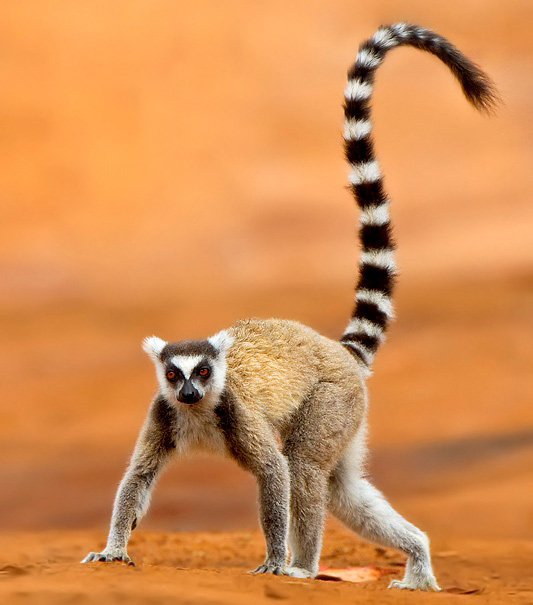
A superb image of a superb Ring-tailed Lemur at Berenty by Dubi Shapiro.
Reptiles, Amphibians and Fish
Chameleons (over 80 species, over half of the world total,
including Pygmy Stump-tailed which is just 2 cm (0.8 in) long) and leaf-tailed geckos. Also a chance of Nile Crocodile.
Invertebrates
Giraffe-necked Weevil. Moths include the fabulous Moon Moth, some males of
which may have wingspans measuring 20 cm (8 in) and tails as long as 15 cm (6 in).
Plants
Six plant families are endemic.
Best Sites for Birds and other wildlife in Madagascar
- Antananarivo south to Berenty
- Antananarivo Airport Sooty Falcon.
- Lac Alarobia Black Heron and Madagascar Pond-heron.
- Anjozorobe Reserve Meller's Duck, Madagascar Rail, Madagascar Snipe, Brown Emutail and Madagascar Grassbird.
- Mangoro River Madagascar Pratincole.
- Andasibe-Mantadia NP (Perinet) Indri, Eastern Woolly, Common Brown, Furry-eared Dwarf and Weasel Sportive Lemurs, Pitta-like, Rufous-headed, Scaly and Short-legged Ground-rollers, Velvet Asity, Blue and Nuthatch Vangas, Blue Coua and Collared Nightjar. Also a chance of Diademed Sifaka, Fosa, Black-and-white Ruffed, Eastern Grey Bamboo, Hairy-eared Dwarf and Goodman's Mouse Lemurs, Lowland Streaked Tenrec, Madagascar Crested Ibis, Madagascar Flufftail, Parson's Chameleon and Giraffe-necked Weevil.
- Ranomafana NP and Vohiparara Milne-Edwards's Sifaka, Red-bellied, Golden Bamboo, Greater Bamboo, Grey Bamboo, Red-fronted Brown, Greater Dwarf and Brown Mouse Lemurs, Pitta-like and Rufous-headed Ground-rollers, Velvet Asity, Common and Yellow-bellied Sunbird-asities, Blue and Pollen's Vangas, Brown Mesite, Madagascar Flufftail and Blue Coua. Also a chance of Black-and-white Ruffed and Eastern Woolly Lemurs, Madagascar Crested Ibis, Short-legged Ground-roller and Leaf Chameleon.
- Isalo Massif Madagascar Partridge, Madagascar Harrier and Forest Rock-thrush.
- Zombitse NP Verreaux's Sifaka, Giant Coua, Appert's Tetraka and Rufous Vanga.
- Toliara (Tulear) Area Red-tailed Tropicbird (Nosy Ve), Madagascar Heron, Madagascar Buttonquail, Crab and Black-banded Plovers, Saunders's Tern, Madagascar Sandgrouse and Littoral Rock-thrush (Anakao).
- Ifaty Area Verreaux's Coua (La Table), Madagascar Nightjar (Arboretum d'Antsokay), Long-tailed Ground-roller, Sickle-billed Vanga, Banded Kestrel, Subdesert Mesite, Running Coua and Red-shouldered Vanga (La Table).
- Kirindy FR Verreaux's Sifaka, Pale Fork-marked, Red-fronted Brown, Fat-tailed Dwarf, Coquerel's Giant Dwarf, Madame Berthe's Mouse and Red-tailed Sportive Lemurs, Narrow-striped Mongoose and Giant Jumping Rat. Also a good chance of Fosa.
- Tolagnaro (Fort Dauphin) (Madagascar) Kelp Gull. Also a chance of Humpback Whale and Indo-Pacific Bottlenose Dolphin.
- Berenty Ring-tailed Lemur, Verreaux's Sifaka, Grey Mouse, Reddish-grey Mouse and White-footed Sportive Lemurs, Madagascar Flying Fox, Giant Coua, and Torotoroka Scops and White-browed Owls. Also a chance of Madagascar Sandgrouse and Madagascar Cuckoo-hawk.
- Andohahela NP Red-tailed Newtonia.
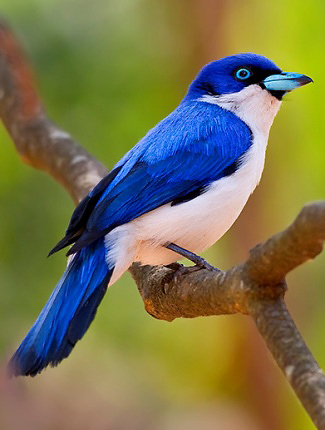
Blue Vanga, one of Madagascar's many fantastic birds and mammals, by Dubi Shapiro.
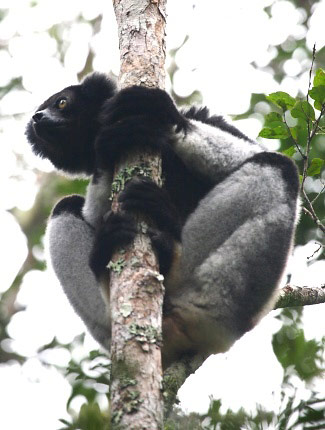
Indri by Simon Colenutt.
- Northwest
- Betsiboka Estuary Madagascar Teal, (Madagascar) Sacred Ibis and Crab Plover.
- Ampijoroa FS, Ankarafantsika NP Coquerel's Sifaka, Western Woolly, Common Brown, Fat-tailed Dwarf and Milne-Edwards's Sportive Lemurs, Madagascar Fish-eagle (Lac Ravelobe), Schlegel's Asity, Blue, Sickle-billed and Van Dam's Vangas, Madagascar Crested Ibis, White-breasted Mesite and Red-capped Coua. Also a chance of Fosa, Golden Mouse Lemur and Nile Crocodile (Lac Ravelobe).
- Lac Amboromalandy Madagascar Jacana, Black Heron and African Pygmy Goose. Also a chance of Greater Painted-snipe.
- Lac Kinkony Sakalava Rail and Madagascar Jacana.
- Mahavavy Delta Madagascar Fish-eagle, Bernier's Teal, Madagascar Heron, (Madagascar) Sacred Ibis, and Crab and Black-banded Plovers.
- Lac Mandrozo Madagascar Fish-eagle and Sakalava Rail.
- Tsingy de Bemaraha NP Von der Decken's Sifaka, and Red-fronted Brown, Cleese's Woolly, Western Rufous Mouse and Fat-tailed Dwarf Lemurs.
- North
- Masoala (Peninsula) NP Red-ruffed, Eastern Woolly, Fork-marked, White-fronted Brown and Seal's Sportive Lemurs, Helmet, Blue and Bernier's Vangas, Scaly and Short-legged Ground-rollers, Velvet Asity, Brown Mesite, Madagascar Pratincole and Red-breasted Coua. Also a chance of Madagascar Serpent-eagle, Madagascar Red Owl and Madagascar Long-eared Owl, and an outside chance of Aye-aye.
- Nosy Mangabe Reserve Black-and-white Ruffed Lemur and an outside chance of Aye-aye (introduced).
- Marojejy NP Silky Sifaka, Helmet and Bernier's Vangas, Pitta-like, Scaly and Short-legged Ground-rollers, Brown Mesite and Red-breasted Coua. Also a chance of Madagascar Serpent-eagle.
- Nosy Boraha A chance of Humpback Whale.
- Antsohihy Madagascar Pochard. Also a chance of Madagascar Red Owl.
- Ankarana SR Crowned, Northern Sportive and Sanford's (Brown) Lemurs, White-breasted Mesite and Sickle-billed Vanga. Also a chance of Fosa.
- Bemanivika Madagascar Pochard. Also a chance of Madagascar Red Owl and Madagascar Long-eared Owl.
- Daraina Area Probably the best place for Aye-aye. Also Golden-crowned Sifaka.
- Montagne D'Ambre NP Crowned, Sanford's (Brown) and Mountain Fork-marked Lemurs, Blue Vanga and Amber Mountain Rock-thrush. Also a chance of Pitta-like Ground-roller.
- Nosy Be, Nosy Komba and Nosy Tanikely Black Lemur (Nosy Komba), Brown Lemur (Nosy Tanikely) and Whale Shark.
Best Times for Birds and other wildlife in Madagascar
The best time to visit Madagascar is between September and December when most lemurs have young, and many of the endemic birds are at their most active and attractive, during their breeding seasons. October-November is the peak time for birds and October is usually the peak time to look for the rare and otherwise elusive Fosa because females in oestrous usually climb their favourite trees at this time, year after year, in order to attract mates. The weather at this time is usually dry and sunny, although there may be some rain. It is normally mild with average temperatures ranging from a cool 10°C early in the mornings to highs in the afternoon of 25-32°C in the eastern rainforests. It is drier and hotter in the west where it is best to be in the field early mornings and late afternoons.
Recommended Bird Books etc. for Madagascar
Wildlife of Madagascar by K Behrens and K Barnes. PUP, 2016.
Bradt Travel Guide: Madagascar Wildlife by N Garbutt and D Austin. Bradt, 2014 (Fourth Edition).
Mammals of Madagascar: A Complete Guide by N Garbutt. A & C Black, 2007.
Lemurs of Madagascar by R A Mittermeier et al. Conservation International, 2010 (Third Edition).
Birds of Madagascar and the Indian Ocean Islands by F Hawkins et al. Helm, 2015.
Birds of the Indian Ocean Islands by I Sinclair and O Langrand. Struik, 2013 (Revised Edition).
The Birds of Africa Volume 8: The Malagasy Region by R Safford and F Hawkins. Helm, 2013.
Birds of Madagascar: A Photographic Guide by P Morris and F Hawkins. Helm, 1998.
A Field Guide to the Amphibians and Reptiles of Madagascar by F Glaw and M Vences. Frosch Verlag, 2007 (Third Edition).
Birding and Wildlife Trip Reports for Madagascar
Many trip reports, some for Madagascar, are posted on the websites listed here. On some of these websites some reports are independent and some are posted by tour companies who organize tours to Madagascar. These tour companies and others also post their own reports on their websites, which are listed under 'Some Organized Tours to Madagascar' below.
- The best website for trip reports is CloudBirders
- but these are also worth a look
- Birdtours
- Fatbirder
- Jon Hornbuckle
- Mammal Watching
Local bird and wildlife guides in Madagascar
The costs of organized tours partly reflect the quality of the tour leaders. Some leaders are certainly better than others and many companies claim their leaders are the best but even the best rely at least to some extent on the exceptional skills of the local guides they employ. If you are travelling independently, employing such local guides will greatly increase your chances of seeing the wildlife you wish to see.
Accommodation for birders in Madagascar
Some Organized Tours for birds, lemurs and other wildlife to Madagascar
There are many tour companies who organize tours to see mammals, birds, other wildlife and other natural wonders. The cost of these tours vary considerably according to such variables as the airlines used, the number of days the tours last, the number of sites visited, the number of people in the group (an important consideration if you wish to see such wildlife as rainforest mammals and birds), the number of tour leaders, the standard of accommodation and transport, and the percentage profit the company hopes to make. Generally, where the number of days tours last and the number of sites visited are similar, the cheapest tours are those that use the cheapest airlines, accommodation and local transport, that have the largest groups with the least number of leaders, and that make the least amount of profit. The most expensive tours tend to be those which are exceptionally long, use the most expensive accommodation (ridiculously lavish in some cases, even for single nights) and which make the most profit. Some tour costs partly reflect the quality of the tour leaders. Some leaders are certainly better than others and many companies claim their leaders are the best but even the best rely at least to some extent on the exceptional skills of the local guides they employ.
While tour companies organize tours with set itineraries many also organize custom tours for individuals and private groups who instead of taking a tour with a set itinerary want to follow their own itinerary to suit their own personal tastes, whether it be mammals, birds, other wildlife, other natural wonders or even man-made attractions, or a mixture of them all. Many organized tours with set itineraries are also fast-paced and target as many species as possible, whether they are mammals, birds or other wildlife or everything, which usually leaves little time to enjoy the best sites and individual species, but on a custom tour those taking part can specify the pace and the sites and species they wish to concentrate on. Custom tours also suit people who like to travel with people they already know, rather than with a group of strangers, and people with partners with different interests. Individuals and small groups will almost certainly have to pay more than the price of an organized tour with a set itinerary but a large group of friends may be able to travel for less than the price quoted for a set tour.
Tour companies who run organized tours or can arrange custom tours to Madagascar include the following.
- Birdquest
- Field Guides
- Greentours
- Naturetrek
- Rockjumper
- Sunbird
- Victor Emanuel Nature Tours
- Wildlife Travel
