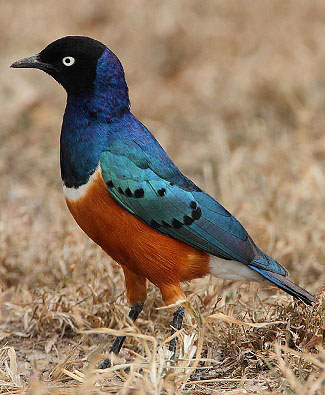
The aptly-named Superb Starling, just one of the numerous spectacular starlings in Africa, by Steve Garvie.
AFRICA
The destinations listed and linked below are the ones we believe are the best in Africa. They have been chosen very carefully and for a multitude of reasons, but mainly based on personal experience of some of them and on dreams of visiting the rest, dreams resulting from what we have heard, read or seen.
It is our intention to update this list regularly as we add destinations and it was last updated in May 2021.
If there are any other destinations you think should be on the list below then please feel free to Email us.
The destinations are listed alphabetically with very brief summaries for those linked, in dark blue, to more detailed pages (to reach these pages click on the destination name). Those not linked to more detailed pages are described in a bit more detail here, in italics, under light blue headings.
For more information see ...
The Best (100) Birds in the World,
The Best (100) Wildlife in the World and
Best (50) Other Natural Wonders.
Destinations
The first and arguably most important destination to consider is a Local Patch, somewhere a short walk from home where it is possible to see a wide range of birds and other wildlife any day of the year.
A
Aldabras
Over 1000 km (700 miles) southwest of the Seychelles and actually much closer to the Comoros and Madagascar but administered by the Seychelles lies one of
the largest coral atolls in the world, with four main islands; Aldabra, Assumption, Astove and Cosmoledo. The low-lying islands support four endemic birds;
Aldabra Drongo, Aldabra White-eye, Abbott's (Souimanga) Sunbird and Aldabra Fody, as well as an endemic subspecies of White-throated Rail (the last
remaining flightless bird in the Indian Ocean), spectacular seabird colonies with Brown, Masked and Red-footed Boobies, and Great and Lesser Frigatebirds,
and other seabirds such as Red-tailed and White-tailed Tropicbirds, and Black-naped and Common White Terns. As for other wildlife there are Coconut Crabs
and over 100,000 Aldabra Giant Tortoises, while coral reefs support a colourful array of reef fishes, Blacktip Reef and Lemon Sharks, and Green and
Hawksbill Turtles.
Algeria
Much of the interior of the second largest country in Africa - about 2000 km by 2000 km - is Sahara Desert but there are mountains in the north,
including the Kabylie of the Babors (Babor Mountains) where the endemic Algerian Nuthatch occurs, and in the late 2010s it was possible to visit the
forests there. No binoculars or telescopes were allowed in the country but cameras and long lenses were! The easiest place to see the nuthatch was in
Bouafroun (Djimla) Forest, 120 km and two to three hours by road from the city of Constantine, accessible directly by air from France, where there is an
impressive canyon with Peregrine Falcon (brookei), Alpine Swift, Eurasian Jackdaw (cirtensis), Blue Rock-thrush and Spanish Sparrow. Other
forest birds include Maghreb Owl, Maghreb Green (Levaillant's) Woodpecker, Great Spotted Woodpecker (numidus), Atlas (Pied) Flycatcher, Western
Bonelli’s Warbler, African Blue Tit (ultramarinus), Coal Tit (ledouci), Short-toed Treecreeper (mauritanica) and Eurasian Jay
(cervicalis). Along the nearby Mediterranean coast it is possible to see Ferruginous Duck, Western Swamphen, African/Eurasian Reed Warbler
(ambiguus) and Barbary Macaque. Tristram’s Warbler and Red 'Atlas' Crossbill occur near El Achir. Western Palearctic listers head down south too,
for Red-billed Firefinch which can be seen in the garden of the Hotel Bois Petrifie in the town of Tamanrasset, and African Silverbill which occurs nearby.
The best time of the year to visit is May to September.
Angola
Angola has a massive bird list of about 1000 species, of which 19 are endemic; Grey-striped and Swierstra’s Francolins, Red-crested Turaco,
Red-backed Mousebird, Pale-throated (Naked-faced) and White-bellied (White-headed) Barbets, Gabela Helmetshrike, White-fronted Wattle-eye, Braun’s
(Luhder’s) and Gabela (Luhder’s) Bush-shrikes, Pulitzer’s Longbill, Hartert’s Camaroptera, Huambo Cisticola, Angola (White-throated) Greenbul,
Benguela Long-tailed (Meves’s) Starling, Angola Slaty-flycatcher, Gabela Akalat, Montane (Ludwig’s) Double-collared Sunbird and Angola Waxbill, as well as
Golden-backed Bishop which may have been introduced to Sao Tome. There are many near-endemics too, including 16 shared only with Namibia, and they include
Finsch's Francolin, Anchieta's Barbet, Angola and Margaret's Batises, Ground Batis (White-tailed Shrike), Bocage's, Gorgeous and Monteiro’s Bush-shrikes,
Rockrunner, Angola Cave-chat, White-headed Robin-Chat, Bocage's Akalat, Bocage's Sunbird and Cinderella Waxbill, while more widespread species include
Greater and Lesser Flamingos, Damara Tern, Black, Blue-breasted and Swallow-tailed Bee-eaters, Blue-throated and Lilac-breasted Rollers, Chattering
Yellowbill and Yellow-bellied Wattle-eye. Don't expect to see any grazing mammals or their predators though - they are all shot for food in this very poor
country. There are a few monkeys and they include the tiny Angolan (Southern) Talapoin. The best time to look for birds is September, usually before the
rainy season kicks in.
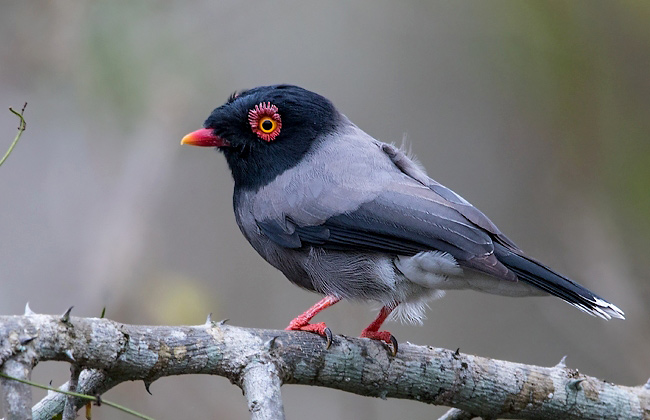
A striking Gabela Helmetshrike in the Caxito Forest, Angola by Dubi Shapiro.
B
Benin
This small country lies between the major Upper Guinea and Lower Guinea forest blocks in a southern extension of sub-Saharan savanna sometimes called the
'Dahomey Gap'. There are lots of waterbirds in the coastal lagoons and lakes along the south coast including African Pygmy-goose and Damara Tern (April to
October), and several small, remnant forest patches in the densely-populated south, the best of which is Lama Classified Forest which supports birds such
as African Cuckoo-hawk, Ahanta Francolin, Western Crested Guineafowl, White-spotted Flufftail, Narina Trogon, Rosy Bee-eater (a non-breeding visitor),
Western Long-tailed (White-crested) Hornbill, several greenbuls including Baumann’s, Grey Longbill, Buff-throated Apalis, West African (Chestnut) Wattle-eye
and Puvel's Illadopsis, and it is a very important site for Red-bellied Monkey, locally known as ‘Zinkaka’, which is endemic to the Dahomey Gap. In the far
northwest next to Burkina Faso is Pendjari National Park, one of the last strongholds for wildlife in West Africa with rather elusive Elephants, Lions,
Leopards and Buffalos, as well as Hippo, Serval, Roan, Korrigum (Topi) and even Cheetah although the total population of the latter species in the WAP
complex which encompasses Parc W (Benin, Burkina Faso and Niger), Arli (Burkina Faso) and Pendjari was estimated to be no more than 20 individuals in 2017.
Birds recorded in Pendjari include Saddle-billed Stork, African Fish-eagle, Beaudouin’s Snake-eagle, Kori Bustard, Black Crowned Crane, Red-throated
Bee-eater, Abyssinian Roller, Northern (Abyssinian) Ground-hornbill and Exclamatory Paradise-whydah, a similar avifauna to that of Parc W in the extreme
north of the country. It is normally dry up north from November to May while the driest time of the year in the constantly humid south is usually December
to March.
Bioko, Equatorial Guinea
Bioko (called Fernando Po during Portuguese colonization) is a rugged mountainous volcanic island rising to 3000 m (nearly 10,000 ft) at Pico Basile
in the Gulf of Guinea 32 km off the west coast of Cameroon. It is about 70 km long and about 30 km across with many plantations having replaced a lot of
the native rainforest. Nearly 200 bird species have been recorded including two endemics: Bioko Batis and Bioko Speirops. There are also at least 28
endemic subspecies including those of Mountain Saw-wing, Grey-necked Rockfowl (Red-headed Picathartes) and Ursula’s Sunbird, while other birds present
include White-tailed Tropicbird, Cameroon Olive-pigeon, Bar-tailed Trogon, Chocolate-backed Kingfisher, Blue-moustached Bee-eater, Grey-headed Broadbill,
Black-necked Wattle-eye, Short-tailed (Bocage's) Akalat, Green Longtail, White-tailed Warbler, Cameroon Sunbird and Shelley's Oliveback. The island is the
best place in the world to see (Bioko) Drills while other mammals include White-bellied (Tree) Pangolin, African Linsang and several monkeys; (Bioko) Black
Colobus, (Pennant’s) Red Colobus, Crowned, (Bioko) Putty-nosed and (Bioko) Red-eared Monkeys, and the rarer Preuss’s Monkey which occurs at higher
altitudes, usually only accessible during January and February, the driest months and best time to visit.
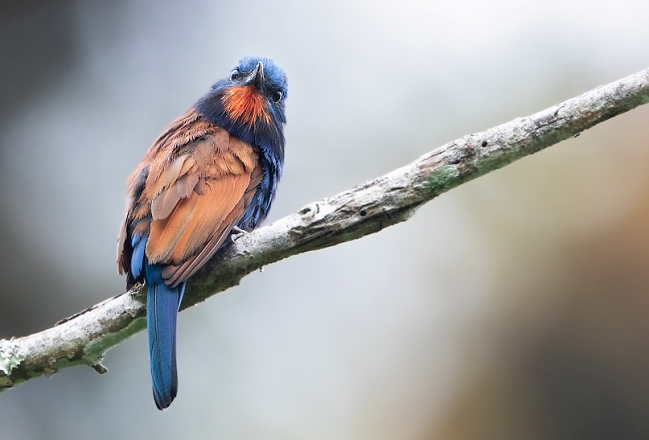
A fine portrait of a Blue-moustached Bee-eater taken on Pico Basile on the island of Bioko by Dubi Shapiro.
Botswana
Many mammals including a good chance of African Wild Dogs, and lots of birds especially in the Okavango Delta, including Slaty Egret, Wattled Crane and
Pel's Fishing-owl, in a country where over a fifth of the terrain lies within unfenced 'protected' areas.
Burkina Faso
This mostly flat, landlocked, low-lying West African country supports a wide range of birds from those of the Sahel in the north through the Sudan-Guinea
Savanna, rivers and lakes to tropical forest species in the south. Species include Arabian and Savile’s Bustards, Black Crowned Crane, Lesser Jacana,
Greater Painted-snipe, Cream-coloured Courser, Black-headed Lapwing, Senegal Parrot, Golden Nightjar, Red-throated Bee-eater, Abyssinian and Blue-bellied
Rollers, Bearded Barbet, Kordofan Lark, Pied-winged Swallow, Blackcap Babbler, Oriole Warbler, Senegal Eremomela, Cricket Warbler, Sennar Penduline-tit,
Chestnut-bellied Starling, Sudan Golden Sparrow, Grey-headed Oliveback and many birds that spend the northern winter in West Africa and the northern
summer in Europe including large numbers of Garganey. The best place for forest birds is probably Beregadougou Hill in the southwest. In the extreme
southeast lies the W - Arli - Singou National Park complex which extends into Benin and Niger and supports specialities such as the isolated West African
subspecies of Golden-tailed Woodpecker. Also south of Ouagadougou, the delightfully named capital pronounced waga-doo-goo, over 300 species have been
recorded at Nazinga Game Ranch along the border with Ghana including 43 diurnal raptors, five nightjars and seven bee-eaters. One of the best wetlands
may still be the Lake Oursi-Lake Darkoye Important Bird Area west of Markoye in the far north. The rainy season makes overland travel tricky so the best
time to visit Burkina Faso is from November to June.
Burundi
This small, densely-populated country still supports 24 of the 36 Albertine Rift Endemics; Handsome Francolin, Rwenzori Turaco, Dwarf Honeyguide, Rwenzori
Batis, Albertine Sooty Boubou, Stripe-breasted Tit, Grauer’s Warbler, Black-faced and Rwenzori Apalises, Grauer’s Swamp-warbler, Red-faced Woodland-warbler,
Neumann’s (Short-tailed) Warbler, Red-collared Mountain-babbler, Yellow-eyed Black-flycatcher, Archer’s Robin-chat, Red-throated Alethe, Blue-headed,
Purple-breasted, Regal and Rwenzori (Stuhlmann’s) Double-collared Sunbirds, Strange Weaver, and Dusky and Shelley’s Crimsonwings. The place to head for
these forest birds is Kibira, contiguous with Nyungwe Forest in neighbouring Rwanda, which also supports Black-billed Turaco, Narina Trogon,
Cinnamon-chested Bee-eater, White-headed Woodhoopoe, Rwenzori Hill-babbler, Equatorial Akalat, Black-faced Prinia, Mountain Oriole, Slender-billed Starling
and Yellow-bellied Waxbill. Other good birding sites include the Rusizi Delta near the capital Bujumbura (lots of waterbirds including African Skimmer);
Lake Rwihinda (Papyrus Yellow Warbler and Papyrus Gonolek); Kigwena-Rumonge Forest NP (Owl-faced Monkey), The Congo-Nile Ridge Park, Nyakazu, Mwishanga
Forest NP and Ruvubu NP (named after the Hippos there this stretch of the Ruvubu River is good for waterbirds, Red-faced Barbet, Papyrus Yellow Warbler and
Papyrus Gonolek). The main wet seasons usually last from February to May and September to November, and the driest times of the year are normally from
June to August and December to January.
C
Cameroon
The richest birdlife in West Africa with many specialities including five endemics; Mount Cameroon Francolin, Bannerman's Turaco, Banded Wattle-eye, Mount
Cameroon Speirops and Bates's Weaver, as well as Scissor-tailed Kite, Black Crowned Crane, Egyptian Plover, Grey Pratincole, Grey-headed Broadbill,
Green-breasted and Mount Kupe Bushshrikes, and Grey-necked Rockfowl, with a chance of Quail-plover and Brown-chested Lapwing.
Canary Islands
The Canary Islands which lie about 100 km off the southern coast of Morocco are the tops of a volcanic mountain range lying beneath the Atlantic Ocean and
although Pico de Teide rises to 12,198 ft (3718 m) on the island of Tenerife and often has snow on it vast areas of that island and those to the east
(Gran Canaria, Fuerteventura and Lanzarote) are barren, solidified lava, moon-like landscapes whereas on the wetter western islands El Hierro, Gomera and
La Palma there are remnant laurel forests. The islands support: at least six endemic bird species: Dark-tailed (Bolle’s) Laurel-pigeon (Tenerife and other
western islands), White-tailed Laurel-pigeon (Tenerife, Gomera and La Palma), Canary Islands Chiffchaff, Fuerteventura Stonechat, Tenerife Blue Chaffinch
and Gran Canaria Blue Chaffinch; three near-endemics - Plain Swift, Berthelot's Pipit and Island Canary; and many endemic subspecies of more widely
distributed birds, including African Houbara (Bustard) (fuertaventurae on Fuerteventura and Lanzarote), African Blue Tit (four subspecies) and
Goldcrest (teneriffae on Tenerife and Gomera). Tenerife supports the greatest diversity of endemic and near-endemic birds. Also present on
Fuerteventura are Egyptian Vulture (majorensis), Cream-coloured Courser, Black-bellied Sandgrouse, Lesser Short-toed Lark and Trumpeter Finch, with
the bustard, courser, lark and finch also on Lanzarote. On ferry crossings - such as between Gran Canaria and Tenerife, and Tenerife and Gomera - it is
possible to see Cory's and Barolo (Audubon's/Little/Macronesian) Shearwaters, Bulwer's Petrel and even (Cramp's) White-faced Storm-petrel (especially in
July when seabird numbers and diversity usually peaks), as well as Short-finned Pilot Whale, Bottlenose Dolphin and Loggerhead Turtle.
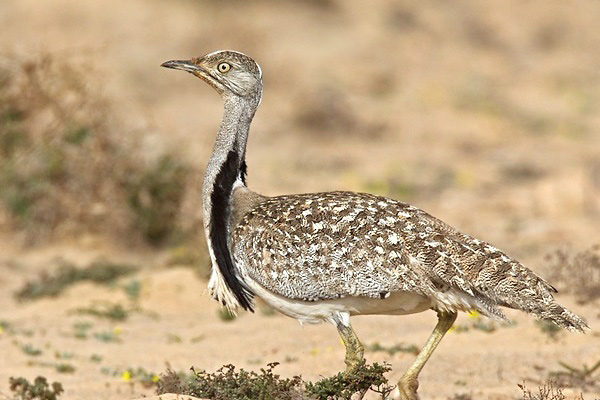
The Canary Islands is still a good place to see African Houbara Bustard. The image of this one was taken on Fuerteventura by Lars Petersson.
Cape Verde Islands
This windy volcanic archipelago of mainly desert and mountains about 350 miles (570 km) west of Senegal, West Africa, is in the Macaronesia ecoregion
along with the Azores, Canary Islands and Madeira, and therefore in the Western Palearctic. It supports just 36 breeding bird species but of the nine
seabirds four are endemic breeding species; Cape Verde (Band-rumped/Madeiran) Storm-petrel, Cape Verde (Fea’s) Petrel, and Boyd’s (Audubon's/Little) and
Cape Verde (Cory's) Shearwaters, while almost all of the landbirds are endemic species or subspecies, the five endemics being Alexander’s Swift, the very
rare Cape Verde (Common) Buzzard, Raso Lark, Cape Verde Swamp-warbler and Cape Verde (Iago) Sparrow, and the endemic subspecies including Purple (Bourne's)
Heron, Common (Alexander's and Neglected) Kestrel, and (Western) Barn-owl. Other birds present include Bulwer's Petrel, (Cramp's) White-faced Storm-petrel
(which can be seen during an overnight stay on Ilheu dos Passeros, off Boa Vista), Red-billed Tropicbird, Western Reef-egret, Brown Booby, Helmeted
Guineafowl, Cream-coloured Courser, Grey-headed Kingfisher (which occurs nowhere else in the Western Palearctic), Greater Hoopoe-lark, Bar-tailed Lark,
Black-crowned Sparrow-lark, Brown-necked Raven and Spectacled Warbler. The best islands to visit are: Santiago, the most bird rich island, mainly for
'Bourne's' Heron, Cape Verde Buzzard (in the mountainous centre of the island overlooking Sierra Malagueta), Grey-headed Kingfisher and Cape Verde
Swamp-warbler, although Praia cliffs is a good place for Red-billed Tropicbirds; Sao Nicolau, mainly for 'Neglected' Kestrel, boat trips to Raso Island for
Raso Lark (which has to be looked for from a boat because only researchers are allowed to land on the island which has colonies of Red-billed Tropicbirds
and Brown Boobies and sometimes attracts roosting Red-footed Boobies), the crossing which is good for Bulwer's and Cape Verde Petrels, Cape Verde
Storm-petrel, and Boyd's and Cape Verde Shearwaters, as well as Atlantic and Pantropical Spotted Dolphins, and Short-finned Pilot Whale, and Ponta do
Barril, one of the best places for seawatching in the archipelago, good for the aforementioned seabirds along with Red-billed Tropicbird and Brown Booby,
with a chance of White-faced Storm-petrel; and Boa Vista, where the Ilheu de Curral Velho, just offshore, supports a breeding colony of Brown Boobies (and
once the last breeding pair of Magnificent Frigatebirds in the Western Palearctic), and Ponta da Varadinha (with a 4WD) where it is possible to see
Red-billed Tropicbirds. The best time to visit is during the driest time of the year, December to June, especially March-April, when Humpback Whales can
also be seen on whale-watching trips.
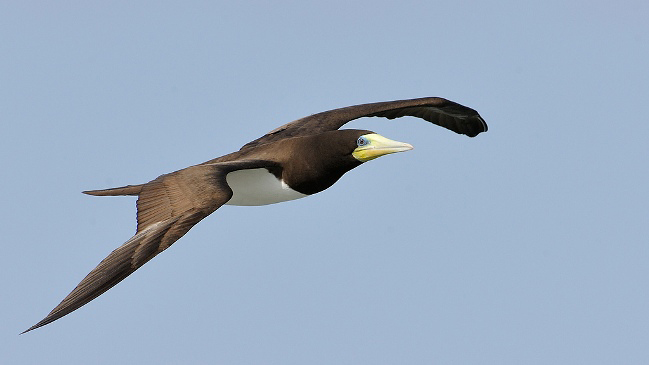
A great image of a Brown Booby captured in the Cape Verde Islands by Steve Rogers.
Central African Republic
Lowland Gorilla, African (Forest) Elephant, African (Forest) Buffalo, Red River Hog, monkeys and spectacular birds such as Grey-necked Rockfowl ...
but this was a troubled country around 2020 so best check with the relevant consulate/embassy/foreign office and travel company/companies before
travelling, and/or check out the facebook page and/or website of Sangha Lodge, the best place
to visit.
Chad
After decades of civil war the deserts, arid plains and mountains of Chad were becoming increasingly accessible to foreign visitors in search of somewhere
new, remote, beautiful and exciting around 2020 but best check with the relevant consulate/embassy/foreign office and travel company/companies before
travelling. In 2017 the bird tour company Birdquest enjoyed a successful trip in search of Nubian Bustard, the near-endemic Niam-niam Parrot,
Black-breasted Barbet, Dunn's and Rusty Larks, Heuglin's Wheatear and Kordofan (Rufous) Sparrow, and they also saw Scissor-tailed Kite, Arabian Bustard,
Black Crowned Crane, Egyptian Plover, Bronze-winged Courser, Abyssinian Roller, Cyprus Wheatear, Blackstart, Brown-tailed Chat, Black Scrub-robin, River
Prinia, Pygmy Sunbird, Chestnut-bellied Starling, Desert and Sudan Golden Sparrows, and Sahel Paradise-whydah, some of which are northern Sahel
specialities. Zakouma National Park in the southeast where Black Crowned Crane, Black-breasted Barbet and millions of Red-billed Queleas occur is one of
the last vestiges of the Sahel despite having being decimated by poaching in the late 20th century, and supports Wild Dog (mainly to the west of the park
in Siniaka-Minia), Cheetah (rare), Lion, Leopard, Spotted Hyaena, Giraffe (the rare Kordofan subspecies), Tiang, Buffalo, Honey Badger, Pallid Fox,
Red-fronted Gazelle, (Western) Greater Kudu and the world’s largest Elephant herd which was about 550 strong in 2018. This park is normally subject to
heavy rains between June and October but at the end of the very dry season impressive numbers of birds and mammals gather around any remaining waters. In
the northeast Addax, Dama Gazelle and Scimitar-horned Oryx are being reintroduced to reserves such as the Ouadi Rime and Ouadi Achim Faunal Reserve where
Nubian Bustard and Dunn's Lark occur. Visiting areas where Kordofan Lark and the near-endemic Chad Firefinch (rare in adjacent north Cameroon) have
been recorded requires special permission. There are hotels and lodges but to see the best birds in the best places it is necessary to camp with the help
of local tour companies equipped with 4x4s during the dry season, especially December to February.
Comoros and Mayotte
There are 30 endemic bird species on the volcanic Comoro Islands and nearby Mayotte that lie between Mozambique and Madagascar, including a green-pigeon,
four scops-owls, Humblot’s Flycatcher which is in a unique genus and occurs only on Grande Comore, a Blue Vanga, four sunbirds and two fodies. In order to
see Grand Comoro Scops-owl and Mount Karthala White-eye it is necessary to camp out near the top of Mount Karthala on Grand Comoro which has the largest
crater of any of the world’s active volcanoes. Also on this island are an endemic subspecies of Madagascar (Malachite) Kingfisher and forms of Frances’s
Sparrowhawk, Cuckoo Roller, Madagascar Spinetail and Madagascar Paradise-flycatcher. Around the coasts of the two main islands of Mayotte it is possible to
see White-tailed Tropicbird, Sooty and Bridled Terns, and Brown Noddy, and off the coast of Moheli the endemic temptator form of Persian
(or Arabian) Shearwater, Lesser Frigatebird and Masked Booby. The dry season usually lasts from May to November and the end of this period is the best time
for birds.
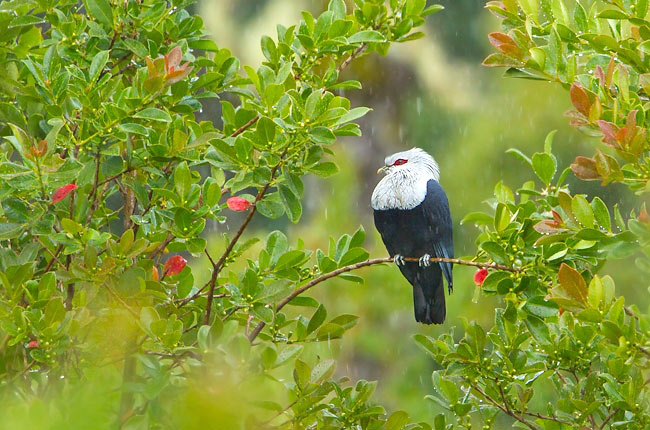
A great image of the rather fancy Comoro Blue-pigeon taken on Mount Karthala on the island of Grand Comoro by Dubi Shapiro. This species occurs only on the Comoros and Aldabra.
Congo, Democratic Republic of (formerly Zaire)
See Democratic Republic of the Congo (formerly Zaire), below.
(Republic of the) Congo
In the remote northwest of this country it is possible to see Western Lowland Gorillas near Ngaga Camp in Odzala-Kokoua National Park, accessible by air
from Brazzaville the capital. Around other camps such as M’boko, visitors can see Forest Elephants and Forest Buffalos. Eleven diurnal primates live in
the park and other mammals include Allen's Swamp Monkey (Lango Camp), Red River Hog, Hammer Bat, Africa’s largest fruit bat, Angwantibo and Potto.
Nearly 450 species of bird have been recorded, 330 breeding, including Congo Serpent-eagle, Red-chested Owlet, Black-collared Lovebird, White-bellied
Kingfisher, Blue-headed Bee-eater, Grey-headed Broadbill, Angola and West African Batises, Eastern Wattled Cuckooshrike, Black-throated Apalis,
Black-collared Bulbul, many greenbuls including Falkenstein’s, and Yellow-capped Weaver. Congo is a low-lying country on the equator between Gabon and
the Democratic Republic of the Congo where over 50% of the land surface is still covered by rainforest and another national park in the far north,
Nouabale-Ndoki, which is contiguous with Dzanga-Ndoki National Park in the Central African Republic, supports the likes of Sandy Scops-owl, Brown Nightjar,
Zenker’s Honeyguide and Preuss’s Weaver. In the far south birds characteristic of the flooded forests in the Kouilou region include White-crested
Tiger-heron, Maned Owl and Vermiculated Fishing-owl while other species present in the Lower Kouilou Basin bordered by the Atlantic coast include Damara
Tern, Black-headed Bee-eater, African River Martin (September-November) and Loango Weaver. The river martin and Rosy Bee-eater breed in Conkouati National
Park in the extreme southwest and the Lefini Faunal Reserve on the Teke Plateau in the southeast next to Gabon supports Finsch’s Francolin, Congo Moor-chat
and Black-chinned Weaver with Brazza’s Martin in neighbouring localities. There are two rainy seasons, usually from March to May, and from September to
November, when Forest Elephants visit bais more often, and two drier seasons, normally from December to February, and from June to September, when ripe
fruits, especially in February and August, attract Gorillas, making them more mobile but once located easier to see as they leave the thick ground
vegetation and take to the trees.
D
Democratic Republic of the Congo (formerly Zaire)
This huge country supports a tremendous variety of wildlife but it is a very difficult place in which to see much of it, especially since it was a troubled
country around 2020 so best check with the relevant consulate/embassy/foreign office and travel company/companies before travelling. One place it is
sometimes possible to visit is Lomako-Yokokala Faunal Reserve deep in the heart of the Congo where it is possible to see the mythical Congo Peafowl, one of
the shyest and most difficult birds to see on planet Earth. In contrast, our closest next of kin, the rare Bonobo, which also occurs here, is easy to see
thanks to researchers habituating several groups. Getting there is not easy. Once permits (‘ordres de mission’) have been obtained from different ministries
it will probably be necessary to charter a plane for the 700 km flight to Basankusu in the province of Equateur then a dugout for a 170 km river trip then
it is a 12 km trek to a clearing where there is no accommodation so all camping gear, food etc. will need to be factored into what is in effect an
expedition, or you could just contact the tour company Birdquest who visited in 2015 and 2017. They also saw Congo Serpent-eagle, Forbes’s Plover,
Yellow-throated Cuckoo, Sladen’s Barbet, Blue Cuckooshrike, Bates’s Paradise-flycatcher, Congo Sand Martin, Congo and Violet-tailed Sunbirds, Cassin’s
Malimbe, Bob-tailed Weaver, Woodhouse’s Antpecker and Grant’s Bluebill, as well as Black Mangabey, Angolan Pied Colobus, Wolf’s Monkey and Red River Hog.
September is the time to go even though the wet season in the north of the country usually lasts from April to October. Congo Peafowl is one of 17 endemic
birds, the others being Prigogine’s (Itombwe) Nightjar (small range in east), Congo Bay-owl (small range on Itombwe Massif in east), Grauer’s Cuckooshrike
(east), Yellow-crested Helmetshrike (west Albertine Rift in east), Bedford’s Paradise-flycatcher (east), Lendu (White-browed) Crombec (east), Kabobo Apalis
(east), Prigogine’s Greenbul (small range in east), Chapin’s Mountain-babbler (east), Itombwe (Chapin’s) Flycatcher (east), Prigogine’s Double-collared
(Marungu Highlands in far southeast) and Rockefeller’s (east) Sunbirds, Lufira Masked (southeast), Upemba Masked (southeast) and Yellow-legged (Ituri
Forest in northeast) Weavers, and Black-lored Waxbill (southeast).
Seeing an Okapi in the wild is another matter altogether although there is an Okapi Fauna Reserve run by The Okapi Conservation Project based at Epulu in the northeast. The reserve encompasses 13,700 square kilometers of the Ituri Forest which also supports the largest populations of Chimpanzees and Forest Elephants in the country as well as 13 primates including Owl-faced monkey, Bongo, and birds such as Spot-breasted Ibis, Chocolate-backed Kingfisher, Blue-throated Roller, Yellow-footed Flycatcher and Blue-billed Malimbe.
Djibouti
Despite its small size, just 20,000 square km or so, and often intense heat, Djibouti, a former French colony with a continued French military presence,
has a bird list of over 360 species, thanks mainly to its location at the mouth of the African Rift Valley, the narrowest point along the Red Sea (the Bab
el Mandeb straits) and close to the Arabian Peninsula, just 28 km away. It therefore has a fascinating mix of African and Middle Eastern species and is on
a major migration flyway to boot. The 370 km long coastline has areas of mangrove bordered by large mudflats while inland mountains rise to about 2000 m
above semi-desert, acacia bush land, savannas and patches of Juniper forest where the birds include the endemic Djibouti Francolin and restricted-range
specialities such as White-eyed Gull, White-cheeked Tern, Somali Bulbul, Gambaga Flycatcher, Somali Starling, Arabian Golden and Somali Sparrows, an odd
sunbird tentatively named Toha Sunbird and a yellow-breasted and yellow-tailed form of Green-winged Pytilia that may prove to be a distinct species. Other
birds present at various times of the year include Persian Shearwater, Greater Flamingo, Abdim’s Stork, Goliath Heron, Pink-backed Pelican, Verreaux’s
Eagle, Crab Plover, Sooty Gull, Blue-cheeked Bee-eater, Hemprich’s Hornbill, Nubian Woodpecker, Greater Hoopoe-lark, Grey-headed Batis, Ethiopian Boubou,
Blackstart, Black Scrub-robin, White-crowned (Black) Wheatear, Graceful Prinia, Basra Reed-warbler, Brown Woodland-warbler, Arabian, Menetries’s and
Upcher’s Warblers, Nile Valley Sunbird and Rüppell's Weaver. There are quite a lot of mammals too, including Hamadryas Baboon, Speke's Pectinator, Dorcas
and Soemmerring's Gazelles, Salt's Dik-dik and Klipspringer. The best time for birds is arguably December to February when birds which breed far to the
north spend the northern winter in the country.
E
Egypt
The main tourist attractions in Egypt are the Great Pyramids and Sphinx of Giza, the Egyptian Museum which hosts Tutankhamun’s treasures, the
Temples of Karnak and Luxor, and the tombs of the Valley of the Kings, but visitors interested in birds may wish to turn their eyes elsewhere,
especially those interested in birds which are difficult or impossible to see elsewhere in the Western Palearctic, birds such as White-eyed Gull
(which is difficult to see anywhere else in the world!), Goliath and Striated Herons, Yellow-billed Stork, Brown Booby, Pink-backed Pelican,
Sooty Falcon, Greater Painted-snipe, Senegal Thick-knee, Crab, Kittlitz’s and African Three-banded Plovers, Sooty Gull, Saunders's Tern (at a
colony near Ras Sedr on the Sinai Peninsula), African Skimmer, Chestnut-bellied and Lichtenstein's Sandgrouse, African Collared and Namaqua Doves,
Senegal Coucal, Desert Tawny Owl, Hooded Wheatear, African Pied Wagtail, Nile Valley and Palestine Sunbirds, and Sinai Rosefinch. There is even an
outside chance of seeing the elusive Yellow Bitterns which were discovered breeding in mangroves along Egypt's southern Red Sea coast at Lahami
south of Marsa Alam in 2012-2013 and were still present in 2017. One hour south is the site for Lappet-faced Vulture, at El Shalateen on the border
with Sudan. The spring (especially mid-April to early May) and autumn (September-October) migration periods are the best times to visit, with the
possibility of large numbers of storks, raptors, shorebirds and passerines, especially at the migration bottlenecks of Suez, Hurghada and Zaranik.
The Red Sea is rich in marine life and there are many places where scuba-diving and snorkelling can be spectacular experiences.
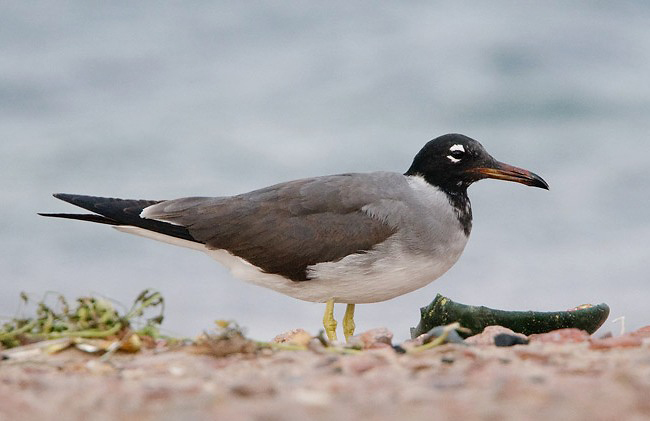
Egypt is the best place in the world to see White-eyed Gull. Image by Michael McKee.
Equatorial Guinea
This very small country in West Africa has a mainland area known as Rio Muni and five inhabited islands in the Gulf of Guinea including Bioko (see above),
where the capital Malabo is situated, 34 km west of Cameroon, and Annobon which is 565 km southwest of Bioko and 340 km west of Gabon. In between these
two islands are São Tomé and Príncipe, a separate country (see below). One of the top birding areas on the mainland is around Djibloho where Sjostedt’s
Owlet, Yellow-throated Cuckoo, Fiery-breasted Bushshrike and Rufous-bellied Helmetshrike occur. In the middle of the mainland lies Monte Alen National Park
which supports Zenker’s Honeyguide, Gabon (Verreaux’s) Batis, Tessmann’s Flycatcher, Black-capped and Uganda Woodland-warblers, and Grey-necked Rockfowl
which also occurs in Nsork Highlands National Park in the southeast corner of the country. Chimpanzees, Gorillas, and Forest Elephants also live on the
mainland but the human population tripled after 1980 and the economic boom following the discovery of oil in the region financed the development of roads
and urban areas leading to the usual habitat loss and so on.
Eritrea
About half (17) of the 35 ‘Abyssinian' endemic birds, confined to Ethiopia and Eritrea, occur in this small country; White-collared Pigeon, Rouget’s Rail,
Wattled Ibis, Banded Barbet, Abyssinian Woodpecker, Black-winged Lovebird, Ethiopian Black-headed Oriole, White-backed Black Tit, Blanford’s Lark,
Ethiopian Cisticola, White-billed Starling, Ethiopian (Groundscraper) Thrush, Abyssinian Slaty-flycatcher, White-winged Cliff-chat, Ruppell’s Chat,
Rusty-breasted (Red-breasted) Wheatear and Yellow-rumped Seedeater. There are also many near-endemics, species restricted to the Horn of Africa (Eritrea,
Ethiopia, Somalia, Djibouti and easternmost Sudan) and they include Erckel's Francolin, White-cheeked Turaco, Thick-billed Raven, White-headed and
White-rumped Babblers, and Somali Starling, while Collared Kingfisher occurs in mangroves along parts of the 1000 km long Red Sea coastline (the only place
in Africa where this otherwise widespread Asian species occurs) and other notable species include Menetries’s Warbler (a passage migrant and winter
visitor), Pale Sparrow (a winter visitor) and Cinereous Bunting (an uncommon passage migrant). More widespread birds range from Crab Plover, White-eyed
Gull and White-cheeked Tern through Steppe and Tawny Eagles, several sandgrouse, Abyssinian Roller and Black Scrub-robin to Greater Hoopoe-lark. Mammals
include Abyssinian Wild Ass (on coastal plains), Caracal, Spotted Hyena, Greater Kudu, Dorca’s and Soemmering's Gazelles, and Hamadryas/Sacred Baboon,
while offshore there are Dugongs in the Gulf of Zuba and southern Dahlak Islands (along with three species of turtle), Whale Sharks, Manta Rays and a wide
variety of coral reef fish. The best times to visit are during the migration periods (February to April and September to November) although some species
are more likely to be seen during the June to October highland rainy season.
Eswatini (Swaziland)
This landlocked, little kingdom between Mozambique and South Africa is one of the best places to look for the rare Blue Swallow, a few pairs of which
occur between late September and March in Malalotja NR on the edge of the Drakensberg Escarpment, and there and elsewhere in the western highlands it is
also possible to see Southern Bald Ibis (at colonies June to October), Striped Flufftail, Denham’s Bustard, Black-winged Lapwing, Ground Woodpecker,
Buff-streaked Chat, Cape and Sentinel Rock-thrushes, lots of cisticolas and Gurney’s Sugarbird, as well as Black Wildebeest, Blesbok and Oribi. In the
north and east at places like Hlane NP and its surrounding reserves it is possible to see Gorgeous Bushshrike, Rudd’s Apalis, Black-bellied Starling,
Purple-banded Sunbird and Pink-throated Twinspot. Mlawula NR on the northeastern border with Mozambique supports White-backed Night-heron, African
Finfoot, Bronze-winged Courser, Thick-billed Cuckoo and Retz’s Helmetshrike. A good place for mammals is Mbuluzi Game Reserve, part of the wider Lubombo
Conservancy, where there are Nile Crocodiles, Hippos, Giraffes, Zebras and Nyalas, and the birds include Purple-crested Turaco and Giant Kingfisher.
December to February is probably the best time to visit, certainly for Blue Swallow, although it is also the time when resident species and inter-African
migrants such as cuckoos, weavers and widowbirds are usually in full breeding plumage.
Ethiopia
18 endemic birds, 35 including Eritrea, birds such as Blue-winged Goose, Rouget's Rail, Ruspoli’s Turaco, Spot-breasted Lapwing, Ethiopian (Stresemann’s)
Bushcrow and Abyssinian Catbird, plus numerous near-endemics and other more widespread spectacular species including Vulturine Guineafowl, Arabian Bustard
and Golden-breasted Starling, as well as some amazing localized mammals such as Gelada and Sacred Baboons, Ethiopian Wolf, Beisa Oryx and Gerenuk, although
most classic African plains mammals are not likely to be seen.
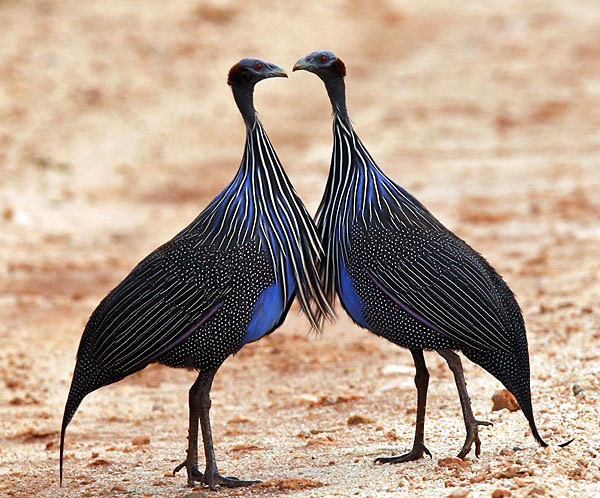
Vulturine Guineafowls in Ethiopia by Lars Petersson, a bird that occurs only in Ethiopia, Somalia, Kenya and northeast Tanzania.
G
Gabon
Lowland Gorilla, a chance of Chimpanzee and Mandrill, Red River Hog and lots of spectacular birds including Long-tailed Hawk, Grey Pratincole, Pel's and
Vermiculated Fishing-owls, Black-headed and Rosy Bee-eaters, African River Martin and Grey-necked Rockfowl, in a lovely, friendly, sparsely populated and
still largely forested country.
(The) Gambia
Easy birding in a small country with spectacular localized birds such as Egyptian Plover, White-backed Night-heron, and Abyssinian and Blue-bellied
Rollers amongst more widespread African icons including African Fish-eagle, Black and Goliath Herons, and Red-throated and Swallow-tailed Bee-eaters.
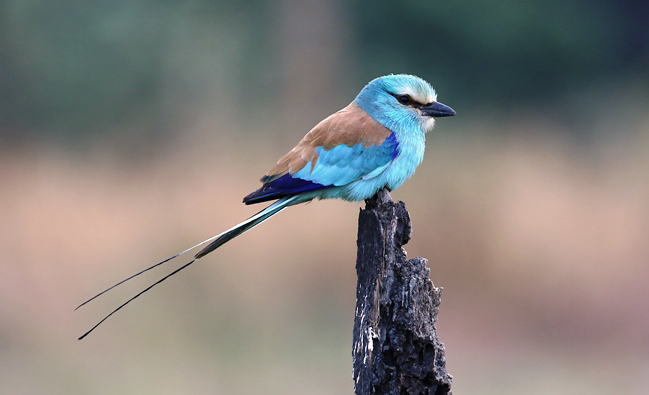
This stunning image of an Abyssinian Roller was taken in Gambia by Nick Cobb.
Ghana
The easiest place in the world to see the extraordinary White-necked Rockfowl, one of the 12 out of 14 Upper Guinea Forest Endemics present, also
including White-breasted Guineafowl, Rufous Fishing-owl, Brown-cheeked Hornbill, Western Wattled Cuckooshrike, Black-headed Rufous-warbler, Green-tailed
Bristlebill, Yellow-bearded Greenbul, Rufous-winged Illadopsis, Copper-tailed Starling, Nimba Flycatcher and Red-fronted Antpecker, while other
spectacular species include Egyptian Plover, Blue-breasted and Chocolate-backed Kingfishers, Black, Blue-moustached and Rosy Bee-eaters, Abyssinian and
Blue-bellied Rollers, and Rufous-sided Broadbill.
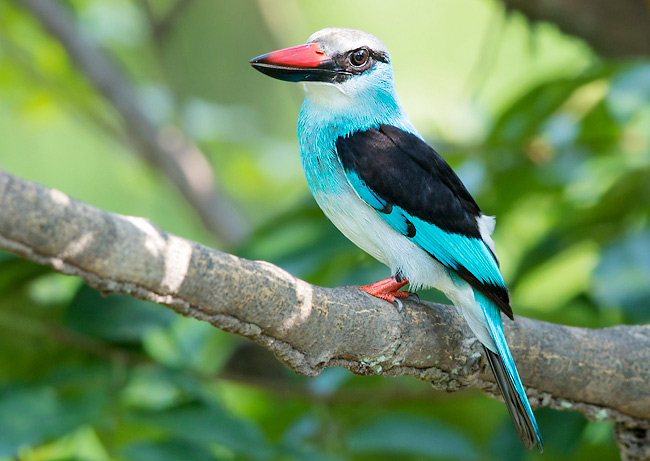
The stunning Blue-breasted Kingfisher occurs across west Africa to Uganda. This image was captured in Mole National Park in Ghana by Dubi Shapiro.
Guinea-Bissau
This low-lying former Portuguese colony is situated in West Africa between Guinea and Senegal with an Atlantic Ocean coastline of 350 km. While the tourist
infrastructure is basic this is a small, relatively safe, poor, sparsely populated country with large expanses of wild spaces where a rich variety of birds
that lives in the transition zone between Guinea forest and sub-Sahelian savanna and where, in 2017, more than 25% of the land was under conservation
management, thanks to the hard work of the Institute for Biodiversity and Protected Areas (IBAP). The huge areas of swamps that are sometimes drained for
intensive agriculture in the west are known as ‘Bolanhas’ (from Bissau Creole ‘rice paddies’) and they support many waterbirds, particularly during the
northern winter when millions of birds arrive in the country, more especially along the coasts and islands including the Bijagos Archipelago which also
supports a significant population of Timneh (Grey) Parrots (on the island of Joao Vieira), West African Manatee, Hippopotamus, Atlantic Hump-backed Dolphin
and five species of nesting turtles including the largest numbers of Green Turtles in the eastern Atlantic with 7000 to 29,000 nests laid annually. The
peak month is November when the hatchlings attract numerous Palm-nut Vultures. Other migrant and resident birds include the localised Turati’s Boubou, as
well as Scissor-tailed Kite, Black Crowned Crane (peak numbers in the Bolanhas between December and March), Egyptian Plover, Rock Pratincole, Abyssinian
and Blue-bellied Rollers, Ussher’s Flycatcher, Pied-winged Swallow and Bronze-tailed Starling. There are also Chimpanzees in Cantanhez National Park which
also supports Chattering Yellowbill, Western Piping and Yellow-casqued Hornbills, and White-tailed Alethe. The best time to visit is December to May
because the very wet West African monsoon (June to November) means that the Bijagos archipelago and some of the more interesting southern Protected Areas
are very difficult if not impossible to access.
K
Kenya
The best overall wildlife experience in the world and therefore A Top Ten Destination, thanks to the presence of so many of
Africa's and the world's most spectacular mammals, birds and coral reef fish, the birds including vast flocks of flamingos, ostriches, African Fish-eagle,
Secretary Bird, Saddle-billed Stork, Kori Bustard and numerous East African specialities such as Vulturine Guineafowl, Crab Plover, Sokoke Scops-owl,
Somali Bee-eater, Golden-winged Sunbird, Golden-breasted Starling and Golden Pipit, so many easy-to-see birds it is possible to see over a hundred species
in a day at several locations, well over 500 in just two weeks and over 800 in a month, along with over 60 species of mammal, all in some wonderful
settings.
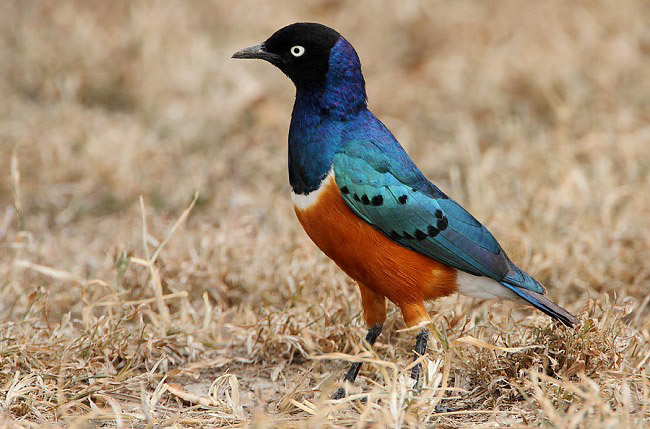
An aptly-named Superb Starling in Kenya by Steve Garvie.
L
Lesotho
The tiny, landlocked, mountain Kingdom of Lesotho is a good place to look for the highland Drakensberg avian specialities of southern Africa. The most
accessible site in the region for these birds is Sani Pass which although technically in South Africa is a major route into Lesotho and a good place for
Drakensberg Rockjumper, Gurney's Sugarbird and Drakensberg Siskin, as well as Grey-winged Francolin, Southern Bald Ibis, Cape Vulture, Lammergeier, Cape
Eagle-owl, Ground Woodpecker, Sentinel Rock-thrush, Buff-streaked Chat, Barratt's Warbler, Bush Blackcap and Mountain Pipit, some of which can also
be seen at Liqobong on the Mechachaneng Ridge where there is a Cape Vulture colony and other cliff-nesting birds such as Jackal Buzzard (the most numerous
raptors at high altitudes, probably due to the abundance of prey in the form of endemic Sloggett's Ice Rats), and at Mafika-Lisiu Pass in the Maluti
Mountains, below which lies Bokong NR where there is an ossuary, an area of large slabs of flat rock used by Lammergeiers to drop and break large bones on.
Below Bokong look out for Malachite Sunbirds nectaring on red-hot pokers (Kniphofia). In the east of the country Yellow-breasted Pipit occurs in
Sehlabathebe NP which is contiguous with South Africa’s Ukhahlamba-Drakensberg Park.
Liberia
After many years of civil wars, military coups, ‘blood diamonds’ - supporting the insurgency in neighbouring Sierra Leone with weapons and training in
exchange for diamonds - this small West African country was at peace again in the mid-2010s. Along the 600 km Atlantic coastline are mangroves, sandbars
and lagoons. Inland the coastal plains rise to rolling plateaux and low mountains and as recently as the early 2000s rich forest still covered some 40%
of the land, enough to support all 14 Upper Guinea Endemic Bird Area species and 184 species of the Guinea Congo forest biome, birds which occur at
places such as Mount Nimba where large scale ongoing iron ore mining continues to reduce the height of the mountain (from 5748 ft (1752 m)), and remove
and degrade much of the remaining forest. Another top birding site is Sapo National Park, Liberia's first and only fully protected area at the heart of
the largest remaining block of Upper Guinean Forest in west Africa, providing habitat for species that need to range over large areas such as ‘Forest’
Elephants. The 14 Upper Guinea specialities are White-breasted Guineafowl, Rufous Fishing-owl, Brown-cheeked Hornbill, Western Wattled Cuckooshrike,
White-necked Rockfowl, Sierra Leone Prinia, Sharpe's Apalis, Black-headed Rufous-warbler, Green-tailed Bristlebill, Yellow-bearded Greenbul, Rufous-winged
Illadopsis, Copper-tailed Starling, Nimba Flycatcher and Gola Malimbe. Recent research suggests Liberian (White-winged) Greenbul may merely be an aberrant
form of Icterine Greenbul. With so much forest intact Liberia also supports the last remaining viable populations of Pygmy Hippopotamus and ‘West
African’ Chimpanzee. Wet summers usually last from April to November making birding difficult and dust-laden harmattan winds which often blow across the
country from the Sahara between December and March don't help much either.
M
Madagascar
Nearly 120 endemic birds and 12 shared only with the Comoros, some belonging to four endemic families; three mesites, five ground-rollers, four asities and
11 tetrakas, and some others including 11 couas, 17 vangas, a sandgrouse, two flufftails, an ibis, a jacana, a fish-eagle, a lovebird, three rock-thrushes,
two fodies, two weavers and a wagtail, as well as over 100 species of lemur including the beautiful sifakas, the loud Indri and the confiding Ring-tailed Lemur, all
in some of the strangest habitats on the planet.
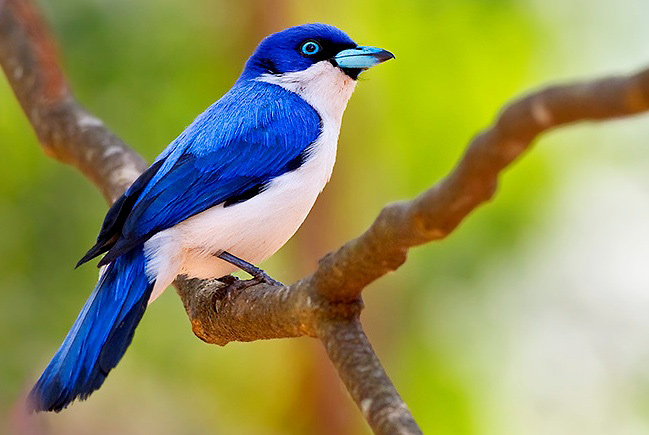
Madagascar Blue Vanga by Dubi Shapiro, one of many unique and stunning birds on the island of Madagascar.
Madeira
Two endemic breeding seabirds; Desertas (Fea's) Petrel and the very rare Zino's Petrel, as well as Bulwer's Petrel, (Madeiran) Band-rumped and White-faced
Storm-petrels, and Barolo Shearwater, make Madeira a great place for seabirds and they can be seen very well on Zodiac boat trips during which there
is also a chance of a wide range of cetaceans. There are also two endemic landbirds; Madeira (Trocaz) Laurel-pigeon and Madeira Firecrest, near-endemic
Plain Swift, Berthelot's Pipit and Island Canary, and some endemic subspecies.
Malawi
This small, densely-populated country is surprisingly birdy and a good place to see the likes of Lesser Jacana, African Skimmer, Pel’s Fishing-owl,
Pennant-winged Nightjar, Lilian's Lovebird, Böhm's Bee-eater, Racquet-tailed Roller, Green-headed Oriole, White-winged Apalis, Blue Swallow, Boulder Chat,
Babbling Starling, Red-tufted Sunbird and Vincent's (Cape) Bunting. There are many Miombo woodland specialists and one endemic; Yellow-throated Apalis, as
well as a fine range of mammals, not least African Elephant, Hippopotamus, Sable and Roan.
Mali
This large, mainly flat, land-locked country is most famous in wildlife circles for the Niger floodplain which lies in the middle of the country between
the historic cities of Djenne and Timbuktu. The extent of the flood varies considerably from year to year but when it is very wet it is a paradise for
birds, being a very important breeding area for African waterbirds and wintering ground for migrant Palearctic waterbirds which have included estimates of
half a million Garganeys, 200,000 Northern Pintails, 150,000 Ruffs and 20,000 Glossy Ibises. The richest area in such years is often Lac Debo near Mopti.
To the north almost half of the country is dominated by the Sahara whereas the south is savanna country where the near-endemic Mali Firefinch occurs in
suitable habitat (rocky outcrops) in and around the capital Bamako and at Dogon Cliffs, a tourist attraction near the town of Sanga, along with
Fox Kestrel, Mocking Cliff-chat and Neumann’s (Red-winged) Starling. Some other special Mali birds include Scissor-tailed Kite, Egyptian Plover, Grey
Pratincole, Cream-coloured Courser, Red-necked Nightjar, Red-throated Bee-eater, Abyssinian and Blue-bellied Rollers, Sahelian (Little Grey) Woodpecker,
Sun Lark, Black Scrub-robin, and Desert and Sudan Golden Sparrows. In the south the dry season normally lasts from November to April and February is the
best time to be in the Niger floodplain because the birds are concentrated on the remaining water.
Mauritania
This large country to the north of Senegal is about two thirds Sahara one third Sahel but the most important site for birds is the Banc d’Arguin National
Park which protects 40% of the 750 km long Mauritanian Atlantic coastline between Nouakchott and Nouadhibou and has been known to support more than two
million migrant shorebirds, the largest concentration of such birds in Africa. However, most visiting birders are after adding several species that have
restricted ranges in the Western Palearctic (WP) to their WP lists. Using the epic nine-volume Handbook of the Birds of Europe, the Middle East, and North
Africa the definition of the WP means that these species must be seen north of 21°N and, bizarrely, in the air above the islands and maritime areas of the
Banc d’Arguin. Along the coast the WP specialities are Long-tailed (Reed) and White-breasted (Great) Cormorants, Grey-headed Gull and West African Crested
(Royal) Tern, while other species include Brown Booby and Western Reef-egret. Inland the WP goodies are African Collared and Namaqua Doves, (African) Grey
Woodpecker, Dunn’s Lark, Cricket, Isabelline (Western Olivaceous) and Western Orphean Warblers, and Sudan Golden Sparrow while other possibilities include
Blue-naped Mousebird and other birds present are Lanner Falcon, Lichtenstein’s Sandgrouse, Speckled Pigeon, Laughing Dove, Greater Hoopoe-lark, Bar-tailed
and Desert Larks, Black-crowned Sparrow-lark, Pale Rock Martin, White-crowned Wheatear, Fulvous Babbler, African Desert Warbler, Chestnut-bellied Starling,
Desert Sparrow and House Bunting, and mammals include Fennec Fox. Two of the best wadis are north of the settlement of Ouadane, a green oasis in the
otherwise barren landscape to the east of the town of Atar where it is possible to arrange the required 4WD with driver.
Mauritius, Reunion and Rodrigues
Since Mauritius was discovered by modern man in the late 1500s all but 3% of the natural vegetation has been destroyed and several species have become
extinct, notably the Dodo which was wiped out by the 1660s. Most of the surviving endemic birds are endangered too, especially the Pink Pigeon, the
kestrel and the Echo Parakeet, while the other five endemics are all declining; a cuckooshrike, a bulbul, a rare white-eye, a relatively 'common' white-eye
and a fody. Other birds present on the island include Mascarene Swiftlet, Mascarene Martin, the rare Mascarene Paradise-flycatcher (which also occurs on
Reunion) and several introduced species. One of the best places to see the endemic landbirds is Black River Gorges National Park although Bras d'Eau
National Park is better for the paradise-flycatcher. Seawatching is arguably best from La Roche qui Pleure on the south coast where the possibilities
include Barau's, Herald/Trindade and Mascarene Petrels. From the north coast it is possible to telescope Gunner's Quoin Island although it is better to
hire a boat to visit the island and the surrounding waters in order to see Red-tailed and White-tailed Tropicbirds, and Masked Booby. Other possible
seabirds around the island include Wedge-tailed Shearwater, Brown and Lesser Noddies, and Sooty Tern. Offshore, Round Island, which can be viewed by boat,
supports nesting Herald/Trindade Petrels, the largest colony of Red-tailed Tropicbirds in the Indian Ocean (2000-2500 pairs), lesser numbers of
White-tailed Tropicbirds and large numbers of Wedge-tailed Shearwaters, as well as an endemic boa and skink.
The heavily degraded island of Rodrigues supports two endemic landbirds; a warbler and a fody, both of which are rare in some high vegetated gulleys, as well as Rodrigues (Golden) Flying Fox.
The forested volcanic mountains of Reunion are where Barau’s and Mascarene Petrels nest, and they also support six endemic landbirds; a harrier, a cuckooshrike, a bulbul, two white-eyes and a stonechat, all of which can be seen in remnant natural forest along the trail from La Roche Ecrite, about half an hour by road from St Denis. Other landbirds present there include Mascarene Paradise-flycatcher, while seawatching near dusk from the the St. Etienne rivermouth area may reveal Barau's and Mascarene Petrels, and Tropical Shearwaters, massing before flying inland to their nesting sites high among the volcanic peaks. The best time to visit these islands is October-November.
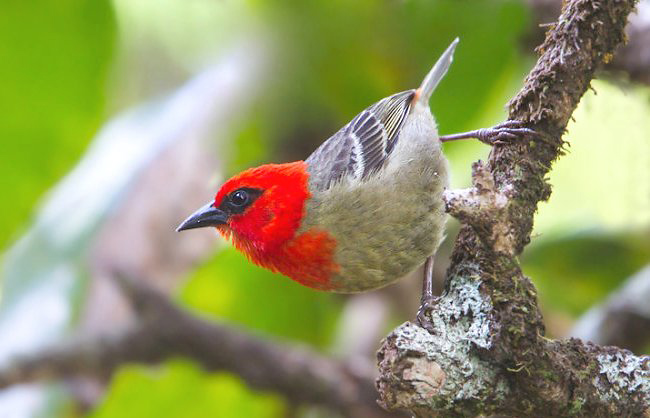
Mauritius Fody by Dubi Shapiro.
Mayotte
See See Comoros and Mayotte, above
Morocco - Southern
All of North Africa's endemic birds except for Algerian Nuthatch, including Moussier’s Redstart, as well as Northern Bald Ibis, Cream-coloured Courser,
Blue-cheeked Bee-eater, a dozen larks, several wheatears and Desert Sparrow.
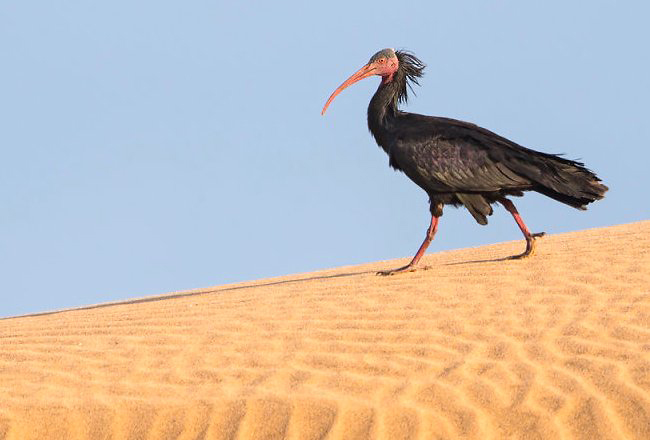
Northern Bald Ibis in Tamri National Park, Morocco, by Dubi Shapiro.
Mozambique
African Pitta, Green-headed Oriole and Miombo woodland specialities, as well as some mammals, mostly reintroduced after a slaughter, and a long coast
with Crab Plovers, Manta Rays, Whale Sharks and numerous colourful other fish on some of the most pristine coral reefs in the world.
N
Namibia
Only one endemic bird; Dune Lark, but 16 shared only with Angola including the unique Ground Batis (White-tailed Shrike), Rockrunner, Angola Cave-chat and
Cinderella Waxbill, and 25 shared only with South Africa including Blue Crane, Karoo Bustard, African (Jackass) Penguin, Hartlaub’s Gull, Black Harrier and
seven larks, as well as many of Africa's classic mammals, such as Lion, Leopard, Cheetah, African Elephant, Giraffe, Gemsbok and Black Rhinoceros, all in
some stunning, mainly desert, scenery.
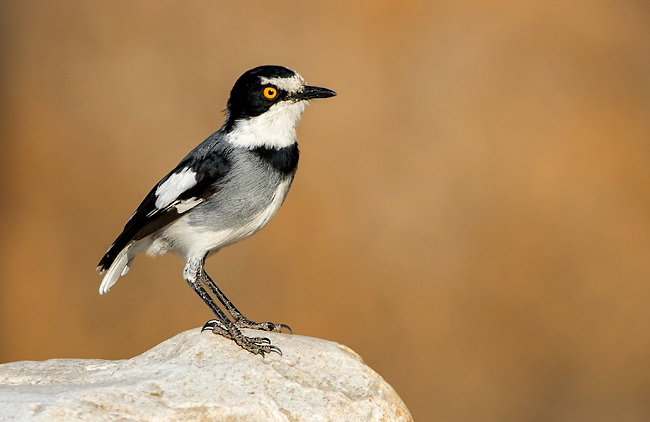
The striking Ground Batis or White-tailed Shrike by Dubi Shapiro. This unique species occurs only in Namibia and Angola where this image was captured at Renato Grade.
P
Prince Edward Islands
This remote, rarely visited archipelago over 1000 miles southeast of South Africa in the subantarctic Indian Ocean has two main islands; Marion and Prince
Edward which support Crozet Shag (also present on nearby Crozet Islands), Black-faced Sheathbill and Kerguelen Tern, as well as possible Gentoo, King,
Macaroni and Southern Rockhopper Penguins. A South African ‘Special Nature Reserve’, activities on the islands are restricted to research and conservation
management and the only human inhabitants are the staff of a research station although it is possible to visit the islands on very occasional
cruises.
R
Republic of the Congo
See See (Republic of the) Congo, above
Reunion
See Mauritius, Reunion and Rodrigues, above
Rodrigues
See Mauritius, Reunion and Rodrigues, above
Rwanda
Read Gorillas in the Mist, the wonderful book by Dian Fossey who carried out most of her research here, try to get some sleep, meet the rangers in
the morning, join a small group of fellow trekkers and head up the switchback trails through the lush, damp, sometimes misty, forest. One to five hours
later you may meet some Mountain Gorillas and the first to emerge from the undergrowth is often the magnificent silverback, and seeing him for the first
time and watching him and his family for the allotted hour, just a few paces away, may well turn out to be your best wildlife experience ever. Birders
may also be interested in the 25 (out of 36) Albertine Rift Endemics present, including Rwenzori Turaco, Neumann’s (Short-tailed) Warbler, Red-collared
Mountain-babbler and Purple-breasted Sunbird.
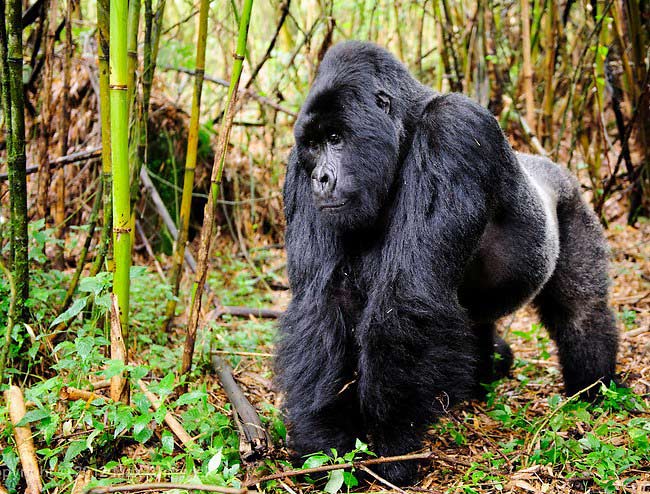
A magnificent silverback Mountain Gorilla in Rwanda by Max Chiswick. Sometimes even fanatical birders have to admit the 'bird-of-the-day' is a mammal.
S
São Tomé and Príncipe
These two small islands in the Gulf of Guinea, often included in, or offered as an extension to, tours to Gabon, support 28 endemic bird species and it is
possible to see all of them during a short visit although some are very rare. The hardest to see on São Tomé are Dwarf Ibis, the short-tail and, especially,
the fiscal and grosbeak. All four are most likely to be seen on a camping trip with local guides to the best remaining forest on Monte Carmo/Carvo in the
remote south of the island. The other 14 of the 18 endemics on São Tomé are an olive pigeon (most likely high up on the trail to Lagoa Amelia), a
green-pigeon, a scops-owl, a kingfisher, an oriole, a paradise-flycatcher, a prinia, a white-eye, a speirops, a thrush, two sunbirds and two weavers. Some
taxonomists believe the island forms of Lemon Dove and Chestnut-winged Starling are also endemic, bringing the total for the island to 20. Other birds
present on São Tomé include São Tomé Spinetail and Príncipe Seedeater, both of which are endemic to the two islands, as well as São Tomé (Bronze-naped)
Pigeon which also occurs on the nearby island of Annobon. Príncipe supports eight single-island endemics six of which can be seen around the luxurious
Bom Bom Island Resort which caters mainly for scuba diving and Marlin fishing; a kingfisher, a warbler (thrush-babbler), a speirops, a starling, a sunbird
and a weaver. The tricky ones to see are the white-eye and the thrush and it is necessary to travel by boat to the south of the island to look for these.
Other species present on Principe include the dryas race of Blue-breasted Kingfisher and Grey Parrot, both of which are still relatively 'common', as well
as a possible new species of scops-owl. Boat trips can be arranged to look for seabirds on offshore islets and volcanic plugs, including White-tailed
Tropicbird and Brown Noddy. The best time to visit the islands for birds is July-August. The best time for Green and Leatherback Turtles nesting on the
beaches is December to March.
Senegal
Sahel specialities and other localised spectacular birds such as Quail-plover, Egyptian Plover, Arabian and Savile’s Bustards, Black Crowned Crane, African
Finfoot, Golden Nightjar, Blue-bellied Roller, Sudan Golden Sparrow and the near-endemic Mali Firefinch, huge roosts of Lesser Kestrels and Scissor-tailed
Kites, a great wetland with a colony of Great White Pelicans, and a few large animals including Nile Crocodile, Hippopotamus and a chance of West African
Manatee.
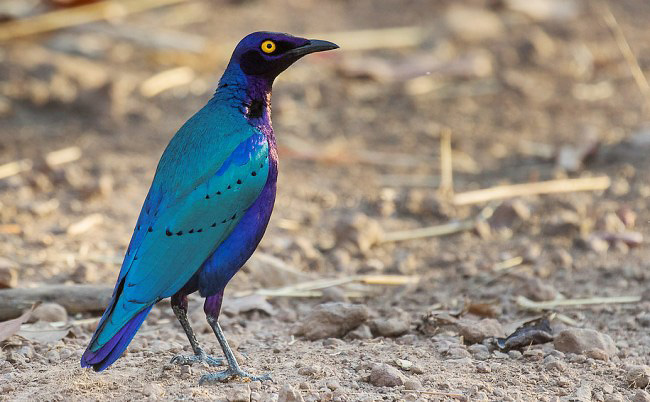
A 'scary dinosaur' Purple Starling by Francesco Veronesi, a bird of the sub-Saharan African savanna belt, from Senegal and The Gambia east to Uganda and far west Kenya.
Seychelles
Twelve endemic birds; a blue-pigeon, a swiftlet, a scops-owl, a kestrel, a parrot (Praslin and Curieuse), a paradise-flycatcher (mainly La Digue and
Denis), a warbler, a bulbul, a white-eye (Mahe and Conception), a magpie-robin, a sunbird and a fody, some of which are very rare and the subject of
long-standing captive-breeding, release and introduction projects, as well as Common White Terns, some large seabird colonies with frigatebirds,
tropicbirds and Sooty Terns, and stunning coral reefs.
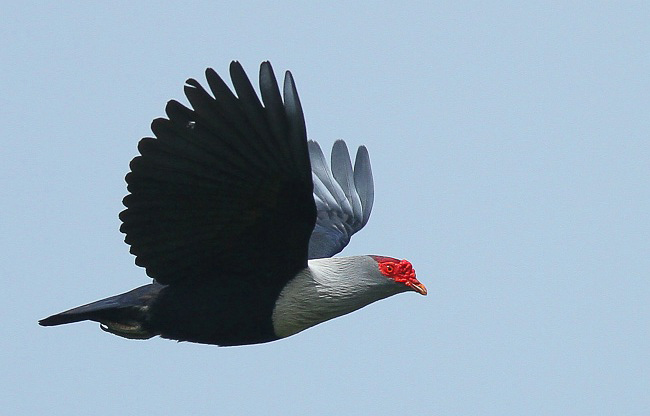
Seychelles Blue-pigeon, one of several endemic landbirds on the Seychelles, by Brian Field.
Sierra Leone
All 14 of the Upper Guinea Forest Endemics; White-breasted Guineafowl, Rufous Fishing-owl, Brown-cheeked Hornbill, Western Wattled Cuckooshrike,
White-necked Rockfowl, Sierra Leone Prinia, Sharpe's Apalis, Black-headed Rufous-warbler, Green-tailed Bristlebill, Yellow-bearded Greenbul, Rufous-winged
Illadopsis, Copper-tailed Starling, Nimba Flycatcher and Gola Malimbe, other spectacular birds such as Long-tailed Hawk, Egyptian Plover, Blue-moustached
Bee-eater, Fiery-breasted Bushshrike and Emerald Starling, lots of monkeys, a chance of Chimpanzee and an outside chance of Pygmy Hippopotamus.
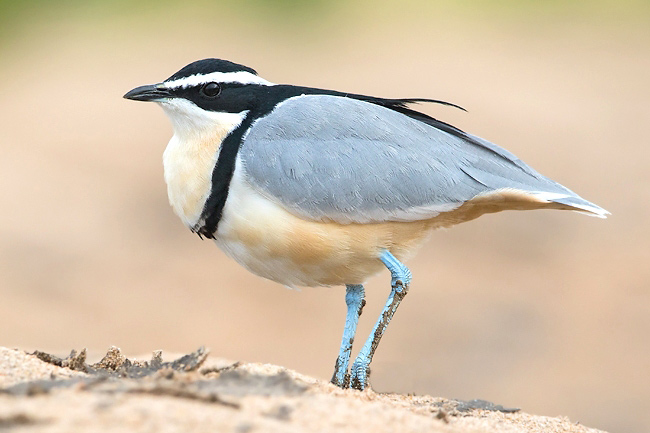
The superb Egyptian Plover by Dubi Shapiro.
Socotra
This island in the Arabian Sea off the Horn of Africa supports some superb Dragon Tree forests in spectacular scenery where 43 bird species are known to
breed, ten of which are endemic; a scops-owl, a buzzard, a warbler, a cisticola, a starling, a sunbird, two sparrows, a grosbeak and a bunting
(Dixcem Plateau only). Other special birds which occur on and around the island include Jouanin’s Petrel, Persian Shearwater, Socotra Cormorant,
Cream-coloured Courser, Sooty Gull, Saunders’s Tern, Bruce’s Green-pigeon, Nubian Nightjar, Forbes-Watson’s Swift, Socotra (Abyssinian) White-eye (which
also occurs in Somalia), Somali Starling and Cinnamon-breasted Bunting.
Somaliland (Somalia)
The British Foreign and Commonwealth Office usually advise against all travel to Somalia and yet some tour companies insist Somaliland
in northwest Somalia, a former British colony which has since 1991 been separated from the rest of Somalia as the (internationally unrecognized) ‘Republic
of Somaliland’ is a largely peaceful pro-western Muslim country, a largely uninhabited wilderness of beaches, volcanic deserts and juniper forests,
relatively safe to travel in and therefore making it possible to see many birds with restricted ranges even in the Horn of Africa, including Little Brown
Bustard, Collared Lark, Somali Wheatear, Philippa’s (Short-billed) Crombec, Somali Thrush and Somali Starling, as well as Arabian and Heuglin’s Bustards,
Somali Courser, White-cheeked Tern, Somali Bee-eater, Yellow-breasted Barbet, Rufous-capped (Blanford's), Short-tailed and Somali Short-toed Larks,
Red-naped Bushshrike, Somali Fiscal, Abyssinian Wheatear, Dodson’s Bulbul, Arabian Warbler, Somali Crombec, Yellow-vented Eremomela, Nile Valley Sunbird,
Golden-breasted, Magpie, Shelley’s and White-crowned Starlings, Somali Sparrow and Northern Grosbeak-Canary, while mammals include Beira Antelope, Gerenuk,
Dorcas, Soemmering’s and Speke’s Gazelles, Speke’s Pectinator, Caracal, Desert Warthog and Somali Elephant Shrew.
Somalia as a whole has a bird list of 660 or so species of which about 300 are resident and 10 are endemic; Somali Pigeon, Archer’s (Augur) Buzzard, Lesser Hoopoe-lark, Sharpe’s (Rufous-naped) Lark, Somali (Long-billed) Lark, Ash’s Lark, Obbia Lark, Somali Thrush, Somali (Golden-winged) Grosbeak and Warsangli Linnet. Like the rest of the birds and other wildlife, especially those which live in the woods and forests, many are likely to be suffering heavy losses since one environmental group warned, in 2002, that Somalia would be a country without trees if they were cut down at the then rate. Near-endemic birds not listed under Somaliland above include Fischer’s Turaco, Forbes-Watson's Swift, Mombasa Woodpecker, Gillett’s Lark, Malindi Pipit, Pangani Longclaw, Little Yellow Flycatcher, Violet-breasted Sunbird, Long-tailed Fiscal, Arabian Golden and Swainson’s Sparrows, Juba Weaver, Fire-fronted Bishop and Donaldson-Smith’s Sparrow-weaver.
South Africa - Eastern
About 26 of the 38 birds endemic to South Africa, Lesotho and Eswatini including Southern Bald Ibis, Blue Bustard, Knysna Turaco and Drakensberg Rockjumper,
many more of the 140-150 species endemic to Southern Africa such as Bokmakierie, Fairy Flycatcher, Rudd's Apalis and Gurney's Sugarbird, other spectacular
localized birds including Wattled Crane, Taita Falcon and Blue Swallow, many mammals including Lion, Leopard, Cheetah, White and Black Rhinoceroses,
Meerkat and a chance of African Wild Dog, and Whale Sharks, Manta Rays and the Sardine Run offshore.
South Africa - Western
About 27 out of 38 birds endemic to South Africa, Lesotho and Eswatini including Cape Rockjumper, Cape Sugarbird and Orange-breasted Sunbird, other
specialities including many more of the 140-150 species endemic to Southern Africa such as African Penguin, Black Harrier, Blue Crane, Karoo and Ludwig's
Bustards, African Oystercatcher, Hartlaub's Gull and Cinnamon-breasted Warbler, as well as seabirds from pelagic boat trips, Southern Right Whales and
land mammals including a good chance of Aardvark, Aardwolf, Gemsbok and Meerkat, although classic African mammals such as Lion, Leopard and Cheetah are a
long way off the beaten track.
Swaziland
See Eswatini, above.
T
Tanzania - Northern
The greatest diversity and numbers of large mammals on Earth make this A Top Ten Destination, with over a million Blue Wildebeest,
over a quarter of a million Thomson's Gazelles and about 200,000 Burchell's Zebras, as well as their predators, including Lion, Leopard, Cheetah, Spotted
Hyaena and, possibly, African Wild Dog, at the right time of year, and lots of iconic open-country African birds, in landscapes to match, not least the
Serengeti and Ngorongoro Crater.
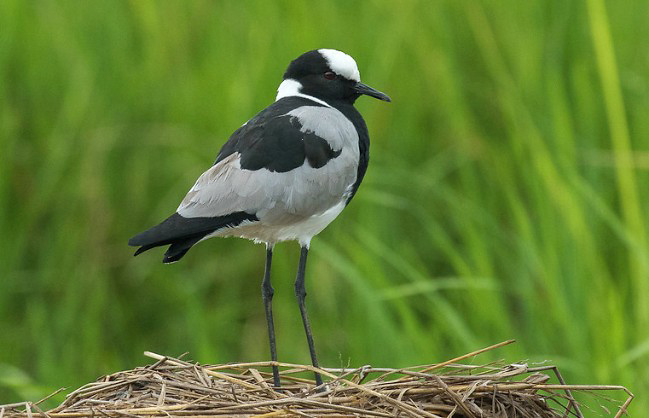
The noisy Blacksmith Plover, widespread in Africa south from Kenya, by Francesco Veronesi.
Tanzania - Southern
Many mammals including African Wild Dogs in some of the most extensive wildest places left on Earth.
There are 35 endemic bird species on mainland Tanzania, with four more on Pemba Island. Widespread endemics include Grey-breasted Francolin (Spurfowl), Tanzanian Red-billed Hornbill, Emin's (D'Arnaud's) Barbet, Yellow-collared Lovebird and Ashy Starling, while Beesley's Lark and Kilimanjaro White-eye have more restricted ranges in the north. The most endemics (20) occur off the beaten track in isolated mountain ranges of Eastern Tanzania known as the Eastern Arc Mountains and they are Rubeho and Udzungwa Forest-partridges, Usambara Eagle-owl, Uluguru Bushshrike, Usambara Hyliota, Long-billed Forest-warbler (Tailorbird) (east Usambaras), Rubeho (Rubeho-Ukaguru Mountains) and Winifred’s (Udzungwas and Ulugurus) Warblers, Uluguru and Yellow-throated (Udzungwas, Ukagurus and Ngurus) Mountain Greenbuls, Montane Tiny (Usambara) Greenbul (Usambaras, Ngurus and Nguus), Usambara Thrush, Iringa, Rubeho and Usambara Akalats, Banded, Loveridge’s (Ulugurus), Moreau's and Rufous-winged (east Udzungwas) Sunbirds, and Usambara Weaver (Usambaras, Ulugurus and Udzungwas). To look for these birds it is best to head for Chome Forest Reserve in the South Pare Mountains; the forest above Lushoto in the West Usambara Mountains; Amani Forest Camp and Kihuwi-Sigi Nature Reserve in the East Usambara Mountains where Usambara Eagle-owl, the rare Dapple-throat, Green-headed Oriole, Usambara Hyliota, Long-billed Forest-warbler, Kretschmer's Longbill, and Banded and Uluguru Violet-backed Sunbirds occur; the Uluguru Mountains where White-winged Apalis, Green Barbet, Uluguru Bushshrike, Uluguru Mountain Greenbul, Chapin’s Apalis, Winifred's Warbler, Orange Ground-thrush, Loveridge’s Sunbird and Bertram’s Weaver occur; and the Udzungwa Mountains National Park for White-winged Apalis, Bar-tailed and Narina Trogons, Yellow-throated Woodland-warbler, Iringa and Sharpe’s Akalats, Rufous-winged Sunbird, Kipengere Seedeater and Oriole Finch, with a chance of Dapple-throat, Swynnerton’s Robin and White-chested Alethe, as well as Iringa Red Colobus, Sanje Mangabey, and Gentle and Kipunji Monkeys.
Tunisia
This is one of Africa’s most wealthy and developed countries, and one with a wide range of habitats despite being only about 800 km from north to south and
300 km from west to east, with coastal wetlands, vast olive groves, central steppes and mountains, and Sahara Desert, in a climate which is hot and dry
from May to September but rather cold and wet from November to March, the best month to visit to search for species such as Yelkouan (Balearic) Shearwater
(Cap Bon), Barbary Partridge, Marbled Teal, White-headed Duck, Greater Flamingos (two thirds of the Mediterranean population winters in Tunisia, mainly in
the Gulf of Gabes), Long-legged Buzzard, Peregrine (Barbary) Falcon, Eurasian Dotterel (wintering in Jebil NP), Cream-coloured Courser, Audouin’s Gull
(Cap Bon), Black-bellied, Crowned, Pin-tailed and Spotted Sandgrouse, Egyptian and Red-necked Nightjars, Maghreb (Levaillant’s) Green Woodpecker,
Greater Hoopoe-lark, Bar-tailed, Temminck’s and Thick-billed Larks, Black-crowned Tchagra, Moussier’s Redstart, Black, Buff-rumped and White-crowned
Wheatears, African Desert, Spectacled and Tristram’s Warblers, Fulvous Babbler, Spotless Starling and Desert Sparrow (Jebil NP). Endangered North African
mammals include Addax, Scimitar-horned Oryx, Dama and Dorcas Gazelle, and the hamster-like Gundi, all of which occur in Bou Hedma NP.
U
Uganda
This small country is packed with people and wildlife, and a A Top Ten Destination where it is possible to spend an hour with
Mountain Gorillas, possibly the ultimate wildlife experience, another hour with Chimpanzees, also possibly the ultimate wildlife experience, see lots
of monkeys and many birds in what is, for its size, the richest country in Africa for birds, over a thousand species in all, including Shoebill,
Green-breasted Pitta and 24 of the 36 Albertine Rift Endemics, including Grauer's Broadbill, Black-faced Apalis, and Blue-headed, Purple-breasted and Regal
Sunbirds.
W
Western Sahara
In this part of northwest Africa currently administered by Morocco it is possible to see a few birds which are difficult or impossible to see elsewhere
in the Western Palearctic and a few mammals which are difficult or impossible to see anywhere else in the world. The main town Dakhla is accessible by air
or road (over 1200 km south of Agadir) from Morocco. Birds in the huge Dakhla Bay include West African Crested Tern and a few Atlantic Humpback Dolphins
survive in this bay. Inland, alongside the Dakhla-Aousserd Road it is possible to see Golden Nightjar (Oued Jenna) and Cricket Warbler (Oued Jenna), as
well as Crowned and Spotted Sandgrouse, Dunn's Lark, Black-crowned Sparrow-lark, Fulvous Babbler, African Desert Warbler and Desert Sparrow, and possibly
Pharoah Eagle-owl and Sudan Golden Sparrow (especially at Oued Jenna). The numbers of birds in the often windy desert seems to depend on winter rainfall,
with the highest numbers usually after plenty of rain. Mammals present alongside the same road include African Wild and Sand Cats, Golden Jackal, Fennec
and Ruppell's Foxes, (Saharan) Striped Polecat, Desert Hedgehog and Lesser Egyptian Jerboa, all of which are most likely to be seen while spotlighting at
night. The best time to visit is March to September.
Z
Zambia
Spectacular localized birds such as Black-cheeked Lovebird and African Pitta, many Miombo woodland specialities, a wide range of mammals including Leopards
in South Luangwa National Park and a roost of millions of Straw-coloured Fruit Bats, and Victoria Falls.
Zimbabwe
Zimbabwe is one of the few places where it is possible to see African Pitta; in riverine thickets near Masoka Camp in the Lower Zambezi Valley for example,
from mid-November to mid-December/early January, along with Nyasa (Lilian’s) Lovebird, Pennant-winged Nightjar, Eastern Nicator, Livingstone’s Flycatcher
and Arnot’s Chat. To the south, the wetlands around the capital Harare can be great for crakes and flufftails in January-February if there has been enough
rain, including Streaky-breasted Flufftail and Striped Crake. There are some good stretches of Miombo woodland nearby where specialities include Miombo
Rock-thrush, Boulder Chat and African Spotted Creeper. East of the Harare, remnant patches of montane evergreen forest amongst extensive banana, tea and
tobacco plantations on the Vumba (Bvumba) Mountains support three near-endemics; Swynnerton’s Robin, Chirinda Apalis and Briar (Roberts’s) Warbler, as well
as Eastern Bronze-naped Pigeon, Lemon Dove, Livingstone’s and Purple-crested Turacos, Orange Ground-thrush, Barratt’s Warbler, Black-fronted and Olive
Bushshrikes, Blue Swallow (Oct-Mar), Red-faced Crimsonwing and Red-throated Twinspot, while more rarely seen species include Buff-spotted and Striped
Flufftails. The eastern lowlands support the rare and localized Green (Zambezi) Indigobird. To the south is Matobo National Park where the high
concentration of raptors includes the highest density of Verreaux’s Eagle in the world and other birds include Freckled Nightjar and Boulder Chat. In the
far west Hwange National Park supports Three-banded (Heuglin's) Courser, Southern Carmine Bee-eater, Racquet-tailed Roller, Bradfield’s Hornbill and
Crimson-breasted Gonolek, and a good variety of mammals such as Wild Dog, Black Rhino, Elephant, Giraffe, Kudu and Sable. Not far from there is the famous
Victoria Falls. Another good place for African mammals is Mana Pools NP where Lion, Leopard, Cheetah, Elephant, Buffalo and Hippo may be seen.