
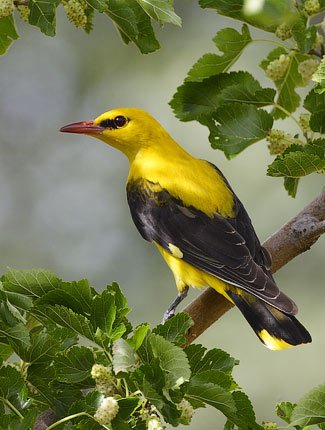
The fabulous Eurasian Golden Oriole is widespread across Europe during the northern summer. It is a shy bird though and difficult to see well, let alone photograph, hence this image, taken by Steve Fletcher, is remarkable.
EUROPE
The destinations listed and linked below are the ones we believe are the best in Europe. They have been chosen very carefully and for a multitude of reasons, but mainly based on personal experience of some of them and on dreams of visiting the rest, dreams resulting from what we have heard, read or seen.
It is our intention to update this list regularly as we add destinations and it was last updated in May 2021.
If there are any other destinations you think should be on the list below then please feel free to Email us.
The destinations are listed alphabetically with very brief summaries for those linked, in dark blue, to more detailed pages (to reach these pages click on the destination name). Those not linked to more detailed pages are described in a bit more detail here, in italics, under light blue headings.
For more information see ...
The Best (100) Birds in the World,
The Best (100) Wildlife in the World and
Best (50) Other Natural Wonders.
Destinations
The first and arguably most important destination to consider is a Local Patch, somewhere a short walk from home where it is possible to see a wide range of birds and other wildlife any day of the year.
A
Abruzzo National Park - Italy
See Italy - Abruzzo National Park, below.
Albania
This small country alongside the Adriatic is a land of coastal dunes, salinas, marshes, beech woods, pine woods and fir forests on the inland mountains
where in Valbone Valley National Park there is a chance of seeing such birds as Rock Partridge, Black and White-backed Woodpeckers, and Northern (Eurasian)
Nutcracker. Divjaka-Karavasta National Park near Berat supports about 5% of the world's breeding Dalmatian Pelicans as well as Pygmy Cormorant, Greater
Flamingo and passage migrant waterbirds such as Marsh Sandpiper and Caspian Tern, with Collared Flycatcher present too. More waterbirds can be found
along the coast including the likes of Collared Pratincole and Slender-billed Gull. The first half of April is best for birds, early June for butterflies
and flowers.
Andorra
This tiny tax haven principality less than 200 sq miles/500 sq km in extent popular with hikers and over ten million skiers per annum lies in the scenic
eastern Pyrenees at an average elevation of over 6500 feet (1996 m), rising to nearly 10,000 feet (2942 m) at Coma Pedrosa. The rugged terrain supports
a superb flora, many mountain butterflies including Apollos, and a typical Pyrenean avifauna with Griffon Vulture, Short-toed Eagle, Eurasian Crag Martin,
Yellow-billed (Alpine) Chough, Alpine Accentor, Citril Finch and Rock Bunting, while high up there is also a chance of Lammergeier, Golden Eagle,
Wallcreeper and White-winged Snowfinch.
Armenia
Landlocked Armenia is dominated by the lofty Lesser Caucasus mountains which rise to 4090 m (13,420 ft) at Mount Aragats although there is also
some semi-desert and a large area of fish ponds at lower elevations. Situated at the junction of Europe, the Middle East and Asia there is a superb
selection of birds to be seen in a very small area just a quarter the size of England, including Pygmy Cormorant, Marbled Teal, White-headed Duck
(Armash fish ponds), Lammergeier, Levant Sparrowhawk, Caspian Snowcock (Gndasar Mountain), Caucasian Grouse (Tsaghkunyats Mountains), White-tailed
Lapwing (Armash fish ponds), Armenian Gull, Blue-cheeked Bee-eater, Bimaculated Lark, White-throated Robin, Finsch's and Red-tailed Wheatears, Blackstart,
Western and Eastern Rock Nuthatches, Green, Menetries's, Moustached and Upcher's (a late arriving summer visitor) Warblers, Rosy Starling, Radde's
Accentor, Eurasian Crimson-winged Finch and Grey-necked Bunting. During the autumn, especially early September, large numbers of Demoiselle Cranes pass
through Lake Sevan. Mammals include the Bezoar Ibex which occurs in the Yeranos Mountains, and more than 230 species of butterfly include Caucasian
specialities and there is a chance of seeing 80 species during the last week of June including Kurdish Copper and Persian Fritillary. The best time for
birds is late May to the middle of June.
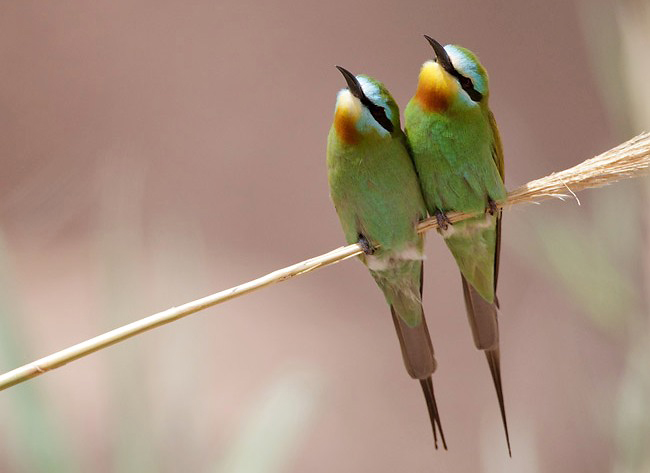
Blue-cheeked Bee-eaters nest in Armenia. Image by Michael McKee.
Austria
Pygmy Cormorant, Great Bustard, Eastern Imperial Eagle, possible Saker Falcon, ten European woodpeckers, Northern (Eurasian) Nutcracker and fine alpine
scenery in a tiny, land-locked country.
Azerbaijan
This small country supports a long list of specialities including Caucasian Grouse, Caspian and Caucasian Snowcocks, Black Francolin, See-see Partridge,
Shikra, Black-winged Pratincole, White-winged (Güldenstädt's) Redstart, Finsch’s and Red-tailed Wheatears, Green, Ménétries's and Upcher’s Warblers,
Caucasian (Mountain) Chiffchaff, Semi-collared Flycatcher, Caspian Tit, Eastern Rock Nuthatch, Radde's Accentor, Pale Sparrow (Rockfinch), (Caucasian)
Twite, 'Caucasian' Great Rosefinch, Eurasian Crimson-winged Finch and Grey-necked Bunting, while other birds present include Chukar, Pygmy Cormorant,
Lammergeier, White-tailed Lapwing, Blue-cheeked Bee-eater, White-throated Robin, Rosy Starling, Red-fronted Serin, and Mongolian and Trumpeter Finches.
These birds are best looked for from mid-May to mid-June and the best areas are Hyrcan National Park (Caspian Tit), the High Caucasus (Caucasian Grouse
and Great Rosefinch (Mount Shahdagh)), and the Autonomous Republic of Nakhchiva (Caspian Snowcock, See-see Partridge, Red-tailed Wheatear, Eastern Rock
Nuthatch, Radde’s Accentor and Pale Sparrow). During the northern winter birds include Greater and Lesser White-fronted Geese, Marbled Teal, White-headed
Duck, Dalmatian and Great White Pelicans, Eastern Imperial Eagle, Little Bustard (thousands in and around Aggol National Park), Grey-headed Swamphen and
Pallas's (Great Black-headed) Gull. Many species pass through on migration as well and there is a bottleneck on the the narrow coastal plain below the
rock of Besh Barmag less than 100km north of the capital Baku where over a million birds have been recorded during the autumn/fall including waterbirds,
raptors, rollers and Blue-cheeked Bee-eaters. Mammals are less prominent but aerial maps of Azerbaijan even in the mid-2010s showed the presence of great
tracts of near-pristine forest where Brown Bears, Wolves and even Leopards still lived.
Azores
Sperm and other whales, Striped and other dolphins, seabirds such as Bulwer's Petrel, Barolo (Little) and Cory's Shearwaters, and Band-rumped (Grant's)
and Monteiro's Storm-petrels, as well as the rare endemic Azores Bullfinch, on and around nine isolated volcanic islands in the Atlantic,
also famous amongst European birders for the astonishing variety of lost North American birds which have landed there, in September-October.
B
Balearic Islands
See Mallorca and Menorca, below
Belarus
Take a trip back in time to what much of northern Europe used to look like; great expanses of meadows, marshes and forests, home to Great Snipe (possibly
displaying at leks), Marsh and Terek Sandpipers, Great Grey Owl, Aquatic Warbler and Azure Tit.
Bosnia-Herzegovina
Much of this country is made up of arid, karst, limestone mountains although there is a large wetland reserve in the south called Hutovo Blato which is
contiguous with wetlands associated with the Neretva Delta. The best time to visit is during spring migration especially late April to late May when on
a visit which includes the mountains and the Neretva area the following birds may be seen; Ferruginous Duck, Rock Partridge, Squacco Heron, Little
Bittern, Pygmy Cormorant, Lesser Spotted and Short-toed Eagles, Levant Sparrowhawk, Red-footed Falcon, White-winged Tern, Lesser Grey Shrike, Northern
(Eurasian) Nutcracker, Yellow-billed (Alpine) Chough, Eastern Orphean and Olive-tree Warblers, Sombre Tit, Western Rock Nuthatch, Collared Flycatcher, and
Black-headed and Rock Buntings.
Bulgaria
Wallcreepers inland and a spectacular migration flyway for pelicans, shorebirds and so on along the coast, with Red-breasted Geese in winter.
C
Corsica
This scenic, sparsely populated, French island nearer the northwest coast of Italy than France supports the endemic Corsican Nuthatch, and five
near-endemics; Marmora's Warbler, Moltoni's (Subalpine) Warbler, Mediterranean (Spotted) Flycatcher, Italian Sparrow and Corsican Finch (which also occurs
only Sardinia). In addition, there are several endemic subspecies, including the corsa race of Eurasian Treecreeper. More widespread species include
Lammergeier (rare and most likely at Haut Asco), Red Kite, Golden Eagle (scarce), Eurasian Hoopoe, Yellow-billed (Alpine) Chough, Dartford and Sardinian
Warblers, Common Firecrest and Spotless Starling, with summer visitors such as European Bee-eater and Woodchat Shrike (the badius subspecies which breeds
on Corsica, Sardinia and the Balearic Islands). Around the coast and on some etangs it is possible to see a few Audouin's Gulls and offshore, Scopoli's
(Cory's) and Yelkouan (Balearic) Shearwaters. The few mammals include Mouflon (most likely at Haut Asco) but there is a rich flora which includes many
orchids and those usually in flower during early May (the best time to look for birds) include Sword-leaved Helleborine, Violet Limodore, Yellow Ophrys,
Heart-flowered Serapias, and Barton’s, Man, Milky, Pink Butterfly and Tongue Orchids.
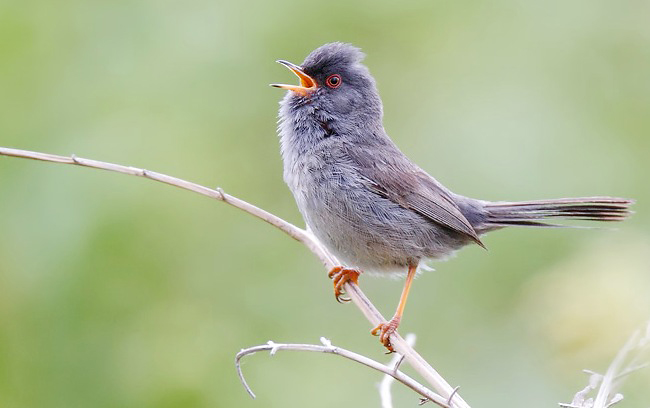
A singing male Marmora's Warbler by Michael McKee, endemic to the western Mediterranean.
Croatia
The limestone islands, cliffs, gorges and craggy mountains of Croatia support Scopoli’s (Cory’s) and Yelkouan (Balearic) Shearwaters, Rock Partridge (Pag
Island near Paklenica and Biokova Nature Park are good sites), Pygmy Cormorant (Lake Vrana is the Croatian stronghold), Griffon Vulture
(colony/rehabilitation centre on the island on Cres), Golden, Lesser Spotted, Short-toed and White-tailed Eagles, Eleonora’s Falcon (Vis Island), European
Bee-eater, Collared Flycatcher, Yellow-billed (Alpine) Chough, Sombre Tit, Western Rock Nuthatch, Olive-tree and Eastern Orphean Warblers, Lesser Grey
Shrike, Rufous-tailed Rock-thrush, Alpine Accentor (near Veti Jure in Biokova NP), (Black-headed) Western Yellow Wagtail, and Black-headed and Rock
Buntings. The rich flora, including lots of orchids, is a fine sight in April and May. The best time for birds is May-June and early June is usually the
peak time for butterflies, 190 species of which have been recorded including a wide variety of ‘blues’ and rarities such as Balkan Copper.
Czech Republic
It is possible to see ten European woodpeckers in the Czech Republic. The best three areas for birds are: (i) the Sumava Mountains on the border
with Germany, which, together with neighbouring Bavaria, support the most extensive forest remaining in Central Europe, home to some great but scarce
and very elusive birds such as Black and Hazel Grouse, Eurasian Pygmy-owl, Ural Owl, and Black, Eurasian Three-toed and White-backed Woodpeckers, most
of which are best looked for on Mount Boubin where Ring Ouzel (alpestris) and Northern (Eurasian) Nutcracker also occur; (ii) the five hundred fish ponds
in the Trebon area which support White-tailed Eagle, as well as a few White Storks, Red-crested Pochard, Red Kite, Bluethroat, Collared Flycatcher and
Eurasian Penduline-tit; and (iii) South Moravia where there is a possibility of seeing Barred Warbler, as well as Saker Falcon and Eastern Imperial Eagle
(both most likely in the Hohenau area just across the border in Austria). The best time to look for birds is the middle of May when most of the summer
migrants have usually arrived and some owls and woodpeckers are still nesting.
Cyprus
Situated to the south of Turkey and north of the Nile delta in the eastern Mediterranean the coastal rocky promontories and wetlands on the rugged island
of Cyprus are a great place to see migrating birds especially during the northern spring (mainly late March to mid April) when species passing through
include Pallid Harrier, Little Crake, Slender-billed Gull, Red-throated Pipit, (Black-headed) Western Yellow Wagtail, Isabelline Wheatear and Rüppell's
Warbler, with 'regular' vagrants such as Caspian Plover. Good sites include Cape Greco near Larnaca in the far southeast which has hosted rarities such as
Hypocolius and Cinereous Bunting; the vast salt lake at Akrotiri (for flocks of Greater Flamingos) and the dry plain known as the Akrotiri Gravel Pits, one
of the best areas for migrant passerines, which in turn attract Pallid Harriers; and Paphos (Pafos) Headland in the far southwest, a classic migration site
also famous for its Roman ruins. There are three widespread endemic breeding species; a scops-owl, a wheatear and a warbler, and four endemic subspecies;
Coal Tit (cypriotes), 'Dorothy's' Short-toed Treecreeper (dorotheae), Eurasian Jay (glaszneri) and Red Crossbill (guillemardi),
all of which occur in the Troodos Mountains. Other breeding species include Chukar, Black Francolin, Griffon Vulture, Eleonora's Falcon, Spur-winged
Lapwing, Audouin’s Gull, Great Spotted Cuckoo, Masked Shrike, Spectacled Warbler and Cretzschmar’s Bunting. During the autumn, usually from late August to
early September, Demoiselle Cranes stopover at Akrotiri Salt Lake where thousands of Greater Flamingos spend the northern winter and other wintering
species include Ruddy Shelduck and Finsch's Wheatear (Oct-Mar). There are also 50 species and forms of orchid in the northern Turkish half of the island,
of which about 30 flower together in March-April, including Anatolian, Cyprus Bee, Early Mammose and Eastern Tongue.
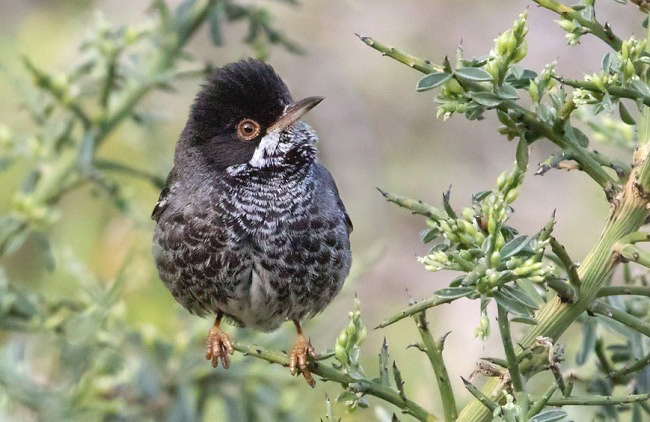
Cyprus Warbler by Lars Petersson.
E
Estonia
Arguably the widest variety of birds in Europe, during migration and the breeding season when over 170 species are present including Lesser Spotted
Eagle, Black Stork and Great Snipe. During the northern autumn/fall millions of waterbirds and passerines, especially finches, pass through, and during
the depths of winter there may be hundreds of Steller's Eiders present.
Extremadura - Spain
The best place in western Europe for bustards and raptors, including Bonelli's and Spanish Imperial Eagles, and Black-shouldered Kite, as well as some of
Europe’s other most spectacular and localized birds such as White and Black Storks, White-rumped Swift, European Roller and Iberian Azure-winged Magpie,
all in one of the wildest and therefore birdiest places left in Europe.
F
Finland and Arctic Norway
The greatest diversity of owls in Europe and an Arctic experience completed by King and Steller’s Eiders, and nesting shorebirds, as well as a good chance
of seeing Brown Bears from hides at night where there is also a chance of Wolverine.
France - Southern
A wonderful combination of wetland and mountain birds in the Camargue and Pyrenees, birds such as Greater Flamingo, Little Bustard, Pin-tailed Sandgrouse,
Lammergeier, Wallcreeper, Alpine Accentor, Citril Finch and White-winged Snowfinch, in some superb scenery.
G
Georgia
Caucasian Grouse, Caucasian Snowcock, White-winged (Güldenstädt's) Redstart and 'Caucasian' Great Rosefinch, in the mountains with Lammergeier, Wallcreeper
and Red-fronted Serin, and Batumi, one of the best places in the world for visible raptor migration, involving over a million birds per autumn/fall, mainly
Honey and ‘Steppe’ Buzzards but also including Great Spotted, Lesser Spotted and Steppe Eagles, and Levant Sparrowhawk.
Germany
Perhaps the most famous birding site in Germany is the offshore island of Hel(i)goland in the North Sea, not just for its large seabird colonies which
include a gannetry but also for attracting an astonishing variety of migrating birds including many rarities, so many that the island list exceeds 430,
more than Fair Isle in Shetland, UK (where the list reached 392 in June 2019 with Franklin's Gull) but less than the Isles of Scilly, UK (447 at the end
of March 2018). On the mainland some of the few hundred Great Bustards left in Germany in 2019 (there were believed to be about 4000 present before the
Second World War) may be seen in the northeast region known as Brandenburg with the best area being around the village of Garlitz. Birds present on and
around Gulper See, also near Berlin, during October-November, include Greater White-fronted, Greylag and Tundra Bean Geese but the main attraction of the
area in autumn is the Common Cranes which usually occur in thousands, especially around Linum fishponds where it is possible to watch them go to roost.
Another area famous for Cranes is Landkreis Diepholz near Bremen in northwest Germany where up to 80,000 birds have been known to stopover between
Scandinavia and Spain during the autumn. At the other end of the country, down south, the scenic Bavarian Alps, especially in Berchtesgaden Alpine National
Park, support a wide range of flowers (usually best during the first half of June), butterflies and birds such as Golden Eagle, Black Woodpecker,
Yellow-billed (Alpine) Chough, Eurasian Crag Martin and Alpine Accentor.
Greece
Large numbers of Greater Flamingos, Pygmy Cormorants, and Dalmatian and Great White Pelicans, in a country also enlivened by Spur-winged Lapwings, Masked
Shrikes, Rüppell's Warblers and Cretzschmar’s Buntings. Also see Lesvos, below.
H
Hebrides (Outer) - Scotland
See Scotland - Outer Hebrides, below.
Holland
Tens of thousands of geese, with a good chance of Lesser White-fronted, as well as swans and Smews in winter, and hundreds of thousands of shorebirds
during late summer.
Hungary
Eastern Imperial and Lesser Spotted Eagles, Red-footed and Saker Falcons, Great Bustards, and Aquatic Warblers during the summer, and tens of thousands of
Common Cranes in November.
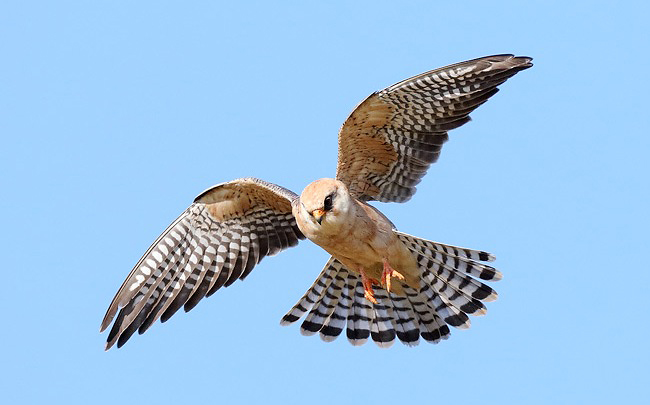
A great shot of a female Red-footed Falcon by Michael McKee.
I
Ibiza
Birds recorded on and around this small Balearic island in the Mediterranean include Balearic Shearwater (also possible on the short ferry ride between
Ibiza and the rather barren island of Formentera to the south), Scopoli's (Cory's) Shearwater, Booted Eagle, Eleonora’s Falcon, Audouin’s Gull, Greater
Short-toed and Thekla's Larks, Balearic Warbler, Blue Rock-thrush, Eurasian Crag Martin, Common Firecrest, 'Balearic' Red Crossbill and a wide range of
passage migrants during spring and autumn.
Iceland
Harlequin Duck and Barrow's Goldeneye, both of which nest nowhere else in Europe, shorebirds such as Grey (Red) and Red-necked Phalaropes, spectacular
seabird cliffs with Brunnich's Guillemots (Thick-billed Murres), Gyr Falcon and a chance of Blue, Humpback and Killer Whales, in some of the wildest
scenery in the world.
(Republic of) Ireland
Most British and many other European birders have heard of places such as Tacumshin, Ballycotton, Galley Head, Cape Clear and Bridges of Ross, all of which
are in Southern Ireland. Tacumshin is a great wetland for shorebirds, including those from North America, and once there was an incredible record flock of
26 Buff-breasted Sandpipers there, on the 27th September 2011, the same day as two Semipalmated Sandpipers, a White-rumped Sandpiper and an American Golden
Plover! Ballycotton is another famous place to look for shorebirds which have included a Long-toed Stint in 1996 and a Red-necked Stint in 2002. Galley
Head is one of several prominent headlands along the southern and western coasts of Ireland from which there is a reasonable chance of birds like
Fea’s-type Petrels in the right weather conditions, usually deep lows during the summer and early autumn, as well as rare landbirds from North America.
Many such rarities have landed on the island of Cape Clear, such as a Blue-winged Warbler in 2000 and Ruby-crowned Kinglet in 2013. Around on the west
coast is another great place to seawatch from, Loop Head, especially Bridges of Ross where Fea’s-type Petrels, Leach’s and Wilson’s Storm-petrels, and
Sabine’s Gulls are all seen on a regular basis and rare American landbirds have included, mostly at Kilbaha, a Canada Warbler in 2006 and a Philadelphia
Vireo in 2008. Farther north at the mouth of Galway Bay are the three Aran Islands including Inishmore (Eastern Kingbird 2012). Another hotspot for North
American vagrants as is an island farther north called Inishbofin (Eastern Kingbird 2013). On the nearby mainland are the vertical 650 ft (198 m) high
Cliffs of Moher where Atlantic Puffins, Guillemots and Razorbills raise their young. These cliffs lie next to The Burren, a huge limestone pavement
beloved by botanists in search of rare and beautiful flowers such as Bloody Cranesbill, Burnet Rose and Columbine. On the northwest coast of Ireland there
is yet another superb seawatching site called Kilcummin Head where after a northwesterly blow one September day in 1998 some fortunate seawatchers saw over
60 Sabine’s Gulls, 1000 Leach’s Storm-petrels and 3600 Sooty Shearwaters. To the north, the other side of Donegal Bay, is the fishing harbour of Killybegs,
famous for possible American Herring, (Kumlien’s) Iceland and Thayer’s Gulls amongst the regular high numbers of Iceland and Glaucous. Other birds present
in Ireland include Red Grouse (Willow Grouse/Ptarmigan), (White-throated) Dipper and Hooded Crow while notable absentee breeding species, present just
across the water on mainland Britain, include Tawny Owl, woodpeckers, Marsh Tit and (Eurasian) Nuthatch. The best time to seawatch is from mid-July to
October, and the time to look for nearctic shorebirds and passerines is from mid-August to October with the shorebird season usually peaking in
mid-September and the very best time for vagrant American passerines being the second week of October.
Ireland - Northern
See Northern Ireland, below.
Italy - Abruzzo National Park
'Marsican' Brown Bears, a chance of birds such as Rock Partridge and White-backed Woodpecker, and a superb selection of alpine flowers including many
orchids.
Italy - Gargano Peninsula
Situated on the southeast coast this is arguably ‘The Orchid Capital of Europe’, home to around 70 species and subspecies and where in April it is
possible to see about 40 in a week including Bertoloni's Bee, Pink Butterfly, Roman, Small-patterned, Sparse-flowered and many localised varieties of
Late Spider Orchid.
Italy - Sicily
See Sicily, below.
L
Latvia
Ancient forests and marshes in this small sparsely populated country means lots of birds such as (Western) Capercaillie, Hazel Grouse, Black Stork,
Montagu’s Harrier, Lesser Spotted and White-tailed Eagles, Corn Crake, Common Crane, lekking Ruffs, all three marsh terns, European Roller and eight
woodpeckers, as well as mammals including Beaver and Elk. The best area is arguably Kemeri National Park although the forested dunes of Cape Kolka in the
Baltic are the best location in spring to see passerine migrants such as Bluethroats and Golden Orioles, with divers and ducks offshore. Peak birding time
is around mid-May when it is also possible to see Ural Owl in adjacent and easily accessible Lithuania.
Lesvos
The Greek island of Lesvos is situated in the Aegean Sea to the east of mainland Greece, although it is actually next to the west coast of Turkey. It
is a very popular destination with birders during the northern spring when large numbers of a wide variety of birds migrate through the island,
including herons, Pallid Harriers, Eleonora's and Red-footed Falcons, Little Crakes, shorebirds including Collared Pratincoles, Whiskered and
White-winged (Black) Terns, European Rollers, Red-throated Pipits, Collared Flycatchers, warblers and shrikes. The numbers of passage migrant birds
usually peak in the second half of April which coincides with the usual arrival period of breeding summer visitors such as Short-toed Eagle, European
Bee-eater, Isabelline Wheatear, Rufous-tailed Scrub-robin (Rufous Bush Chat), Masked Shrike, Olive-tree, Eastern Orphean and Rüppell's Warblers, and
Black-headed, Cinereous and Cretzschmar's Buntings. These join resident species such as Ruddy Shelduck, Greater Flamingo, White and Black
Storks, Long-legged Buzzard, Sombre Tit, and Krueper's and Western Rock Nuthatches to make a fine selection of birds which may also include rarer
migrants such as Levant Sparrowhawk, Baillon's Crake, Spur-winged Lapwing and Great Snipe, while around the coast there is a chance of Audouin's Gull
(a rare resident) and offshore a better chance of Scopoli's (Cory's) and Yelkouan (Balearic) Shearwaters.
Lithuania
It is possible to see nearly 200 species on a short trip during the second half of May to the picturesque meadows, bogs, woods, river valleys and lake
systems of Lithuania if led by local guides, including, in Nemunas Delta Regional Park, Greater Spotted Eagle, Great Snipe and Aquatic Warbler, in
Curronian Spit National Park, Blyth’s Reed-warbler, and in the east, Black Stork, Lesser Spotted and White-tailed Eagles, Hazel Grouse, Eurasian Pygmy,
Tengmalm’s (Boreal) and Ural Owls, White-backed Woodpecker and Northern (Eurasian) Nutcracker. Lithuania is easily accessible from Latvia – there are no
border restrictions – and would make a great combination with that country. The peak time to observe autumn migration along the Baltic Flyway is the first
week of October. Millions of birds, especially geese, ducks, divers, raptors and shorebirds, pass through the Baltic states at this time of the year with
Lithuania at the narrowest point hence Vente Cape has the largest bird banding/ringing station in the world. Up to 800,000 birds have been known to fly
over the cape each day while at Curronian Spit National Park, another migration hot-spot, mainly for raptors and passerines, up to 1.5 million migrants
have been counted passing on peak days!
M
(Republic of North) Macedonia (in 2018 Macedonia and Greece agreed that this country should rename itself Republic of
North Macedonia and this came into effect in February 2019)
This small, landlocked, mountainous country next to Bulgaria and Greece is a good place to see Rock Partridge as well as a wide range of raptors
including Egyptian and Griffon Vultures (both at Vitachevo vulture feeding station), Eastern Imperial and Lesser Spotted Eagles, Levant Sparrowhawk and
Lesser Kestrel, European Roller, Lesser Grey Shrike, Eurasian Golden Oriole, Northern (Eurasian) Nutcracker, Rock Bunting and species confined to southeast
Europe during the breeding season, such as Olive-tree Warbler and Black-headed Bunting. The best places for waterbirds such as Dalmatian Pelicans and Pygmy
Cormorants are the two huge lakes, Megali Prespa and Ohrid, in the southwest corner of the country. Pelister National Park to the northeast, along with the
Galicica Plateau and the Vardar Valley which runs across Macedonia are the top places for butterflies in a country where over 200 species have been
recorded including Apollo, Clouded Apollo, coppers, and lots of blues and fritillaries. The peak time for most butterflies is usually the second half of
June which is also a good time to look for most birds.
Madeira
Two endemic breeding seabirds; Desertas (Fea's) Petrel and the very rare Zino's Petrel, as well as Bulwer's Petrel, (Madeiran) Band-rumped and White-faced
Storm-petrels, and Barolo Shearwater, make Madeira a great place for seabirds and they can be seen very well on Zodiac boat trips during which there
is also a chance of a wide range of cetaceans. There are also two endemic landbirds; Madeira (Trocaz) Laurel-pigeon and Madeira Firecrest, near-endemic
Plain Swift, Berthelot's Pipit and Island Canary, and some endemic subspecies.
Mallorca
The largest Balearic Island has a wide range of habitats ranging from one of the largest freshwater marshes in the Mediterranean to mountains that rise
to over 1000 m. Speciality birds include Balearic and Scopoli’s (Cory’s) Shearwaters, Eleonora’s Falcon, Audouin’s Gull, ‘Balearic’ Woodchat Shrike
(badius), Balearic (Marmora’s) (at its highest density on Isla de Cabrera), Moltoni’s (Subalpine) (also on Isla de Cabrera) and Moustached Warblers,
Mediterranean (Spotted) Flycatcher, Spotless Starling and 'Balearic' Red Crossbill, while more widespread species include Purple and Squacco Herons,
Cinereous (Eurasian Black) and Griffon Vultures, Bonelli’s and Booted Eagles, Eurasian Scops-owl, Pallid Swift, Eurasian Hoopoe, Thekla's Lark, Zitting
Cisticola, Western Bonelli’s, Sardinian and Spectacled Warblers, and Common Firecrest. Amongst over 30 endemic plants are a relic from the ice age,
Hypericum balearicum, and orchids like Bug and Loose-flowered. The main birding site is S’Albufera de Mallorca National Park with a bird list of over 270
species including Marbled Teal, Red-crested Pochard (reintroduced), Little Bittern, Western (Purple) Swamphen (reintroduced), Red-knobbed Coot
(reintroduced), and Great Reed, Moustached and Savi’s Warblers. Spring migration usually peaks in mid-April, autumn passage in mid-October.
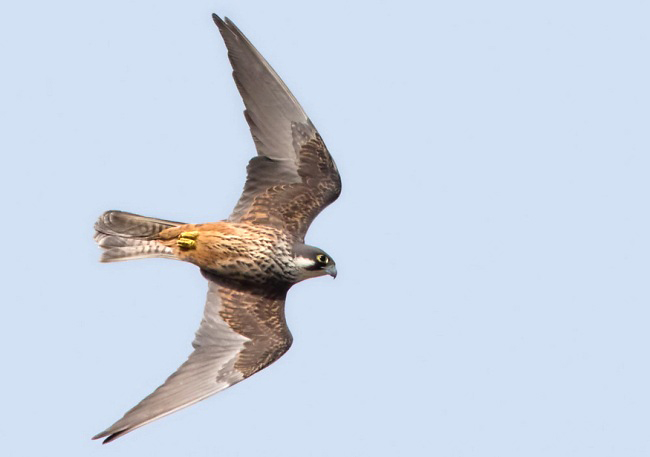
Eleonora's Falcon at Sa Dragonera, Mallorca, by Lars Petersson.
Menorca
The greenest Balearic Island is noted for its wild flower displays, especially orchids, in late April, and Europe’s only sedentary population of
Egyptian Vultures with other birds present during the spring at least including Balearic and Scopoli’s (Cory’s) Shearwaters, Purple and Squacco Herons,
Ferruginous Duck, Red Kite, Booted Eagle, Audouin’s Gull, Eurasian Hoopoe, European Bee-eater, ‘Balearic’ Woodchat Shrike (badius), Thekla's Lark, Tawny
Pipit, Blue Rock-thrush, Sardinian Warbler, Mediterranean (Spotted) Flycatcher and Spotless Starling. There is also a chance of Moustached Warbler
at sites such as the Tirant Marshes near Platages/Playa de Fornells.
(Republic of) Moldova
A small country near the Danube Delta between Romania and Ukraine with woods, forests, farmland, orchards, vineyards, river valleys and some fine
wetlands. A place where many species in steep decline elsewhere in Europe are still present in reasonable numbers, for example European Turtle-dove,
Common Cuckoo, Eurasian Hoopoe, European Bee-eater, European Roller, Eurasian Golden Oriole, Red-backed Shrike, Eurasian Tree Sparrow and Corn Bunting.
There are also plenty of raptors including Red-footed Falcon and waterbirds such as Pygmy Cormorant, Great White Pelican, Squacco Heron, Little Bittern
and Whiskered Tern. On the steppes in the far south Saker Falcon is possible, along with Long-legged Buzzard, Short-toed Eagle and Levant Sparrowhawk. It
is possible to see about 140 species in a week. Few people visit but one tour company does, Oriole Birding, in late June.
Montenegro
Boka Kotorska Bay, southern Europe’s longest and deepest fjord, is on the Adriatic coast of this small country but elsewhere along the coast there are
beaches, sand dunes, saltpans and the delta of the River Bojana, important migration stopovers for shorebirds such as Marsh Sandpiper. Inland, Levant
Sparrowhawks nest in woodlands while open country with olive groves and rocky outcrops is good for Rock Partridge, European Bee-eater, European Roller,
Eastern Black-eared Wheatear, Eastern Olivaceous and Eastern Orphean Warblers, Western Rock Nuthatch, Lesser Grey Shrike and Black-headed Bunting.
Between the mountains lies Lake Skadar, the largest freshwater lake in Europe, westernmost nesting site of Dalmatian Pelicans and home to thousands of
Pygmy Cormorants as well as Whiskered Terns. The coniferous forests and open slopes of the relatively unspoilt rugged mountains, in Durmitor National Park
for example, support Golden Eagle, Black and Eurasian Three-toed Woodpeckers, Northern (Eurasian) Nutcracker, Yellow-billed (Alpine) Chough, Sombre Tit,
Rufous-tailed Rock-thrush and Rock Bunting. Birding is best April-May but the later the better for a chance of Olive-tree Warbler.
Mull (and Scottish Highlands) - Scotland
See Scotland - Highlands to Mull, below.
N
Netherlands
Tens of thousands of geese, with a good chance of Lesser White-fronted, as well as swans and Smews in winter, and hundreds of thousands of shorebirds
during late summer.
Northern Ireland
Northern Ireland's largest seabird colony is on Rathlin Island off the north coast where there is a Seabird Centre, accessible by boat from Ballycastle.
Breeding birds from late April to July include Manx Shearwater, Northern Fulmar, (Black-legged) Kittiwake, (Common) Guillemot (Murre), Razorbill and
Atlantic Puffin. On the mainland nearby is the famous Giant's Causeway where there are about 40,000 hexagonal basalt columns up to 1.8 m (6 ft) high on the
coast of County Antrim and where birds include Purple Sandpiper and Red-billed Chough. There is a Bird Observatory on Copeland Island, accessible, with
prior permission, by boat from Donaghadee, where rare North American birds recorded include a Red Fox-sparrow in 1961. The largest sea lough in the British
Isles, Strangford Lough, is of international importance to wildfowl (25,000) and waders (50,000) during the winter, including (Pale-bellied) Brent Geese,
the numbers of which usually peak at about 12,000 in October. Breeding species include Arctic Tern. Inland is the largest freshwater lake in the British
Isles, Lough Neagh, which with Lough Beg and associated wetlands is another important wetland in winter when the enormous rafts of birds include the
largest concentrations of diving ducks in Britain and Ireland. Bird numbers may reach up to 100,000, including six per cent of the world's Whooper Swans
and internationally significant numbers of Bewick's (Tundra) Swans. In the nearby Sperrin Mountains there are Red Grouse (Willow Grouse/Ptarmigan).
Norway (Arctic) and Finland
The greatest diversity of owls in Europe, an Arctic experience completed by King and Steller’s Eiders, and nesting shorebirds, and a good chance of seeing
Brown Bears from hides at night where there is also a chance of Wolverine.
O
Outer Hebrides - Scotland
See Scotland - Outer Hebrides, below.
P
Poland
Ancient lowland forest with woodpeckers and bison, and the largest inland wetland left in Europe where White-winged Terns and Aquatic Warblers nest.
Portugal
Greater Flamingos and Western (Purple) Swamphens in the Algarve, and Iberian Azure-winged Magpies, Cinereous (Eurasian Black) Vultures, bustards and
Black-shouldered Kites in the Alentejo.
R
Republic of North Macedonia
See Macedonia, above.
Romania
Waterbirds galore in the Danube Delta and along the rest of the Black Sea coast, during summer and on migration, including pelicans and Pygmy Cormorants,
with Wallcreepers and Brown Bears in the Carpathian Mountains.
S
Sardinia
The coastal lagoons, forests, limestone hills and mountains of this island in the Mediterranean support Barbary Partridge, Audouin’s Gull (Laguna di
Nora in the south hosts the largest breeding colony in Italy), Marmora’s (in low scrub usually above 800 metres) and Moltoni’s (Subalpine) Warblers,
Spotless Starling and Corsican (Citril) Finch (on Monte Albo), as well as Red-crested Pochard, Scopoli’s (Cory’s) and Yelkouan Shearwaters, Greater
Flamingo, Eurasian Griffon, Golden Eagle, Eleonora’s Falcon, Slender-billed Gull, Alpine and Pallid Swifts, European Bee-eater, European Roller,
Dartford and Sardinian Warblers, Common Firecrest, Mediterranean (Spotted) Flycatcher (tyrrhenica), Woodchat Shrike (badius) and Rock Sparrow (on Monte
Sa Pittada). Other wildlife includes the unique endemic cave salamanders with different species in separate mountain ranges, about 35 species of
dragonfly including the endemic Island Bluetail, Copper Demoiselle, and Violet Dropwing, and 25 orchids. The best time for orchids is early April, for
dragonflies early June and for birds late April - early May when migrants pass through.
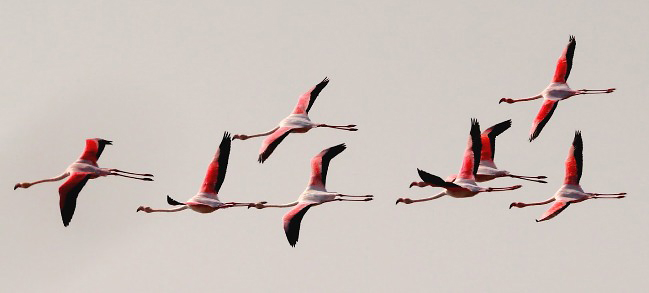
A superb image of flying Greater Flamingoes by Spider.
Scotland - Highlands to Mull
Golden and White-tailed Eagles on the same island of Mull, one of the best places in Britain to see Otters as well, and where it is possible to see
White-tailed Eagles at very close range on boat trips, while the nearby highlands of mainland Scotland support Osprey, Western Capercaillie, Black and
(Red) Willow Grouse, (Rock) Ptarmigan, Eurasian Dotterel and Crested Tit.
Scotland - Outer Hebrides
Corn Crake, Golden and White-tailed Eagles, Hen Harrier, nesting shorebirds and a chance of Otter on some wild islands which are also famous for the
many rare British birds that appear there, especially on the island of Barra.
Scotland - Shetland
Some of the world's most spectacular seabird cliffs, the best place in Britain for nesting Red-necked Phalaropes, other nesting shorebirds, Great Skuas,
Otters and a chance of Killer Whales. During the spring and especially the autumn/fall these islands also host a great variety of rare British birds, some
from America but most from Europe and northern Asia.
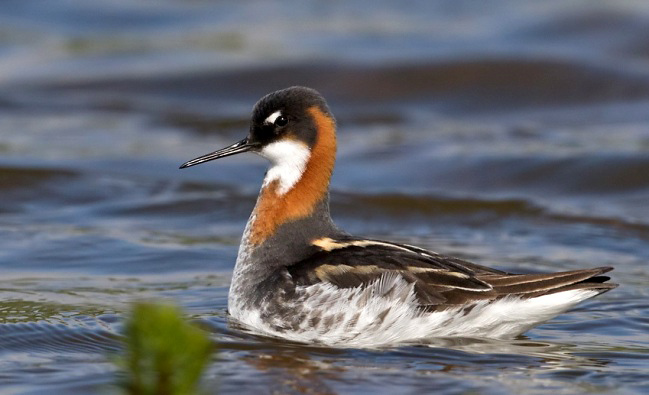
The exquisite Red-necked Phalarope by Lars Petersson.
Scotland - Wester Ross and Handa
The wild northwest region of the Scottish Highlands in the Scourie-Clachtoll-Lochinver-Gairloch area supports Black-throated Diver (Arctic Loon) and
Red-throated Diver (Loon), Golden and White-tailed Eagles, Merlin, Otter and Red Deer, and offshore are the seabird cities of Handa, an island with 123
metre high cliffs accessible by boat from Tarbet with Atlantic Puffins, Common Guillemots (Murres) (over 50,000 birds during the last count in 2016),
Razorbills, (Northern) Fulmars, (Red-legged) Kittiwakes, Arctic Terns and incredibly nearly 300 pairs of Great Skuas. June is the best time to go but
prepare to meet millions of midges.
Serbia
This small country about the size of Portugal is mainly flat north of the capital Belgrade where large rivers including the Danube flow slowly across the
Pannonian Plain while to the south there are hills and mountains. The best wetlands include Slano Kopovo NR (20,000 Common Cranes on passage, mostly March
and November, and roosting geese during the winter); Rusanda Nature Park in Melenci (shorebirds and Red-footed Falcon); Beljarica floodplain of the Danube
in Belgrade (nesting Black Stork and White-tailed Eagle); and fish farms along the River Tamis (breeding and migrant waterbirds, and possible wintering
Greater Spotted Eagle). In gorges in the west of the country there are about 140 pairs of Eurasian Griffons (Tresnjica Gorge NR is the nearest
colony to Belgrade and can be visited within a day). In the east Djerdap (Iron Gates) NP along the Danube supports Black and White-backed Woodpeckers,
Eurasian Crag Martin, Sombre Tit, and Ortolan and Rock Buntings. However, perhaps the most famous site for birds in Serbia is the town of Kikinda where in
some winters over 700 Long-eared Owls roost! The best times to visit Serbia are April to May and November to January. In spring/early summer it is also
possible to see Ferruginous Duck, Squacco Heron, Little Bittern, European Bee-eater, European Roller, Collared Flycatcher, Savi’s Warbler, Lesser Grey
Shrike, Rosy Starling (every few years) and Black-headed Bunting. During the winter tens of thousands of geese overwinter, twice as many when the Danube
area is frozen solid, mostly Greylag and Greater White-fronted Geese (half of them at the Labudovo okno Ramsar site at the Danube) with the odd Lesser
White-fronted and Red-breasted Geese. Other winter highlights include Pygmy Cormorant which can be seen year-round but in some winters the Belgrade
population reaches up to 7000, 10% of the regional population.
Shetland - Scotland
See Scotland - Shetland, above.
Sicily
This sunny, scenic, rugged island with smouldering Mount Etna, Europe’s largest active volcano which rises to 3350 m (10,991 ft), plateaus, plains,
orchards and coastal marshes is perhaps most famous amongst birders for the spring passage of migrant raptors across the Strait of Messina between Sicily
and mainland Italy. Birds move through from mid-March to May, as many as 40,000 or more of them, mostly European Honey-buzzards, Western Marsh-harriers and
Black Kites but also Pallid Harriers and Red-footed Falcons (mostly late April-early May) and rarities which have included Amur Falcon and Steppe Eagle. The
island also supports the resident endemic whitakeri race of Rock Partridge and a distinctive form of Long-tailed Tit. These birds occur in the interior
Madonie Mountains along with Lanner Falcon, Lesser Kestrel, Rock Sparrow and Rock Bunting. During the second half of April it is possible to see a wide
variety of passage migrant passerines especially on east coast headlands where migrant hot-spots include Capo Murro di Porco where the garrigue-covered
cape provides refuge for birds such as Collared Flycatchers. Seawatching from such places and along the south coast may reveal Scopoli’s (Cory's) and
Yelkouan Shearwaters, and Audouin’s Gull whereas coastal lagoons support a wide variety of waterbirds including Greater Flamingos, Ferruginous Ducks and
passing shorebirds. Common birds include Spotless Starling. Endemic plants include several orchids, such as Archimedes’ Ophrys, Brancifort’s and
Small-flowered Tongue Orchids, and the rare Pale Ophrys, all best looked for in May.
Slovakia
This land-locked country of scenic meadows, mountains, forests, canyons, gorges, rivers and waterfalls at the heart of Europe supports Black Grouse,
Black and White Storks, Golden, Eastern Imperial, Lesser Spotted and White-tailed Eagles, Saker Falcon, Corn Crake, marsh terns, nine European
woodpeckers and Eurasian Wryneck, Barred and River Warblers, Northern (Eurasian) Nutcracker and Citrine Wagtail. There is also a chance of seeing Eurasian
Eagle-owl, Eurasian Pygmy-owl, Tengmalm’s (Boreal) and Ural Owls (all especially during the first half of May), as well as Hazel Grouse, Lesser Grey
Shrike, Collared Flycatcher and Wallcreeper.
Slovenia
Slovenia is a small, relatively unspoiled country lying where the Alps meet the Mediterranean with an array of natural wonders including the 21 km
(13 miles) of passages, galleries and halls in the karst limestone Postojna Cave where in a small pool live pink Olms (Proteus anguinus), cave salamanders
endemic to the Dalmatian coast. Breeding birds include White Stork, Golden Eagle, Corn Crake, Ural Owl, Black Woodpecker, Rufous-tailed Rock-thrush,
Northern (Eurasian) Nutcracker, Yellow-billed (Alpine) Chough, Alpine Accentor, White-winged Snowfinch and Rock Bunting, and there is a chance of seeing
Rock Partridge, Rock Ptarmigan, Black and Hazel Grouse, Eurasian Pygmy-owl, Eurasian Three-toed and White-backed Woodpeckers, Wallcreeper and Common
Rosefinch. The alpine mountain slopes and steep-sided valleys thick with pine forests also support a rich flora of over 2900 species, many of which are
restricted to the Julian Alps and include Edelweiss, Illyrian Gladiolus and Transylvanian Orchid. June is the best time to look for birds, flowers and
some of the 181 butterflies recorded in the country such as Common Glider and Spotted Fritillary. In the southern Dinaric Alps region it is possible to
visit specially designed photography hides to view and photograph Brown Bears, most likely in May.
Spain - Extremadura
The best place in western Europe for bustards and raptors, including Great and Little Bustards, Spanish Imperial Eagle, Cinereous (Eurasian Black),
Egyptian and Griffon Vultures, and Black-shouldered Kite, as well as Black-bellied and Pin-tailed Sandgrouse, European Roller and Iberian Azure-winged
Magpie, in some splendid scenery.
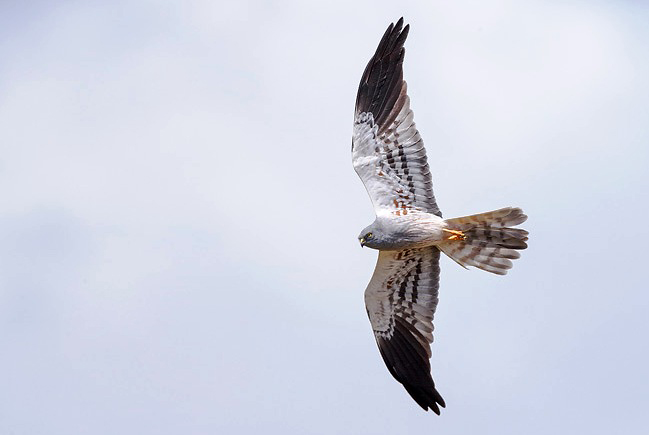
Montagu's Harrier by Michael McKee, one of the many raptors in Spain and a feature of Extremadura.
Spain - Northern
Lammergeier, Wallcreeper, Citril Finch and White-winged Snowfinch in the beautiful Pyrenees.
Spain - Northwestern
A chance of Brown Bear, Wild Cat and Wolf, as well as birds such as Great Bustard, Wallcreeper and White-winged Snowfinch.
Spain - Southern
Waterbirds galore in and around the Coto Donana, the spectacular autumn/fall migration of storks and raptors from Iberia to Africa, and a good chance of
Iberian Lynx.
Spitsbergen (Svalbard)
Polar Bear, Walrus and birds such as Ivory Gull in spectacular settings.
Sweden
Sweden is a sparsely populated country so a lot of good habitat remains intact and over 50% of the country is still forested. Conifers dominate the
north but to the south and east there are mixed forests with beech, birch and oak. In south-central Sweden during the cold, snowy winters (especially
early February) and in early spring (mid-April) it is possible to see Great Grey, Northern Hawk, Eurasian Pygmy, Tengmalm's (Boreal) and Ural Owls (all
only likely with local guides), Black, Grey-faced and Eurasian Three-toed (where dying spruce trees harbour Spruce Bark Beetles) Woodpeckers, Siberian Tit,
Siberian Jay and Northern (Eurasian) Nutcracker (both at feeding stations), as well as large numbers of Long-tailed Ducks and Smews along the Baltic coast,
Western Capercaillie, displaying (in spring) Black Grouse, white-headed caudatus Long-tailed Tits, white-breasted and bellied europaea
Eurasian Nuthatches, and Parrot Crossbill, with the additional possibility of Bohemian Waxwings, Arctic (Hoary) Redpolls and Pine Grosbeaks in influx
years, while mammals may include Moose (European Elk) and a darker variant of Red Squirrel.
Most people in search of owls (and bears) visit Finland where Wolverine and Red-flanked Bluetail are also possible but if it's Cranes visitors are after then Sweden is the place to go. During the first half of April 20,000 or so gather at Lake Hornborga (Hornborgasjon) a few hours from Stockholm and in early September the same number come together at Bergslagen, along with up to 20,000 Taiga Bean Geese. This is also a good time to see Elk (Moose) because the bulls have a full rack of antlers ready for the autumn rut. Each autumn about 500 million birds migrate from Scandinavia to Europe and Africa, and four million are recorded annually at Falsterbo, a migration bottleneck at the southern tip of Sweden, a particularly good place to watch migration in action, involving, on good days, usually when a southwest wind blows, big numbers of raptors, (Common) Wood Pigeons and Blue Tits. Birds occurring in smaller numbers include Greater and Lesser Spotted Eagles, and Northern (Eurasian) Nutcrackers. The best time to be at Falsterbo is from late August to October. Up north in southern Lapland the best time to look for Reindeer and birds such as lekking Great Snipe, Long-tailed Skua (Jaeger) and Lapland Bunting (Longspur) is late May-early June. It is also possible to see Brown Bears in Sweden, at night in July, from luxurious purpose-built hides.
The large limestone island of Gotland is a favourite summer holiday destination amongst the Swedish people but it remains remarkably unspoilt. During June it is possible to see Barnacle Goose, Red-necked and Slavonian (Horned) Grebes, Golden and White-tailed Eagles (Gotland has the densest eagle population in Sweden), Montagu’s Harrier, Corn and Spotted Crakes, Common Crane, Ruff, Arctic and Caspian Terns, Thrush Nightingale, Barred, Greenish and River Warblers, Collared and Red-breasted Flycatchers, and Red-backed Shrike, as well as 40-50 species of butterfly in a week, especially on the limestone pavements, and 15-20 dragonflies while the spectacular flora includes 37 of Sweden’s 40 orchids including all three Cephalanthera orchids; Long-leaved, Red and White Helleborines. Half an hour by boat offshore is the one kilometer square Stora Karlsö, an island with the Baltic Sea's largest seabird cliffs where 17,000 pairs of Common Guillemots (Murres), 10,000 pairs of Razorbills, Black Guillemots and fuscus ‘Baltic’ Lesser Black-backed Gulls raise their young. Gotland is also the home of one of if not thee best bird artists, Lars Jonsson, who has a public gallery/museum at Vamlingbo Prästgård in the south of the island.
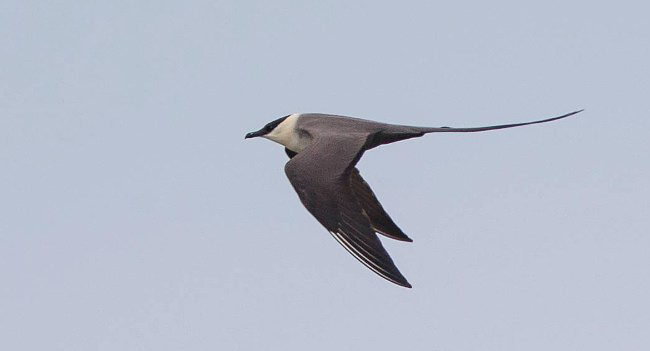
The elegant Long-tailed Skua or Jaeger by Simon Colenutt.
Switzerland
One of the best areas for birds and butterflies in this beautiful country is the Valais region bordering Italy where based in the Val d’Hérens, a Parc
Regional, it is possible to see nearly a hundred butterflies in a week during the second half of June including lots of blues, and birds such as Lammergeier
(Derborence Valley), Golden Eagle, Alpine Swift, European Bee-eater, Northern (Eurasian) Nutcracker, Yellow-billed (Alpine) Chough (tame at the Gornergrat
glacier at 3000m, reached via mountain railway up from Zermatt, where, if visibility is good, the spectacular views include the Matterhorn), Eurasian Crag
Martin, Wallcreeper (Grande Dixence Dam), Red-backed Shrike, White-winged Snowfinch, Alpine Accentor (Gornergrat and Grande Dixence), Citril Finch
(Derborence) and Rock Bunting. Many of these birds occur throughout the country of course along with mammals such as Alpine Marmot, Alpine Chamois and
Alpine Ibex (Grande Dixence). Also in Valais is the Grosser Aletsch Glacier, the largest glacier in the Alps. Other birds present in Switzerland include
the shy and rarely seen Rock Partridge and Rufous-tailed Rock-thrush, with waterbirds at Lac de Neuchatel and the Swiss Bodenssee (Lake Constance)
bordering Austria and Germany. The best place in the Swiss Alps for plants is the Upper Engadine in the far southeast where, in July, there are such
wonders as Globe, Short-spurred Fragrant, Dark Vanilla and Red Vanilla Orchids. Another good places for orchids, especially in late June, is around the
car-free village of Wengen where the mountain pastures contain Burnt, Bird’s-nest and Lady’s Slipper Orchids.
T
Turkey
Some of the most exciting birding in the Western Palearctic, but Turkey is a huge country and to see all of its best birds it would be necessary to
travel hundreds of miles, so most visitors opt to cover certain areas. The Bosphorus, especially in September, is a great place to watch the visible
migration of tens of thousands of raptors including Lesser Spotted Eagles and Levant Sparrowhawks, along with huge numbers of White Storks and some
Black Storks, on their way from Eurasia to Africa. The narrow strait between Europe and Asia is also regularly traversed by Yelkouan (Balearic)
Shearwaters. In southwest (as well as southern and eastern) Turkey it is possible to see the likes of Dalmatian Pelican (Lake Karine near Bafa),
Spur-winged Lapwing, White-breasted (Smyrna) Kingfisher (scarce in the Dalyan Delta), Finsch’s Wheatear (Pamukkale area), White-throated Robin,
Olive-tree (Pamukkale area), Eastern Orphean and Rüppell's Warblers, Sombre Tit, Krueper's and Western Rock Nuthatches, Masked Shrike, Black-headed,
Cinereous (Pamukkale area) and Cretzschmar's Buntings, and Red-fronted Serin (Gulubeli Pass, east of Dalaman). The south coast is famous for the
(Western) Brown Fish-owls at Oymapinar Barrage/Reservoir near Antalya and the chance of seeing the very elusive 'Lilford's' White-backed Woodpeckers
at Akseki. East from there is where most of the regionally-endemic (or breeding-endemic) Western Palearctic specialities are though, including
Caspian Snowcock, Radde's Accentor and Eurasian Crimson-winged Finch at Mount Demirkazik (along with Wild Goat (Bezoar Ibex) and Asia Minor Souslik).
Caspian Snowcock and Caucasian Grouse occur in the far northeast near Sivrikaya and to the south it is possible to see Grey-necked Bunting and
Mongolian Finch at Dogubeyazit.
The British Foreign and Commonwealth Office usually advise against travelling to areas near the border with Syria and parts of southeast Turkey, a dangerous region and Western Palearctic birding hotspot which includes the Birecik area. It was once a good place to see See-see Partridge, Pallid (Striated) Scops-owl, Pied Kingfisher, Blue-cheeked Bee-eater, Menetries's Warbler, Iraq Babbler, Desert Finch, Dead Sea and Pale Sparrows, and Chestnut-shouldered Bush-sparrow (Yellow-throated Sparrow), along with a feral colony of Northern Bald Ibises, and Red-wattled Lapwing near Batman to the east. The best time to look for most birds in Turkey is May.
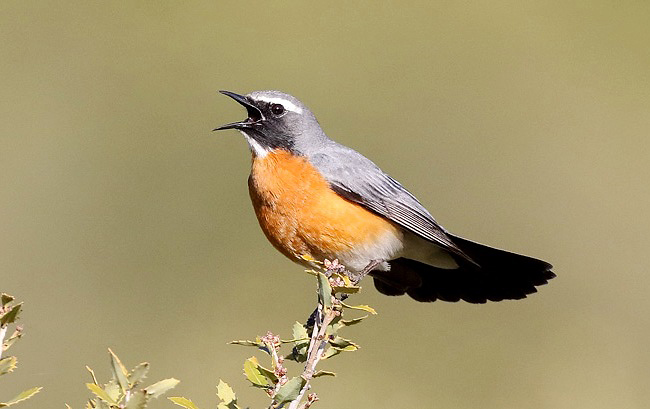
A singing male White-throated Robin at Seki in Turkey by Michael McKee.
U
Ukraine
Demoiselle Cranes, Great Bustards, and Red-footed and Saker Falcons on feather grass steppes, and waterbirds in the Danube Delta region, including
Dalmatian and Great White Pelicans, Pygmy Cormorant, Pallas's (Great Black-headed) Gull, and passage migrant shorebirds and terns.