
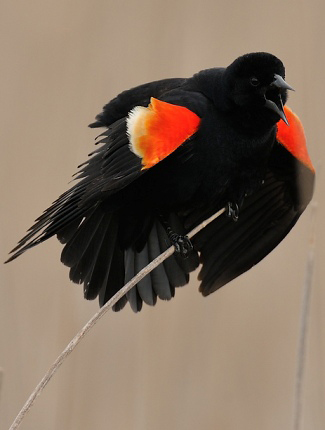
Red-winged Blackbird at Point Pelee by Steve Rogers.
NORTH AMERICA
The destinations listed and linked below are the ones we believe are the best in North America. They have been chosen very carefully and for a multitude of reasons, but mainly based on personal experience of some of them and on dreams of visiting the rest, dreams resulting from what we have heard, read or seen.
It is our intention to update this list regularly as we add destinations and it was last updated in May 2021.
If there are any other destinations you think should be on the list below then please feel free to Email us.
The destinations are listed alphabetically with very brief summaries for those linked, in dark blue, to more detailed pages (to reach these pages click on the destination name). Those not linked to more detailed pages are described in a bit more detail here, in italics, under light blue headings.
For more information see ...
The Best (100) Birds in the World,
The Best (100) Wildlife in the World and
Best (50) Other Natural Wonders.
Destinations
The first and arguably most important destination to consider is a Local Patch, somewhere a short walk from home where it is possible to see a wide range of birds and other wildlife any day of the year.
A
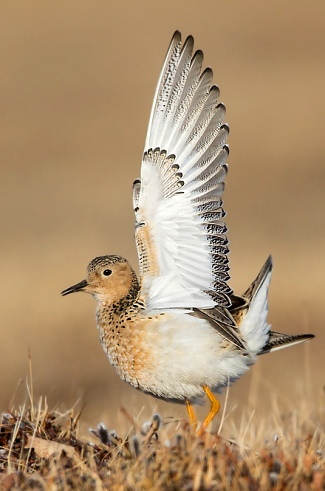
A beautiful, intricately-marked, displaying Buff-breasted Sandpiper at Barrow by Dubi Shapiro.
Alaska
Millions of seabirds and fur seals on the Pribilof Islands; one of the greatest concentrations of birds and mammals in the world, as well as the endemic
McKay's Bunting, other spectacular localised birds such as Emperor Goose, Spectacled and Steller's Eiders, Red-faced Cormorant, Red-legged Kittiwake,
Aleutian Tern, and nesting shorebirds such as Bristle-thighed Curlew and Rock Sandpiper, as well as Grizzly Bears, Killer Whales, Musk Ox, Moose and Sea
Otters, with a chance of Polar Bear at Barrow where, in autumn/fall, it is also possible to see many Ross's Gulls.
Alaska - Southeast
A chance to see Humpback Whales bubble-net feeding, Grizzly Bears fishing, and Black Bears, amongst the mountains, glaciers, fjords and
temperate rainforests of wild northwest America.
Alberta - Canada
See Canada - Alberta, below.
Arctic Canada and Greenland
See Canada - Arctic, below.
Arizona - Southeast
See USA - Arizona, below.
Arkansas - USA
See USA - Arkansas, below.
B
Baffin Island - Canada
See Canada - Baffin Island, below.
Bahamas
Eight endemic birds; Inagua Woodstar (Great Inagua), Bahama Lizard-cuckoo, Bahama Swallow, Bahama Nuthatch (may have become extinct due to Hurricane Dorian
in 2019), Northern Red-legged Thrush, Bahama Oriole, Bahama Yellowthroat and Bahama Warbler, as well as near-endemics Bahama Woodstar, Cuban Emerald, West
Indian Woodpecker, Cuban Amazon, La Sagra's Flycatcher, Cuban Pewee and Olive-capped Warbler, and wintering Kirtland's Warblers, all in one of the best
places in the world to swim with dolphins, sharks and sting rays.
Baja California - Mexico
See Mexico - Baja California, below.
Bay of Fundy (New Brunswick-Nova Scotia, Eastern Canada)
See Canada - Bay of Fundy, below.
Bermuda
This 21 square mile (54 square km) somewhat depauperate archipelago in the North Atlantic about 570 miles (920 km) east of Cape Hatteras in North Carolina
is most famous in the birding world for the endemic breeding Bermuda Petrel, or Cahow as it is called on Bermuda. When Columbus sailed past Bermuda
in 1492 an estimated half a million pairs of Bermuda Petrels were probably present. It did not take long after the arrival of people, especially the
English in the early 1600s, with their pigs, cats, dogs and rats, to push the petrel to what was thought to be extinction. Then a petrel was picked up
alive in 1906. Three others followed, in 1935, 1941 and 1945, before an expedition to search for birds was organized in 1951 and seven nesting pairs were
found. Since then, thanks mainly to the efforts of David B. Wingate who was present during the expedition, the numbers have risen to 70 pairs in 2003 and
130 by 2019, by which time it was possible for visitors to see some petrels, on boat trips run by the Bermuda Audubon Society in November, the
best time to see the petrels, especially during the new moon (birds usually leave during December before returning to lay their eggs). When these trips
are cancelled in bad weather it is possible to see the birds with a telescope from Cooper’s Island/Point, especially after 4 p.m. as they begin to
approach land. Bermuda Petrels are normally present through to April and another good time to look for them is in late February-early March when
White-tailed Tropicbirds are also present (usually until August). The 20 or so resident bird species include Eastern Bluebird, Grey Catbird and the
bermudianus form of White-eyed Vireo. Many more species have been recorded, mainly because Bermuda is a refuge for lost migrant North
American passerines, particularly from mid-September to mid-October when no less than 38 species of warbler were recorded one autumn (1998). Over a hundred
species including 20 or so warblers may remain throughout the winter. The top all-round birding site is Spittal Pond, good, according to the season, for
White-tailed Tropicbirds and warblers although Ferry Point Park is another well-known site for migrants.
Bosque del Apache (New Mexico) - USA
See USA - Bosque del Apache, below.
British Columbia (Western Canada)
See Canada - Western Canada, below.
C
California (Northern) - USA
See USA - California (Northern), below.
California (Southern) - USA
See USA - California (Southern), below.
Canada - Alberta
Black and possibly Grizzly Bears, American Bison, Moose, Elk, Bighorn Sheep and Mountain Goat, as well as birds such as Bald Eagle, Harlequin Duck, Varied
Thrush, Mountain Bluebird and Clark’s Nutcracker, in prairie potholes and grasslands, and the scenic forested, snowy mountains of the Rockies.
Canada - Arctic, and Greenland
Polar Bear, Walrus, Beluga, Bowhead Whale, Musk Ox, seabird cities with Little Auks (Dovekies) and Thick-billed Murres (Brunnich's Guillemots), and other
spectacular birds such as Gyr Falcon, Snowy Owl and Ivory Gull, all in wonderful settings, make this A Top Ten Destination.
Canada - Baffin Island
The best place in the world for Narwhal, plus a chance of Polar Bear, Walrus, Beluga and Bowhead Whale, as well as passing birds such as Ivory and
Sabine’s Gulls.
Canada - Eastern (Bay of Fundy, New Brunswick-Nova Scotia)
Fin, Northern Right and a chance of Humpback Whales, summering seabirds, and passing shorebirds and warblers.
Canada - Manitoba
The greatest concentration of Polar Bears in the world, at Churchill during October. In the first half of June Churchill is a good place to see passing
shorebirds and from late June to mid-August it is possible to see (and even swim with) Belugas there.
Canada - Newfoundland
The largest northern summer numbers of Humpback Whales in the world and spectacular seabird colonies including over half a million Atlantic Puffins on
Great Island alone, the largest colony in North America.
Canada - Northwest Territories
The most famous place for wildlife in Canada’s Northwest Territories province is Wood Buffalo National Park where the spectacular Whooping Crane, one of
the rarest birds in the world, nests. The cranes usually return from their wintering grounds in Texas in mid-April and leave during September-October. The
45,000 sq km park also supports breeding American White Pelicans and American Avocets, up to a million wildfowl during the autumn/fall migration period,
and mammals such as bison, bears, wolves, wolverines, lynx, moose and caribou but all, even the thousands of bison, can be extremely elusive in what is an
area larger than Switzerland. To the north in the Yellowknife region boreal habitats in the Great Slave Lake area support Bald Eagle, Sandhill Crane, Alder
and Olive-sided Flycatchers, Grey Jay, Blackpoll, Orange-crowned, Tennessee and Wilson’s Warblers, Western Tanager and Rusty Blackbird. The best time of
year to look for such birds is late June-early July.
Canada - Nunavut
It is possible to fly to the town of Cambridge Bay on Victoria Island in the high Arctic of Canada, from where visitors can travel by vehicle on a few
roads and tracks to: (i) the base of Mount Pelly where shorebirds including American Golden Plover, Baird’s, Semipalmated and Stilt Sandpipers, and
Red-necked Phalarope nest alongside Long-tailed Jaeger (Skua), Arctic Tern, Horned (Shore) Lark, Lapland Longspur (Bunting) and Snow Bunting. Also possible
are Yellow-billed Loon (White-billed Diver) and Muskox, and, if there are lots of lemmings, Snowy Owl and Pomarine Jaeger (Skua); (ii) Dease and Simpson
Straits overlooking the Northwest Passage, a good place for Ringed Seals, and where the tundra supports breeding Tundra (Bewick’s) Swan, Greater
White-fronted Goose, Common and King Eiders, Long-tailed Duck and shorebirds which may include Buff-breasted, Pectoral and White-rumped Sandpipers; and
(iii) the interior where nesting birds include Red (Grey) Phalarope and Sabine’s Gull. The best time is late June-early July.
Canada - Point Pelee (Ontario)
A migration bottleneck in spring for up to 30 species of New World warblers, as well as vireos, orioles and tanagers, and a good place to catch up with
American Woodcock.
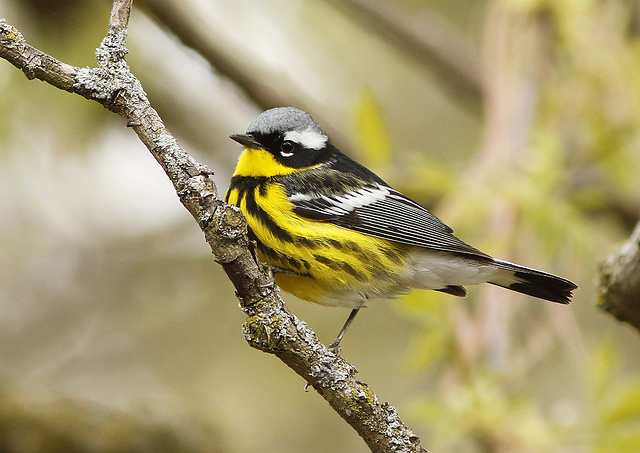
A superb Magnolia Warbler by David Beadle, one of many warblers possible on a good day at Point Pelee.
Canada - Quebec
A good chance of Beluga, Blue, Fin, Humpback and Minke Whales by boat, zodiac and kayak where the Saguenay Fjord meets the St Lawrence, out of the town
of Tadoussac from mid-June to September, especially mid-September for Blue Whale. Also, Laurentides Wildlife Reserve is a good place for Black Bear (from
hides and vehicles), Matane Wildlife Reserve for Moose and the Gaspe Peninsula/Gaspesie National Park for (Woodland) Caribou and a colony of nearly 50,000
pairs of Northern Gannets, possibly the largest on Earth, on Bonaventure Island. Other birds possible include Bald Eagle, Ruffed and Spruce Grouse, Boreal
Chickadee, up to 20 species of warbler, and Evening and Pine Grosbeaks, with Bicknell's Thrush at the top of Mount Saint Anne near Perce. During
late September-early October, when the autumnal colours are usually at their peak, up to 50,000 migrating Snow Geese and other waterfowl gather at the Cape
Tourmente National Wildlife Area.
Canada - Saskatchewan
In the first half of October small groups of Whooping Cranes and thousands of Sandhill Cranes, as well as tens of thousands of Canada and Snow Geese with
fewer Greater White-fronted and Ross’s Geese, and lots of ducks, migrate south across southern Saskatchewan stopping to rest and refuel in pothole country
east of Saskatoon, while in the boreal forest in Prince Albert National Park there is a chance of seeing Spruce Grouse, Northern Saw-whet Owl, American
Three-toed, Black-backed and Pileated Woodpeckers, Grey Jay, Boreal Chickadee, Bohemian Waxwing, sparrows which could include Harris’s and, occasionally,
Evening and/or Pine Grosbeaks, as well as Elk and Moose. Late May and June is the best time to enjoy the breeding birds of the vast prairie grasslands and
wetlands of southern Saskatchewan including American White Pelican, Ferruginous Hawk, Yellow Rail (unlikely to be seen), Upland Sandpiper, Sprague’s Pipit,
Baird’s Sparrow, Chestnut-collared and McCown’s Longspurs, and Yellow-headed Blackbird.
Canada - Western (British Columbia)
Grizzly Bears fishing for salmon, viewable from raised platforms, the greatest concentration of Killer Whales in the world, viewable from shore, boat and
kayak, Black Bears and even 'Spirit Bears' make this A Top Ten Destination.
Canada - Yukon
The Yukon is where Canada’s highest mountains are, as well as the largest non-polar icefields on Earth. There are not so many birds but the boreal forest
and tundra alongside the 350-mile-long gravel road known as the Dempster Highway between Dawson City and Inuvik at 68°N 120 miles inside the Arctic Circle
support Gyr Falcon, Long-tailed Jaeger (Skua), Northern Hawk-owl, Northern Wheatear, Smith’s Longspur and Grey-crowned Rosy-finch, as well as Black and
Grizzly Bears, and Moose. The best time to be there is late May-early June.
From mid-September to late October up to 50 Grizzly Bears arrive at Bear Cave Mountain to feast on salmon where thermal springs warm the river so it flows all year round. Due to its remote location close to the Arctic Circle access is very difficult and restricted and it may be necessary to book the adventure camp, accessible by helicopter from Dawson City, up to three years in advance.
Cape May, New Jersey - USA
See USA - Cape May, below.
Colorado - USA
See USA - Colorado, below.
D
Dakota, North - USA
See USA - North Dakota, below
E
El Triunfo - Mexico
See Mexico - El Triunfo, below
F
Florida - USA
See USA - Florida, below.
G
Greenland
See Canada - Arctic Canada, and Greenland, above.
H
Hawaii
About 30 endemic landbirds, 26 on the main islands, including three elepaios (small monarch flycatchers), three solitaires (Olomao, Omao and Puaiohi), and
16 'honeycreepers' (now in the finch family) which occur only on the islands of Hawaii, seabirds such as Laysan Albatross, Red-tailed and White-tailed
Tropicbirds, Great Frigatebird, Common White Tern, Red-footed Booby and Hawaiian Petrel, Bristle-thighed Curlew and the Hawaiian form of Black-necked
Stilt, Spinner Dolphins, Manta Rays, Green Turtles, coral reef fish, Humpback Whales and the chance to see rivers of molten lava pouring out of one of the
most consistently active volcanoes in the world.
Hawk Mountain Sanctuary - Pennsylvania
See USA - Pennsylvania, below.
I
Idaho - USA
See USA - Idaho, below.
L
Louisiana - USA
See USA - Louisiana, below.
M
Maine - USA
See USA - Maine, below.
Manitoba - Canada
See Canada - Manitoba, above.
Massachusetts - USA
See USA - Massachusetts, below.
Mexico - Baja California
Whales and dolphins galore, including Blue Whale and confiding Grey Whales, and a few seabirds such as Red-billed Tropicbird, Blue-footed and Masked
Boobies, Black and Least Storm-petrels, and Craveri's and Scipps's Murrelets, while, on land live six endemic landbirds; Xantus’s Hummingbird, Baja
Pygmy-owl, Grey Thrasher, San Lucas Robin, Baird’s Junco and Belding’s Yellowthroat.
Mexico - Central (Michoacan)
A Top Ten Destination thanks to millions of Monarch butterflies at their winter roosts, many more beautiful butterflies, some
superb Mexican and Central American endemic birds such as San Blas Jay, Aztec Thrush, Chestnut-sided Shrike-vireo, Orange-breasted Bunting and many
colourful warblers, as well as Humpback Whales and Red-billed Tropicbirds along the Pacific coast.
Mexico - El Triunfo
The cloud forest in this reserve in the Sierra Madre de Chiapas is one of the few accessible sites in Chiapas and neighbouring Guatemala where Horned
Guan occurs, and this is also a good place to see other range-restricted highland specialities such as Highland Guan, White-breasted Hawk, Fulvous Owl,
Resplendent Quetzal (the subspecies with the longest tail), Blue-throated Motmot, Green-throated Mountain-gem, Emerald-chinned Hummingbird, Black-throated
Jay, Blue-crowned Chlorophonia and Hooded Grosbeak. At lower altitudes the major speciality is Azure-rumped (Cabanis's) Tanager (most likely at Canada
Honda), while others include Rufous Sabrewing, Sparkling-tailed Woodstar, Tody Motmot, Giant Wren (Tapachula area) and Grey-crowned Ground-sparrow. Other
birds include Turquoise-browed Motmot (Paval area), Black-crested Coquette, Grey Silky-flycatcher and Long-tailed Manakin, and mammals present include
Central American (Geoffrey's) Spider Monkey, Collared Peccary and Southern Ringtail (Cacomistle). Visitors must have permission from the Instituto de
Historia Natural in Tuxtla Gutiérrez which can also help with the logistics in reaching the basic bunkhouse, which involves an uphill hike of about 11
km (6.5 miles), camping lower down, food and so on. The best time to visit is March when Horned Guans are usually calling.
Mexico - Oaxaca
There are probably more bird species in Oaxaca than any other Mexican state; nearly 700, and about a hundred of these are regional endemics. The area around
the city of Oaxaca is also one of the richest regions in Mexico for endemic birds and many of these occur: on Cerro San Felipe (La Cumbre), notable for
Dwarf Jay and lots of warblers including Red; along Route 175 North (the striking Slaty Vireo and, nearer the town of Valle Nacional, Tody Motmot); and
at Monte Alban, home of the skulking Ocellated Thrasher. Other great birds around the city include Grey Silky-flycatcher and Chestnut-sided Shrike-vireo,
with a chance of Aztec Thrush. Further afield, the Sierra Madre del Sur near Puerto Angel on the Pacific coast supports more endemics and Red-breasted Chat
(most likely in Parque Nacional Huatulca), and on pelagic boat trips out of places such as Huatulca and Puerto Angel it is possible, on good days, to see
Townsend’s Shearwater, as well as Galapagos and Pink-footed Shearwaters, Black and Least Storm-petrels, and Nazca (Masked) Booby. At the far eastern end of
the state, live two fantastic endemic birds; Orange-breasted and Rose-bellied (Rosita’s) Buntings, which can be seen side-by-side in the Tapanatepec
Foothills along with such birds as Citreoline Trogon, Russet-crowned Motmot and White-throated Magpie-jay. The endemic Giant Wren (a real giant!) occurs
not far away, near the small town of Puerto Arista in the state of Chiapas, and beyond there in Chiapas lies the Biosphere Reserve Selva el Ocote (Nava's
Wren), El Sumidero Canyon (Belted Flycatcher and a chance of Slender Sheartail) and the warbler-filled woods of San Cristobal de las Casas (Golden-cheeked
and Pink-headed Warblers, and a chance of Blue-throated Motmot and Black-throated Jay). The best time to look for birds is January to April.
Mexico - Southern (Yucatan-Chiapas)
Yucatan bird specialities such as Ocellated Turkey, Mexican Sheartail and Yucatan Jay, more widespread spectacular birds such as Keel-billed Toucan and
Turquoise-browed Motmot, and one of the best places in the world to swim with Whale Sharks.
Mexico - Veracruz
The best place to watch migrating raptors in the world, with 4-6 million birds passing over each autumn/fall in what is known as the ‘Río de Rapaces’
or ‘River of Raptors' and with the 30 or so species of raptor there are sometimes over a million butterflies and dragonflies per day.
Mexico - Western (including the Durango Highway, San Blas, and Colima and Jalisco)
The spectacular endemic Tufted Jay can be seen in the Sierra Madre Occidental, accessible along the Durango Highway, along which also occur the rare
Sinaloa Martin, Red-headed Tanager and Mexico's famous flocks of warblers which here contain Crescent-chested, Olive, Red and Red-faced. Lower down,
specialities include Military Macaw, Purplish-backed Jay and wintering Black-capped Vireos. At the coast, on the Gulf of California, rocky islets
viewable (with telescopes) from Mazatlan support breeding Red-billed Tropicbirds and Blue-footed Boobies. Further south along the Pacific coast lies
the small holiday resort of San Blas where it is possible to see 250 species in a week, less than a thousand miles south of the U.S. border, including
about 30 endemics (such as Citreoline Trogon and San Blas Jay), as well as Rufous-necked Wood-rail, Bare-throated Tiger-heron, Boat-billed Heron, Collared
Forest-falcon, Northern Potoo, Military Macaw, Russet-crowned Motmot, Fan-tailed Warbler and the unique Rosy Thrush-tanager. Humpback Whales spend the
northern winter in Banderas Bay, Puerto Vallarta, where on organised whale-watching trips it is also possible to see Bottlenose and Spotted Dolphins. Not
much further south is the small state of Colima which together with parts of neighbouring Jalisco supports about 40 endemics including San Blas Jay, Aztec
Thrush, Red Warbler and Orange-breasted Bunting, as well as Grey Silky-flycatcher, Chestnut-sided Shrike-vireo, many warblers including Colima and
Golden-browed, and Red-breasted Chat. The smoking Volcan de Fuego is one of the best sites, although the vast flocks of Yellow-headed Blackbirds winter on
the Ciudad Guzman Marshes. At the coast, boat trips can be arranged out of Manzanillo to a big rock called Piedra Blanca where Red-billed Tropicbirds
breed. The best time to bird Western Mexico is January-February.
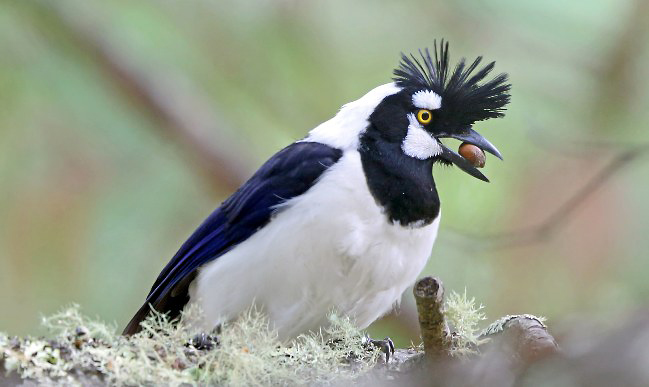
The striking Tufted Jay at Reserva Chara Pinta by Nigel Voaden.
Michigan - USA
See USA - Michigan, below
Minnesota - USA
See USA - Minnesota, below
Missouri - USA
See USA - Missouri, below
Montana - USA
See See USA - Montana, below
N
Nebraska (Platte River) - USA
See USA - Nebraska, below.
New Brunswick-Nova Scotia (Eastern Canada)
See Canada - Eastern, above.
Newfoundland - Canada
See Canada - Newfoundland, above.
New Mexico (Bosque del Apache) - USA
See USA - Bosque del Apache, below.
North Carolina - USA
See USA - North Carolina, below.
North Dakota - USA
See USA - North Dakota, below.
Northwest Territories - Canada
See Canada - Northwest Territories, above.
Nova Scotia-New Brunswick (Eastern Canada)
See Canada - Eastern (Nova Scotia-New Brunswick), above.
Nunavut - Canada
See Canada - Nunavut, above.
O
Oaxaca - Mexico
See Mexico - Oaxaca, above.
Ohio - USA
See USA - Ohio, below.
Ontario (Point Pelee) - Canada
See Canada - Point Pelee (Ontario), above.
Oregon - USA
See USA - Oregon, below.
P
Pennsylvania - Hawk Mountain Sanctuary
See USA - Pennsylvania, below.
Platte River (Nebraska) - USA
See USA - Nebraska, below.
Point Pelee (Ontario) - Canada
See Canada - Point Pelee (Ontario), above.
Q
Quebec - Canada
See Canada - Quebec, above.
S
Saskatchewan - Canada
See Canada - Saskatchewan, above.
T
Texas
See USA - Texas, below.
U
USA - Alaska
Millions of seabirds and fur seals on the Pribilof Islands; one of the greatest concentrations of birds and mammals in the world, as well as the endemic
McKay's Bunting, other spectacular localised birds such as Emperor Goose, Spectacled and Steller's Eiders, Red-faced Cormorant, Red-legged Kittiwake,
Aleutian Tern, and nesting shorebirds such as Bristle-thighed Curlew and Rock Sandpiper, as well as Grizzly Bears, Killer Whales, Musk Ox, Moose and Sea
Otters, with a chance of Polar Bear at Barrow where, in autumn/fall, it is also possible to see many Ross's Gulls.
USA - Southeast Alaska
A chance to see Humpback Whales bubble-net feeding, as well as Grizzly Bears fishing, and Black Bears, amongst the mountains, glaciers, fjords and
temperate rainforests of wild northwest America.
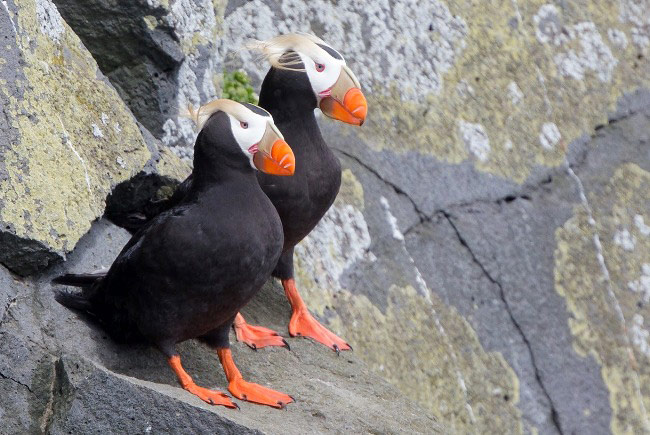
Tufted Puffins are easy to see on the Pribilof Islands of Alaska. Image by Simon Colenutt.
USA - Arizona (Southeast)
A greater variety of breeding birds than any other area of comparable size in the United States; about 190 species in total including over ten species of
owl, lots of hummingbirds, Coppery-tailed (Elegant) Trogon, Painted Redstart, and Grace's, Olive and Red-faced Warblers, mostly replaced in winter by
Sandhill Cranes, Mountain Plovers, raptors and sparrows, all half a day by road from Tucson.
USA - Arkansas
The small state of Arkansas, north of Louisiana, is home to birds such as Red-cockaded Woodpecker, Brown-headed Nuthatch and Bachman’s Sparrow, all
three of which occur together at some sites in the southern half of the state including the Ouachita National Forest near Waldron where other breeding
birds include Greater Roadrunner, and Kentucky, Pine and Prairie Warblers. In the far north of the state next to Missouri are the limestone hills and
mountains of the Ozarks which support 18 species of breeding warblers, most of which are best looked for when they are singing, especially during the
middle two weeks of May. One of the best areas is the upper Buffalo River near Harrison from Lost Valley to the springs at Mountain View where the
bottomlands and valleys support Cerulean, Hooded and Kentucky Warblers, as well as Bald Eagle and Wood Thrush. Another good birding site in the far north
is Mammoth Spring State Park near Hardy where Wood Duck, Red-headed Woodpecker and Warbling Vireo occur.
USA - Bosque del Apache, New Mexico
Up to and sometimes above 20,000 wintering Snow Geese and thousands of Sandhill Cranes in one of the most impressive gatherings of birds in the world.
USA - California (Northern)
The best chance of Bobcat in the world, a good chance of Blue and Humpback Whales, as well as Northern Elephant Seal and Sea Otter, with the fine
selection of birds including Black-footed Albatross, the reintroduced California Condor, the state endemic Yellow-billed Magpie, the near-endemic Allen's
Hummingbird, and California Thrasher, all in one of the most scenic places on Earth, not least Yosemite Valley, with the tallest trees in the world (Coast
Redwoods), the largest trees in the world (Giant Sequoias) and the oldest trees in North America (Bristlecone Pines).
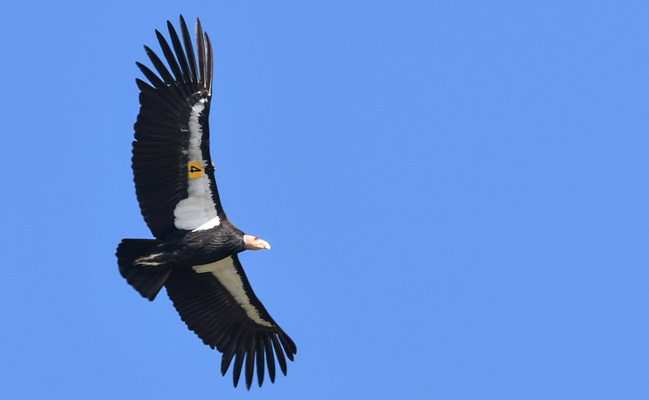
The USFWS recorded a population of 268 California Condors living in the wild in December 2015, many of them in California where they are being reintroduced into the mountains north of Los Angeles and the Big Sur area of the central coast. Image by Chris Townend.
USA - California (Southern)
A wide range of habitats in a small, often scenic, area means Southern California is a top birding destination. Mountains, pine-oak woods, chaparral,
deserts, shoreline and ocean combine to support a great diversity of birds including two endemics (Island Scrub-jay and Yellow-billed Magpie) and
several specialities; Black-vented Shearwater (off La Jolla Cove), Brown Booby (on cliffs at La Jolla - now breeding on Los Coronados Islands south of
San Diego), Scripps’s (Xantus's) Murrelet, Yellow-footed Gull, Allen’s Hummingbird, Nuttall’s Woodpecker, California Thrasher, California Gnatcatcher
(San Elijo Lagoon Ecological Preserve), Wrentit, the nomadic Lawrence's Goldfinch, California Towhee and Tricoloured Blackbird, while other spectacular
species include Heermann's Gull, Black Skimmer, Burrowing Owl and Greater Roadrunner. The best times to look for these birds are late April-early May and
during the winter when there are thousands of Snow Geese (with Ross's Geese), hundreds of Sandhill Cranes and lots of Mountain Plovers around the southern
end of the Salton Sea which is the only regular location for Yellow-footed Gull in the United States, although they are rare in winter (numbers usually
peak during late summer). 'Desert' Bighorn Sheep occur in Anza-Borrego SP along with Dulzura and Merriam's Kangaroo Rats.
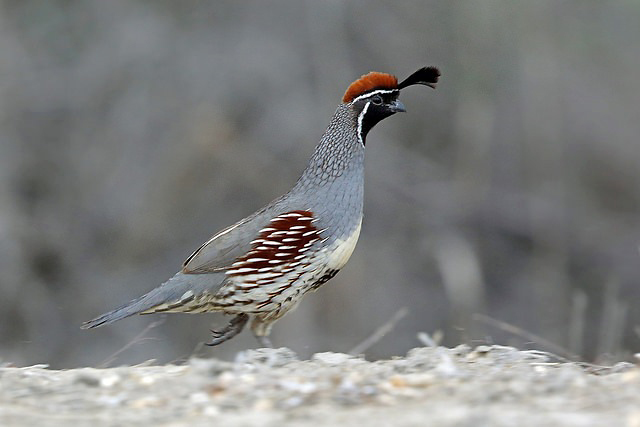
Gambel's Quail at Grand Junction, Colorado, by Nigel Voaden. This great bird can be seen in the desert scrublands of Colorado, Utah, Nevada, California, Arizona, New Mexico, Texas and northwestern Mexico.
USA - Cape May, New Jersey
Cape May is one of the best places on Earth to experience visible bird migration. During the autumn/fall birds from a huge area of northern North America
pass through this peninsula at the southern end of the state of New Jersey, 160 miles south of New York, before continuing south. Small bird migration
usually peaks during the middle two weeks of September and the main period of migration for all species usually lasts between mid-September and
mid-October and includes waterbirds, shorebirds, raptors, warblers, vireos, sparrows and buntings. They may occur in astonishing numbers if there has been
a 'fallout', usually after wet cold fronts sweep across the cape from the northwest. During such times there are also likely to be lots of Yellow-shafted
Flickers, Blue Jays and Tree Swallows, and plenty of Belted Kingfishers, while the freshwater and saltwater marshes and beaches also support a few Bald
Eagles and hundreds of Black Skimmers. The best sites, crowded with birders during peak season, are Higbee Beach WMA (especially for passage migrant
passerines early morning, in what is known as the 'morning flight' when nocturnal migrants flit north and west over the dike in search of roosting and
foraging sites for the day), Cape May Point SP (for waterbirds, shorebirds, migrating raptors (the Cape May Bird Observatory's hawk watch platform is
here) and the 'morning flight' over the dunes), and Edwin B. Forsythe (formerly Brigantine) NWR, about 50 miles north of Cape May (for waterbirds,
shorebirds and raptors).
Although most famous for the autumn/fall migration it is also worth considering visiting Cape May during the spring, when: the spawning of tens of thousands of Horseshoe Crabs in Delaware Bay takes place, their eggs in turn providing food for thousands of passage migrant shorebirds (the spawning usually peaks during the last week of May); over 20 species of warbler may be seen, with nesting and passage migrant species both singing (the greatest variety of warblers and other small migrants usually occurs during the first half of May, especially on overcast days with southwesterly winds); and freshwater and saltwater marshes and beaches support the rare Piping Plover, as well as Bald Eagle and Black Skimmer.
For information on Cape May Bird Observatory, the annual Cape May Autumn Birding Festival (usually held in late October) and the annual 24-hour fundraising birdrace known as the World Series of Birding (usually held in early May) see the New Jersey Audubon website.
USA - Colorado
Seven species of displaying grouse in spring, other birds including Mountain Plover, Lewis’s Woodpecker and Pinyon Jay, and a chance of Elk, Bighorn
Sheep and Pronghorn.
USA - Florida
Localized North American birds such as Magnificent Frigatebird, Wood Stork, Snail and Swallow-tailed Kites, Short-tailed Hawk, Red-cockaded Woodpecker and
the endemic Florida Scrub-jay, lots of waterbirds, alligators and West Indian Manatees.
USA - Hawaii
About 30 endemic landbirds, 26 on the main islands, including three elepaios (small monarch flycatchers), three solitaires (Olomao, Omao and Puaiohi), and
16 'honeycreepers' (now in the finch family) which occur only on the islands of Hawaii, seabirds such as Laysan Albatross, Red-tailed and White-tailed
Tropicbirds, Great Frigatebird, Common White Tern, Red-footed Booby and Hawaiian Petrel, Bristle-thighed Curlew and the Hawaiian form of Black-necked
Stilt, Spinner Dolphins, Manta Rays, Green Turtles, coral reef fish, Humpback Whales and the chance to see rivers of molten lava pouring out of one of the
most consistently active volcanoes in the world.
USA - Hawk Mountain Sanctuary, Pennsylvania
See Pennsylvania, below.
USA - Idaho
From the Snake River to the Sawtooth mountains Idaho supports a fine range of western American birds, best looked for during the second half of May.
The Snake River Canyon Birds of Prey National Conservation Area just outside Boise includes an 80-mile-long section of the river where the cliffs
provide nesting sites for more than 500 pairs of 15 species of eagles, hawks, falcons and owls including Golden Eagle, Ferruginous Hawk and Prairie
Falcon while the surrounding woods and shrub-steppe desert support Calliope Hummingbird, Lewis's Woodpecker, Lazuli Bunting and Black-headed Grosbeak.
In contrast the Camas National Wildlife Refuge has numerous nesting waterbirds such as grebes, ducks, Trumpeter Swans, White-faced Ibises, Bald Eagles,
Sandhill Cranes and Franklin's Gulls. For mountain birds head up to McCall where Williamson's Sapsucker, MacGillivray's Warbler and Western Tanager
occur.
USA - Louisiana
Many taiga and prairie pothole breeding species winter in the rice-growing region of southwest Louisiana; geese, ducks, sparrows and, best of all, Yellow
Rails. Thanks to the rice-harvesting schedule of Cajun farmers there is a better chance of seeing these secretive little birds here than virtually
anywhere else. During early November when the annual Yellow Rails and Rice Festival is held the rice combine harvesters collect the lagniappe (extra)
autumn crop and flush the birds as they spiral inwards, along with other rails, American Bitterns and sparrows. The rice fields were formerly coastal wet
prairie where prairie-chickens and Whooping Cranes nested; both have gone although between 2011 and 2017 ten to 16 hatched juvenile cranes were released
annually in a reintroduction scheme which by 2016 had resulted in five pairs making nine nesting attempts one of which included the first successful
wild-hatched Whooping Crane in Louisiana since 1939. In addition, pine woods support resident southeastern specialties Red-cockaded Woodpecker,
Brown-headed Nuthatch and Bachman's Sparrow, and the coastal marshes, beaches and cheniers (tree islands) provide food and shelter for numerous resident
waterbirds, wintering species and migrants, and during the spring the sometimes spectacular migration associated with the adjacent Texas coast can be
just as good in little-known Louisiana where summer breeding species include Swallow-tailed Kite and Swainson’s Warbler.
USA - Maine
From late May to late June in Maine, the peak of the breeding season where many species reach their northernmost or southernmost limits, it is possible
to see thousands of seabirds such as Great Shearwater, and Leach's and Wilson's Storm-petrels, all three of which, as well as Fin Whales, occur in
'the Ballpark', a rich area of upwelling, accessible, along with Petit Manan Island where breeding Arctic Terns, Atlantic Puffins, Razorbills, Common
Murres (Guillemots) and Black Guillemots can be seen at close quarters, on half-day boat trips out of Bar Harbor. On land there are Ruffed and Spruce
Grouse, Bald Eagle, 'Eastern' Willet, Upland Sandpiper (Kennebunk Plains), Blue-headed Vireo, lots of flycatchers, Blue and Grey Jays, Boreal Chickadee,
several thrushes including Bicknell’s (on Mount Washington in the White Mountains just across the state border in New Hampshire) and up to 25 species of
warbler including Blackburnian, Black-throated Blue, Chestnut-sided and Magnolia, as well as, possibly, American Woodcock displaying, Piping Plover and
Black-backed Woodpecker.
USA - Massachusetts
Large numbers of Humpback Whales and seabirds such as Great Shearwaters and Wilson's Storm-petrels on the nutrient rich Stellwagen Bank during the
summer.
USA - Michigan
The rare Kirtland’s Warbler winters on the Bahamas and summers in the young jack pine forests on Michigan’s lower peninsula along with Cape May,
Golden-winged and Mourning Warblers, as well as Upland Sandpiper, Henslow’s Sparrow and Evening Grosbeak. Kirtland’s Warbler is strictly protected and
the best way to see it is on tours usually conducted by the Michigan Audubon Society in mid-May to early July. To look for migrant warblers and other
passerines head to Tawas Point, a sandy spit on the shores of Lake Huron where many birds may seek food and shelter after a cold front in spring.
Another famous Michigan ‘point’ is Whitefish at the southeast end of Lake Superior ten miles north of Paradise. Tens of thousands of migrant birds pass
through, by or over in spring (mostly April when owls including Boreal and Northern Saw-whet may drop in) and autumn/fall. Lake Erie Metropark, about
20 miles south of Detroit, is one of the best Hawkwatch Sites in North America. Raptor numbers usually peak in mid-September but the greatest diversity
occurs in October. The seasonal average of over 250,000 raptors was surpassed on the 17th of September 1999 when 547,000 flew over including over half
a million Broad-winged Hawks!
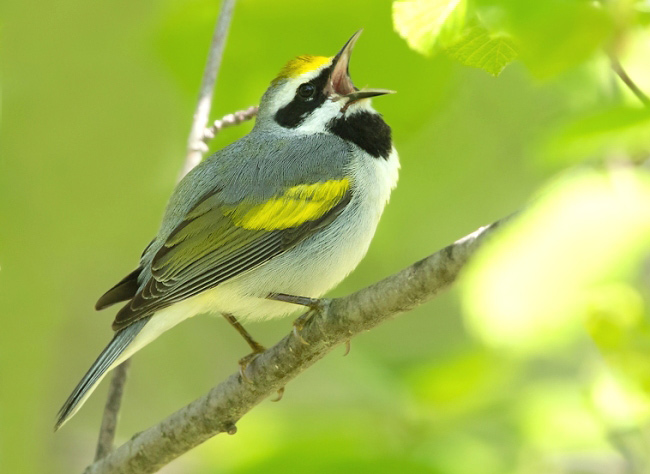
A beautiful singing male Golden-winged Warbler, Grayling, Michigan, by Dubi Shapiro.
USA - Minnesota
The boreal bogs and forests of northern Minnesota, especially Sax-Zim Bog and the Superior National Forest north of Duluth, are famous for Great Grey Owls,
although there are not many of them and they can be difficult to find. It is probably easier to find them during the extremely cold winter months when it
is also possible to see Boreal, Northern Hawk and Snowy Owls, Evening and Pine Grosbeaks, and Hoary (Arctic) Redpoll, as well as white Short-tailed Weasel
(Stoat) at some of the several feeding stations. Looking for them in early June it is also possible to see over 20 species of warbler including
Blackburnian, Canada, Cape May, Connecticut, Golden-winged, Magnolia and Mourning, all in full song and breeding plumage, as well as Sandhill Crane and
Blue-headed Vireo. Resident species include Ruffed Grouse, Black-backed Woodpecker, Grey Jay and Boreal Chickadee. Elsewhere in the state Maplewood State
Park is a particularly good place for Golden-winged Warbler and out west in the Felton prairies Greater Prairie-chicken is possible. To the west lies
North Dakota, described below.
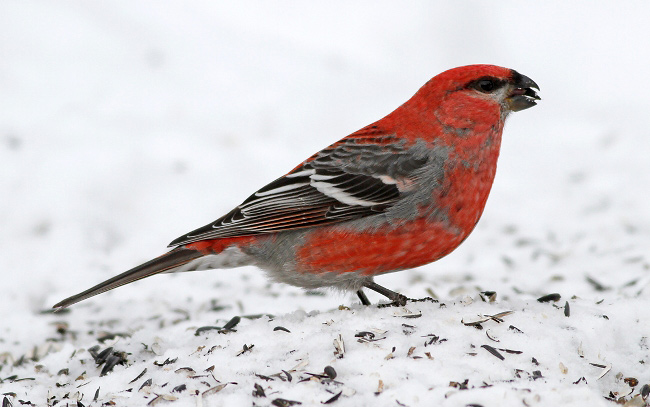
Pine Grosbeak in a snowy Minnesota winter by Chris Townend.
USA - Missouri
Missouri lies just east of the central United States. Rolling farmland and tiny remnants of prairie cover the north and west, and flat plains and the
forested limestone hills and mountains of the Ozarks the south and southeast with the Mississippi River running south along the state’s eastern border
with Illinois. In the Americas over 95% of tall-grass prairies have been cleared to make way for agricultural land and less than three percent of what
once existed in Missouri remains. The largest and finest remnant is in Prairie State Park near Springfield in the southwest which supports Scissor-tailed
Flycatcher, Henslow’s Sparrow and Dickcissel, as well as Bison. Greater Prairie-chicken used to occur here. Up to 18 species of warbler including
Cerulean, Kentucky and Nashville spend the northern summers in the Ozarks, most of which are best looked for when they are singing, especially during the
middle two weeks of May which are also a good time to see the wide range of wild flowers. For breeding and migrant warblers head for Roaring River State
Park or the Ruth and Paul Henning Conservation Area (formerly White River Balds Natural Area) just west of Branson where the ‘balds’, forest glades, are
good for warblers and Yellow-breasted Chat.
USA - Montana
The sparsely populated (six to seven people per square mile) plains, rivers, lakes, marshes and mountains of the fourth largest of the United States
support a wide range of birds and mammals. Prairie pot holes are an especially rich habitat, particularly at Freezeout Lake State Waterfowl Management
Area and Benton Lake National Wildlife Refuge where there are many ducks, White-faced Ibis, American White Pelican, Wilson's Phalarope, American Avocet,
Black-necked Stilt and Yellow-headed Blackbird with Long-billed Curlew, Marbled Godwit, Chestnut-collared and McCown's Longspurs, Bobolinks and Lark
Buntings in the surrounding grasslands. As for mountains they don’t get much more scenic than in Glacier National Park where Harlequin Duck, Varied
Thrush, MacGillivray's, Townsend’s and Wilson’s Warblers, Grey-crowned Rosy-finch and Black Bears occur. Outside the park ‘Goat Lick’, a steep cliff
and natural mineral lick above the Flathead River is where Mountain Goats gather during the spring. Grizzly Bears may be seen out on the prairie at
Pine Butte Swamp and other mammals abound in the National Bison Range, particularly American Bison which roam among some of the last Palouse Prairie
in western Montana. Other Montana mammals include Pronghorn, Elk, Bighorn Sheep and Black Bear, and other birds are Lewis' Woodpecker and Mountain
Bluebird. The peak time to visit is the first week of June during the late spring when there is up to 15 hours of daylight.
Montana also has the largest number (14) of breeding owl species of any U.S. state; American Barn-owl, Barred, Boreal, Burrowing, Flammulated, Great Grey, Great Horned, Long-eared and Short-eared Owls, Eastern and Western Screech-owls, Northern Hawk-owl, Northern Pygmy-owl and Northern Saw-whet Owl, while Snowy Owl is a regular winter visitor. The breeding species are best searched for during the second half of April.
USA - Nebraska (Platte River)
One of the most impressive gatherings of birds in the world with about half a million Sandhill Cranes at their staging area in March along with Ross's
and Snow Geese.
USA - New Mexico
See USA - Bosque del Apache, above.
USA - North Carolina
During the summer, especially late May to early June, up to 40 miles off Cape Hatteras, where the warm waters of the Gulf Stream meet the cool waters of
the Labrador Current, there is a considerable upwelling of nutrients which in turn provide a rich food supply for a wonderful selection of seabirds.
Regular species are Black-capped Petrel, Audubon's, Cory’s and Great Shearwaters, Band-rumped (Grant's), Leach's and Wilson’s Storm-petrels, Bridled Tern
and Pomarine Jaeger (Skua), less regular species include Manx Shearwater, South Polar Skua, Long-tailed Jaeger (Skua) and Sooty Tern, and rare species
include Bermuda, Cape Verde (Fea's), Desertas (Fea's) and Trinidade Petrels. Whales, dolphins, turtles, flying fish and even Blue Marlin are also possible.
The all-day pelagics are run by Seabirding. Along the coast and inland there are some great
birds too, including Brown Pelican, a wide variety of herons, Clapper Rail, shorebirds including Piping Plover, Black Skimmer, Blue Jay and Seaside
Sparrow, as well as Southeastern United States specialities such as Wilson’s Plover, Red-cockaded (Croatan NF) and Red-headed Woodpeckers, Brown-headed
Nuthatch, Swainson’s and Prothonotary Warblers, Summer Tanager, Bachman’s Sparrow and Painted Bunting.
USA - North Dakota
The rolling grasslands and wetlands in prairie-pothole country near Jamestown in Kidder County on the Great Plains of eastern North Dakota are famous for
nesting waterbirds, especially ducks (the region is often referred to as the 'Duck Factory' of North America), but also Western Grebe, American White
Pelican (one of the continent's largest breeding colonies is at Chase Lake NWR), American Bittern, Upland Sandpiper, Marbled Godwit, American
Avocet, Wilson's Phalarope, California and Franklin’s Gulls, and Black and Forster's Terns. The grasslands support the rare Sprague's Pipit and Baird's
Sparrow, as well as Sharp-tailed Grouse, Ferruginous Hawk, Dickcissel, Grasshopper and Vesper Sparrows, Chestnut-collared Longspur, Bobolink and
Yellow-headed Blackbird. Just to the east is Minnesota, described above. The peak time for birding is early June.
USA - Ohio
Crane Creek and Magee Marsh Wildlife Area, along the Lake Erie shoreline about 15 miles east of Toledo, make up one of the best places in North America to
see warblers during the spring, especially the middle two weeks of May when over 30 species may be seen and the
The Biggest Week in American Birding, an annual event, is held. The birds stop to
rest and refuel in the tiny stretch of woods here before making the 30-mile crossing to Ontario and often allow close-up views along with cuckoos,
flycatchers, thrushes, vireos, tanagers and orioles. At nearby Ottawa National Wildlife Refuge it is possible to see a good variety of ducks, herons and
shorebirds. Cerulean, Hooded and Yellow-throated Warblers, as well as birds such as Acadian Flycatcher and Wood Thrush more typical of the southern
Appalachians can be seen in eastern Ohio in Cuyahoga Valley National Park.
USA - Oregon
Because there are so many habitats in such a small area in Oregon there is a greater diversity of birds than in any other similar-sized area in the world
at a similar latitude. The range of birds is impressive, whether it is the second half of May, the peak spring period when songbirds are singing and in
spring plumage or the first two weeks of September when huge numbers of birds are passing through on southward migration, and includes Harlequin Duck,
Mountain Quail, Bald Eagle, Ferruginous Hawk, Prairie Falcon, Sandhill Crane, American Avocet, Wilson's Phalarope, several owls, Calliope and Rufous
Hummingbirds, lots of woodpeckers and flycatchers, Clark's Nutcracker, Wrentit, Mountain Bluebird, Varied Thrush, Lazuli Bunting and Evening Grosbeak,
with trickier species including Yellow Rail (Klamath Marsh NWR), Tufted Puffin (Cape Kiwanda SNA), Great Grey Owl (sometimes nesting on known nesting
platforms in the Blue Mountains near La Grande) and Tricoloured Blackbird. Mammals include several chipmunks and ground-squirrels, Bighorn Sheep, Elk,
Pronghorn and Yellow-bellied Marmot. In addition, on full-day pelagic trips out of Newport in September it is possible to see Black-footed Albatross,
Pink-footed Shearwater, Fork-tailed Storm-petrel and other seabirds such as Laysan Albatross.
USA - Pennsylvania (including Hawk Mountain Sanctuary)
Every autumn/fall mainly September-October an average of 18,000 raptors pass over Hawk Mountain Sanctuary on the Kittatinny Ridge in the Appalachians
about 25 miles north of Reading. Species with peak times in parentheses include Western Osprey (September), Bald Eagle (first half of September), Northern
Harrier (October), Sharp-shinned Hawk (mid-September to the end of October), Cooper’s Hawk (October), Northern Goshawk (November), Red-shouldered Hawk
(mid-October to mid-November), Broad-winged Hawk (September), Red-tailed Hawk (October-November), Rough-legged Hawk (November to mid-December), Golden
Eagle (mid-October to mid-November), American Kestrel (September), Merlin (October), Peregrine Falcon (October-November). The Annual Autumn Hawk Watch
takes place daily from mid-August to mid-December 9 am to 5 pm at North Lookout when an official counter and interpreters are on hand to point out and
identify birds. There may not be many birds if the weather conditions are unsuitable though; it is best to visit on days immediately following the passage
of a cold front when the wind blows from the northwest.
An impressive diversity of flycatchers, vireos, warblers and sparrows breed in central Pennsylvania. Singing usually peaks in late May when males arrive and establish territories. There may be as many as five species of Empidonax flycatchers, Henslow's Sparrow is the star of the sparrows, the possible 25 species of warbler include Blackburnian, Black-throated Blue, Canada, Cerulean, Golden-winged, Magnolia, Mourning and Prothonotary, and Yellow-breasted Chat is also possible.
USA - Platte River, Nebraska
See USA - Nebraska, above.
USA - Texas
Bird migration in action with, in the right spring weather, huge 'kettles' of Broad-winged and Swainson's Hawks, flocks of shorebirds stopping off on
their way north, and thousands of small birds including warblers, tanagers and buntings, all in dazzling summer plumage, and all vying for attention
alongside wintering Whooping Cranes, resident Greater Roadrunners and summer visitors such as Swallow-tailed Kites and Scissor-tailed Flycatchers.
Down south there are over 20 birds more or less restricted to southern Texas in the United States and best looked for in the Lower Rio Grande Valley area, birds such as Plain Chachalaca, Common Pauraque, Green and Ringed Kingfishers, Great Kiskadee, Green Jay, Tropical Parula, and Altamira and Audubon's Orioles.
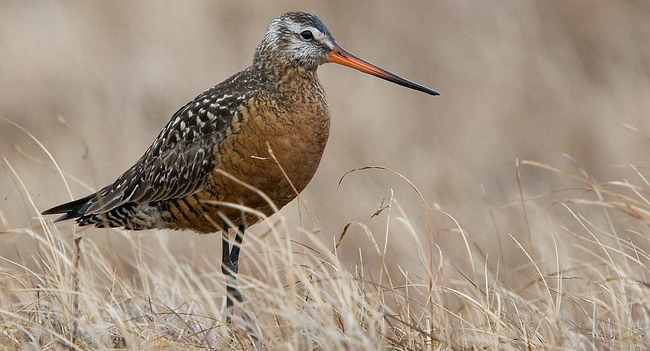
The numerous shorebirds migrating through Texas during the spring include Hudsonian Godwits, some of them in summer breeding plumage like this male by Michael McKee.
USA - Virginia & West Virginia
Possibly the greatest range of breeding warblers for such a small area of North America occurs from the rolling Piedmont and Blue Ridge Mountains of
Virginia across the Shenandoah Valley to the Allegheny and Cheat Mountains of West Virginia. At the end of May and early June the forested mountains
resound with the songs of over 25 species of warbler including Blackburnian, Canada, Cerulean (especially in the oak woods of the Blue Ridge, Virginia),
Chestnut-sided, Kentucky, Magnolia, Mourning, Prothonotary and Yellow-throated.
USA - Washington
This west coast state supports an impressive range of birds, whether it is the second half of May, the peak spring period when songbirds are singing and
in spring plumage or the first two weeks of September when huge numbers of seabirds, shorebirds and songbirds are passing through on southward migration.
The list includes Harlequin Duck, Bald Eagle, White-tailed Ptarmigan (Mount Rainier NP, along Skyline Trail near Panorama Point above Paradise, and along
Mt Fremont Lookout Trail above Sunrise), Sandhill Crane, Calliope and Rufous Hummingbirds (these, as well as Cassin's Finch, and Black-headed and Evening
Grosbeaks, are attracted to the feeders at Mt Adams Lodge), Tufted Puffin (on Protection Island NWR, accessible via two-hour boat trips from Port Townsend
on the Olympic Peninsula), lots of woodpeckers, Clark's Nutcracker, Varied Thrush, Mountain Bluebird, Lazuli Bunting and Grey-crowned Rosy-finch (Mt
Fremont Lookout Trail above Sunrise in Mount Rainier NP). Mammals include Killer Whale (the waters around the San Juan Islands, accessible from Port
Townsend, are some of the best in the world for this species), Black Bear, Elk and various chipmunks and ground-squirrels. During September Washington is
not only a great place for rare shorebirds in North America it is where a wide range of seabirds gather offshore and on full-day pelagic trips out of
Westport Harbor it is possible to see lots of Black-footed Albatrosses, as well as Buller’s and Pink-footed Shearwaters, Fork-tailed Storm-petrel and
South Polar Skua. In addition, Laysan Albatross, Flesh-footed Shearwater and Tufted Puffin are seen on some trips and rarities have included the likes of
Murphy’s Petrel.
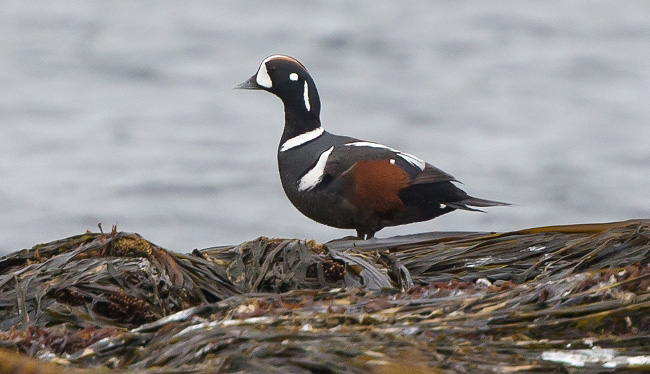
The beautifully patterned and coloured Harlequin Duck is widespread across northwestern North America, as far south as Washington and Oregon where they usually spend the summers inland and the winters along the Pacific coast. This superb image was taken by Simon Colenutt in Alaska.
USA - Wyoming (Yellowstone)
Wolf, Grizzly and Black Bears, Bison and Moose, as well as some spectacular birds including Bald Eagle and Clark's Nutcracker, in the superb settings of
the Grand Tetons and Yellowstone, complete with snowy mountains, hot springs and other geothermal phenomena such as geysers like Old Faithful.
V
Veracruz - Mexico
See Mexico - Veracruz, above.
Virginia & West Virginia - USA
See USA - Virginia & West Virginia, above.
W
Washington - USA
See USA - Washington, above.
Wyoming (Yellowstone) - USA
See USA - Wyoming, above.
Y
Yellowstone (Wyoming) - USA
See USA - Wyoming, above.
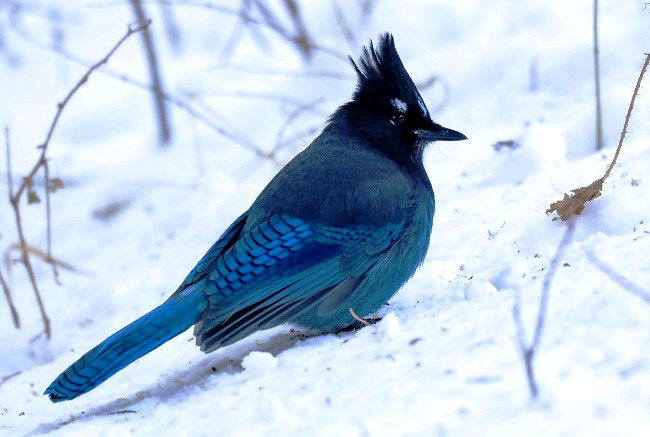
A beautiful image of a Steller's Jay in Yellowstone by Simon Colenutt.
Yucatan - Mexico
See Mexico - Southern, above.
Yukon - Canada
See Canada - Yukon, above.