
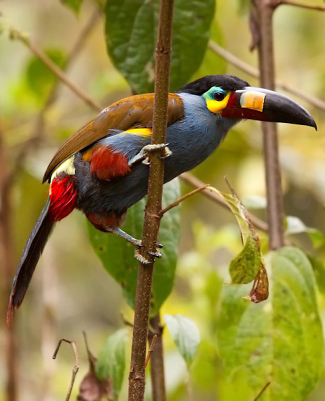
The amazing Plate-billed Mountain-toucan at Bellavista Lodge in Northern Ecuador by Dubi Shapiro.
SOUTH AMERICA and ANTARCTICA
The destinations listed and linked below are the ones we believe are the best in South America and Antarctica. They have been chosen very carefully and for a multitude of reasons, but mainly based on personal experience of some of them and on dreams of visiting the rest, dreams resulting from what we have heard, read or seen.
It is our intention to update this list regularly as we add destinations and it was last updated in May 2021.
If there are any other destinations you think should be on the list below then please feel free to Email us.
The destinations are listed alphabetically with very brief summaries for those linked, in dark blue, to more detailed pages (to reach these pages click on the destination name). Those not linked to more detailed pages are described in a bit more detail here, in italics, under light blue headings.
For more information see ...
The Best (100) Birds in the World,
The Best (100) Wildlife in the World and
Best (50) Other Natural Wonders.
Destinations
The first and arguably most important destination to consider is a Local Patch, somewhere a short walk from home where it is possible to see a wide range of birds and other wildlife any day of the year.
A
Amazon (Brazil)
See Brazil - Amazon , below.
Antarctica - Emperor Penguins
Sail and fly in (at great expense) to spend a few days at an Emperor Penguin colony.
Antarctica, South Georgia and the Falklands
Whales, dolphins, elephant seals, fur seals, penguins, albatrosses and innumerable other seabirds in the most amazing settings on Earth make this
A Top Ten Destination. Possibly the greatest concentration of life in the world on South Georgia includes vast colonies
of King Penguins and nesting albatrosses such as Wandering and Light-mantled, while to the south lies the extreme beauty of Antarctica completed by
Antarctic and Snow Petrels.
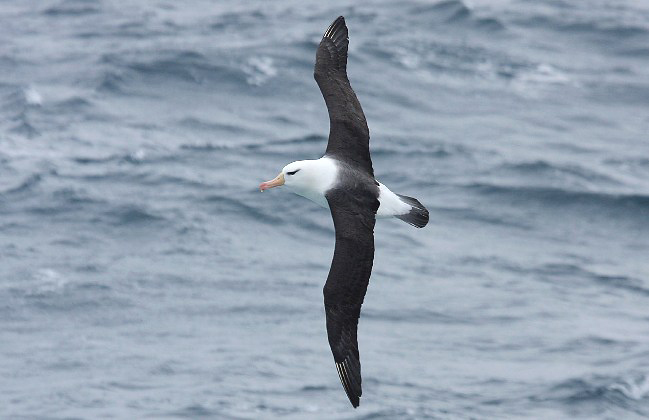
Albatrosses in the Southern Ocean between The Falklands and South Georgia include the handsome Black-browed. Image by Jon Hornbuckle.
Argentina - Northern
Condors, flamingos, localised specialities such as Black-legged Seriema and Rufous-throated Dipper, and a brilliant hummingbird called a Red-tailed Comet,
in the spectacular high Andes.
Argentina - Southern
Killer Whales 'beaching' in pursuit of seal pups, Southern Right Whales, Southern Elephant Seals, up to a million Magellanic Penguins at their largest
rookery in the world, Andean Condors, Magellanic Plovers, Tawny-throated Dotterels, Magellanic Woodpeckers and the very rare and localised Hooded
Grebe.
Atlantic Odyssey
For people who love seabirds and can arrange a holiday lasting 30 days (to Ascension), 36 days (to Cape Verde), 44 days (to Madeira) or even longer, all
the way to mainland Europe, this could be the actual 'Trip of a Lifetime' for in addition to the Top Ten Destination that involves
Antarctica and South Georgia summarised above the ship sails on, north through the Atlantic to Gough Island, Tristan da Cunha, St Helena and so on, making
it possible to see 40, even 50, species of seabird, as well as island endemics such as Ascension Frigatebird, St Helena Plover and Gough Moorhen, and
numerous whales and dolphins.
B
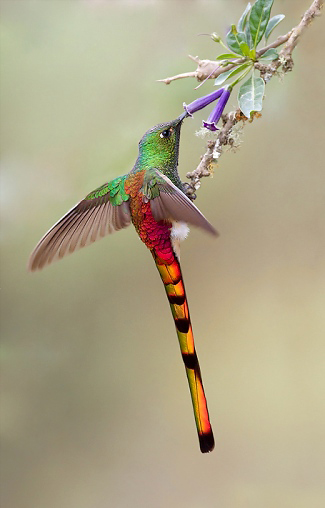
One of the best images ever of one of the most spectacular hummingbirds, a Red-tailed Comet by Dubi Shapiro, taken at a place called Siberia in Bolivia.
Bolivia
Several spectacular macaws including the endemic Blue-throated, 17 other endemics including Horned Curassow, Black-hooded Sunbeam, Masked Antpitta, Apolo
(Swallow-tailed) Cotinga and Cochabamba Mountain-finch, and numerous near-endemics including 84 species shared only with Peru, and 29 only with Argentina,
with the latter group including Red-tailed Comet, one of the most beautiful hummingbirds, all in the birdiest landlocked country on Earth.
Brazil - Amazon
The largest river on the planet, flowing through the richest rainforest in the world which supports the greatest diversity of life on Earth, with many
birds including parrots, macaws, hummingbirds, jacamars, toucans, antbirds and cotingas, notably Crimson Fruitcrow, Guianan Cock-of-the-rock and
Guianan Red Cotinga, and mammals such as sloths, tamarins, marmosets and monkeys.
Brazil - Carajas
Carajas National Forest in southeastern Para state, northeast Brazil, is one of the richest areas for birds in Amazonia. It is possible to see and/or hear
250 species in a few days and they may include Peruvian Recurvebill, Black-chested Tyrant and Black-and-white Tody-flycatcher, as well as Bare-faced
Curassow, White-crested Guan, Red-throated Piping-guan, Chestnut-headed Chachalaca, Grey-bellied Goshawk, Harpy Eagle, Cryptic Forest-falcon, Black-winged
Trumpeter, Rufous-sided and Russet-crowned Crakes, Marbled Wood-quail, Blue-and-yellow, Hyacinth, Red-and-green and Scarlet Macaws, Jandaya and Pearly
Parakeets, Red-fan and Vulturine Parrots, Dot-eared Coquette, Blue-necked Jacamar, Rufous-necked Puffbird, Eastern Red-necked Aracari, Banded and
Southern Wing-banded Antbirds, Long-winged Antwren (paraensis), Black-bellied and Black-breasted Gnateaters, Fiery-capped and Opal-crowned Manakins,
Guianan Red Cotinga, Purple-breasted, Spangled and White-tailed Cotingas, the wallacei subspecies of White Bellbird, Sharpbill, Blackish Pewee, White-naped
Jay, Rose-breasted Chat, Para (Guianan) Gnatcatcher, Spotted Tanager, Red-billed Pied Tanager and Yellow-shouldered Grosbeak. In the same region, around
the town of Caxias in Maranhao state are restricted-range birds such as Buff-browed Chachalaca, Kaempfer’s Woodpecker, Moustached Woodcreeper and Hooded
Gnateater, along with Lesser Crescent-chested Puffbird, Curl-crested Jay, and Blue and Coalcrest, with a chance of Rufous-vented Ground-cuckoo. The best
time to visit is August-September.
Near Belem, also in Para state, it is possible to see the endemic Hooded Gnateater, as well as Buff-browed Chachalaca and Olive-backed Foliage-gleaner while the amazing Golden Parakeet is being reintroduced to a city park and other birds in and near the city include White-browed Hawk, Vulturine Parrot, the nominate subspecies of Willis’s Antbird, Grey Antwren, Cinereous Antshrike, Purple-breasted and White-winged Cotingas, and Crimson-hooded and Opal-crowned Manakins. Endemic to the lower Amazon, Scaled Spinetail occurs on Mexiana Island at the mouth of the river, and Little Wood-rail can be seen at Salgado Paraense near Salinopolis, along with Scarlet Ibis, Rufous Crab-hawk, Sunbittern, Mangrove Cuckoo and Plain-bellied Emerald.
Brazil - Central (Minas Gerais)
Some tour companies tie a trip to the Pantanal with the Campo and Cerrado Region of Minas Gerais state in Central Brazil where the main sites are:
Serra da Canastra National Park, where it is possible to see Brazilian Merganser, one of the rarest birds in the world, as well as Giant Anteater,
Black-ear-tufted Marmoset, Red-legged Seriema, Aplomado Falcon, Golden-capped Parakeet, Toco Toucan, Campo Miner, Grey-backed Tachuri, Cock-tailed,
Sharp-tailed and Streamer-tailed Tyrants, Collared Crescentchest, Helmeted Manakin, White-rimmed and White-striped Warblers, Blue Finch and
Yellow-rumped Marshbird; Serra do Cipo National Park, where the main attractions are Hyacinth Visorbearer, possibly Horned Sungem, Cipo Canastero and
(Cipo) Long-tailed Cinclodes, along with Cinereous Warbling-finch and Pale-throated Pampa-finch; Serra do Caraca National Park, where there is a chance
of Maned Wolf on the monastery steps and Black-ear-tufted Marmoset, as well as Slaty-breasted Wood-rail, Orange-eyed Thornbird, Serra Antwren, Rufous
Gnateater, Red-ruffed Fruitcrow, Swallow-tailed Cotinga and Pin-tailed Manakin; and Caratinga National Park, where Buffy-headed Marmoset, and Brown Howler
and Woolly Spider Monkeys occur, and there is a chance of Three-toed Sloth and Giant Helicopter Damselfly. The best time to visit is the dry season, July
to October.
From Belo Horizonte in Minas Gerais state it is not far east to the state of Espirito Santo where the adjacent Rio Doce Private Forest Reserve and Sooretama Biological Reserve protect one of the largest remnants of Atlantic coastal lowland rainforest and support Red-billed Curassow, White-necked Hawk, Black-cheeked Gnateater, Black-headed Berryeater and White-winged Cotinga. Not far from there is the town of Santa Theresa where the hummingbird feeders at the home of the late Dr Augusto Ruschi attract a whirl of hummers, including Frilled Coquette. Santa Theresa city park is a good place to see Masked Titi Monkey, Geoffroy’s Marmosets and Common Opossums (on the bird tables at night) and Santa Lucia Reserve near Santa Theresa supports Cinnamon-vented Piha, Bare-throated Bellbird, Sharpbill and many tanagers.
In 2018 a new reserve was created in the rocky uplands of eastern Minas Gerais to help protect the recently rediscovered Blue-eyed Ground-Dove.
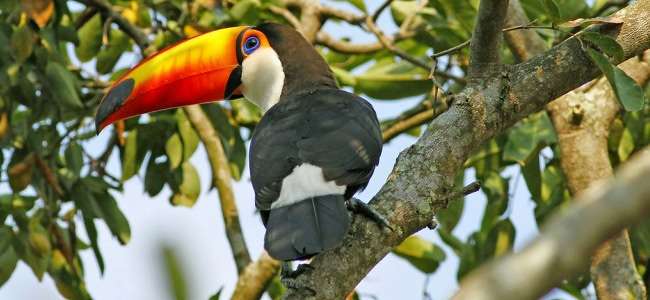
Brazil is the best place to see Toco Toucan. Image by Chris Townend.
Brazil - Alta Floresta
This luxurious Cristalino Lodge is about an hour by road and half an hour by river from Alta Floresta which is accessible by air in one
and a half hours from Cuiaba, the gateway to the Pantanal, hence the two destinations are often combined by tour operators. Cristalino is situated in
southern Amazonian rainforest, the richest place for birds on Earth, hence nearly 600 bird species have been recorded. Many are thin on the ground and/or
shy and skulking though so a stay of at least a week is recommended to stand a chance of seeing some of the numerous specialities such as Razor-billed
Curassow, Red-throated Piping-guan, Zigzag Heron, Harpy Eagle, White-browed Hawk, Cryptic Forest-falcon, Green-winged Trumpeter, Crimson-bellied Parakeet,
White-faced Amazon (Kawallʼs Parrot), Pavonine Quetzal, Tapajos Hermit, Brown-banded, Eastern Striolated and Rufous-necked Puffbirds, Blue-necked Jacamar,
Black-girdled Barbet, Curl-crested Aracari, Gould's Toucanet, Glossy Antshrike, Bare-eyed Antbird, Alta Floresta (Spotted) Antpitta, Zimmerʼs Tody-Tyrant,
Flame-crested and Snow-capped Manakins, Tooth-billed Wren and Yellow-shouldered Grosbeak, as well as more widespread species such as Agami Heron,
Sunbittern, Blue-and-yellow, Red-and-green and Scarlet Macaws, Great and Paradise Jacamars, Long-billed Woodcreeper, Black-spotted Bare-eye,
Chestnut-belted Gnateater, Pompadour, Purple-throated and Spangled Cotingas, Bare-necked Fruitcrow, Amazonian Umbrellabird, White-browed Purpletuft,
Band-tailed Manakin, Musician Wren and Paradise Tanager. There are two 50 metre high canopy towers, lots of trails and boat trips along the blackwater
rivers are available to seek out the birds and mammals, which include Red-handed Howler and several other monkeys. The best time to visit is
October-November at the start of the rainy season when more birds are in song and there are more antswarms. Similar species occur at Rio Azul
Jungle Lodge, three hours by road from Alta Floresta, including Tapajos Hermit, and the forest here is a good place to see the rare Bald
Parrot.
Brazil - Northeast
In the states of Alagoas, Bahia, Ceara and Pernambuco it is possible to see over 450 species on a regular trip including well over 100 of Brazil’s 268
endemics, many of which are rare and highly localised in remnant patches of three main habitats: the arid, thorny scrub and woodland of the Caatinga,
savanna-like Cerrado, and Atlantic Forest. In the Fortaleza-Recife region the stunning Arapire Manakin which has a tiny range occurs in the Crato area
along with White-browed Antpitta, with Scarlet-throated Tanager between there and Quixada. The very localized endemic Grey-breasted Parakeet can be seen
at the Hotel de Remanso on the Quixada-Serra de Baturite Road and in the serra along with Ceare (Rufous) Gnateater and a few extra possible ‘ceara’splits.
South from Recife, between there and Salvador, the very rare White-collared Kite is possible at Murici along with Alagoas Antwren, Scalloped
Antbird, Black-cheeked Gnateater and Seven-coloured Tanager. Inland, the place for Lear's Macaw is Canudos. South of Salvador the greatest concentration of
endemics in Brazil occurs in the Boa Nova area in Bahia with species present including Giant Snipe, Pygmy Nightjar, Frilled Coquette, Large Pale-browed
Treehunter, Narrow-billed Antwren, Rio de Janeiro, Scaled, Slender and White-bibbed Antbirds, Fork-tailed and Hangnest Tody-tyrants, Pink-legged
Graveitero, Pin-tailed Manakin and Dubois's Seedeater. South of Boa Nova Buff-throated Purpletuft and Cinnamon-vented Piha occur at Serra Bonita and the
two outstanding cotingas, Banded and White-winged, are both at Veracel. Inland, Helmeted Manakin occurs at Caetite. The mammals of this huge region
include White-tufted-ear and Wied's Black-tufted-ear Marmosets, and Coimbra-Filho's Titi Monkey. The best time for birding is January at the start of the
rainy season when more birds are vocal.
Brazil - Roraima
The Amazonian lowlands, Tepuis cloud forests, palm swamps, savannas and marshes of Brazil's northernmost state support many range-restricted species such
as Crestless Curassow, Sun Parakeet, Hoary-throated Spinetail, and Rio Branco and Yapacana Antbirds, in the Guianan Shield, Imeri (west of the Rio Branco)
and Pantepui areas of endemism. From Boa Vista (accessible by air from Manaus) head north to the Serra do Tepequem (a southern extension of the Tepui) and
on to Viruá National Park, 30 mins by road from Caracarai City, for the aforementioned species, as well as Slate-coloured Hawk, Sunbittern, Blue-and yellow
and Red-and-green Macaws, Black-headed and Caica Parrots, Golden-winged Parakeet, Scarlet-shouldered Parrotlet, Tufted Coquette, Green-tailed and Paradise
Jacamars, Spotted Puffbird, Channel-billed Toucan, Guianan Toucanet, Black-necked and Green Aracaris, Black-headed, Ferruginous-backed, Rufous-throated and
White-bellied Antbirds, Guianan Tyrannulet, Rufous-crowned Elaenia, Guianan Cock-of-the-rock, Black, White-crowned and Yellow-crested Manakins, Cayenne
Jay, Campina (Black-billed) Thrush, Burnished-buff Tanager, White-naped Seedeater and Plumbeous Euphonia (mostly Apr-Aug). The dry season extends from
September to March.
Brazil - Southeast
More endemic birds than any other corner of South America (74), plus 76 shared with far north Argentina and east Paraguay and a whole load more Atlantic
Forest Endemics, many of which are localized, rare and little-known but they include such star birds as Black-headed and Hooded Berryeaters, Cinnamon-vented
Piha, Black-and-gold, Grey-winged and Swallow-tailed Cotingas, Bare-throated Bellbird, Buff-throated Purpletuft and Elegant Mourner, as well as some
very large antshrikes and several stunning tanagers not least Brassy-breasted, Cherry-throated and Red-necked.
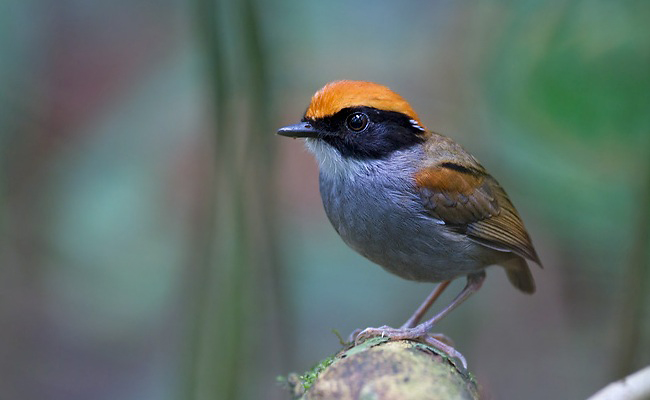
Black-cheeked Gnateater at the 'REGUA' Reserve in Southeast Brazil by Dubi Shapiro.
Brazil - Southern (Pantanal-Iguassu)
One of the greatest concentrations of wildlife in South America, in one of the world's most extensive wetlands, the Pantanal, the best place in the world
to see Jaguars, with other mammals including Giant Anteater, Giant Otter and Brazilian Tapir, and numerous birds such as Southern Screamer, Sunbittern,
Hyacinth Macaw and Toco Toucan.
C
Colombia
More bird species than any other country, over 1900 of them, with over 90 endemics including 12 hummingbirds, and nearly 250 species shared with Panama
(27), Venezuela (81), Ecuador (100), and Ecuador and Peru (40), plus many more widespread spectacular species such as Scarlet Ibis and Oilbird, so many
birds in fact that on a wide-ranging trip taking in the Choco region in the west, the Andes in the middle and the Amazonia region in the east it is
possible to record an incredible 1000 species in a month!
E
Ecuador - Northern
More birds per square mile than any other country in the world including many parrots, macaws, hummingbirds, trogons, quetzals, jacamars, toucans,
antbirds, cotingas, manakins, tanagers and spectacular localized birds such as Zigzag Heron, Rufous-bellied Seedsnipe, Oilbird and Black-necked Red
Cotinga, hence it is possible to see over 850 species in three to four weeks, as well as some mammals, maybe even Pygmy Marmoset and Spectacled Bear.
Ecuador - Southern
Five of Ecuador's eight endemic birds occur in the south; Blue-throated Hillstar, Violet-throated Metaltail, El Oro Parakeet, Ecuadorian Tapaculo and
Pale-headed Brush-finch but it is some of the 109 birds shared only with Peru that many birders wish to see, including Jocotoco Antpitta, Black-crested
Tit-tyrant, White-tailed Jay and Orange-throated Tanager, as well as birds shared only with Colombia, such as Long-wattled Umbrellabird.
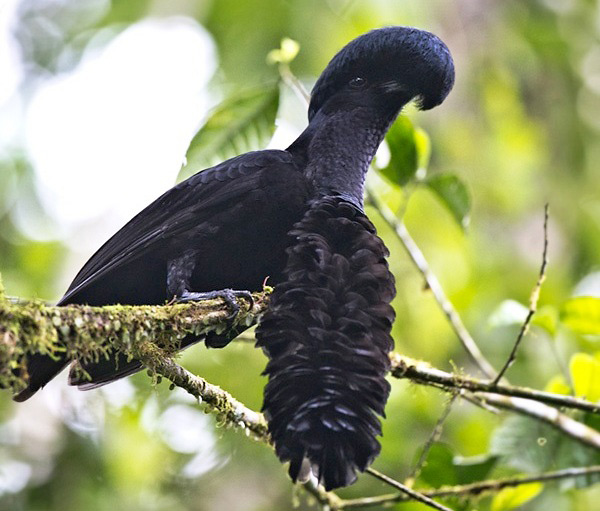
The truly extraordinary Long-wattled Umbrellabird at the Jocotoco Foundation's Buenaventura Reserve in Southern Ecuador by Lars Petersson.
Emperor Penguins - Antarctica
See Antarctica - Emperor Penguins, above.
F
Falkland Islands (Islas Malvinas)
King and other penguins, Black-browed Albatross colonies, Southern Elephant Seals, three endemic birds; Falkland Steamerduck, Blackish Cinclodes and Cobb’s
Wren, and a few birds difficult to see elsewhere including Ruddy-headed Goose, Striated Caracara and White-bridled Finch.
French Guiana
Forest still covers about 90% of this sparsely populated overseas department of France which means the birding is fantastic. However, the ecotourist
infrastructure is relatively basic and many sites are accessible only by boat or plane. The long list of spectacular and special birds includes Agami
Heron (the world’s largest nesting colony with about 1500 pairs is at Reserve Naturelle des Marais de Kaw about 70 km from the capital Cayenne), Scarlet
Ibis, Hoatzin, (Cayenne) Cabot's Tern (Ile de Grand Connetable), Red-fan Parrot, Crimson Topaz, jacamars, trogons, toucans, Guianan and Spotted Puffbirds,
Painted Tody-flycatcher, White-plumed Antbird, Capuchinbird, Guianan Cock-of-the-rock, Guianan Red Cotinga, Pompadour, Purple-breasted and Spangled
Cotingas, Dusky Purpletuft, Crimson-hooded Manakin, Musician Wren, Blue-backed Tanager and Red-and-black Grosbeak, with additional species in the primary
forest (with trails) surrounding the small, isolated village of Saul in the heart of the country, arguably the top site in French Guiana with over 450
species recorded, accessible only by air, including Black Curassow, Zigzag Heron, Orange-breasted Falcon, Black-and-white Hawk-eagle, Crested and Harpy
Eagles, Red-and-green and Scarlet Macaws, all five Amazonian potoos, Fiery-tailed Awlbill, Tufted Coquette, Red-billed Woodcreeper, McConnell’s Spinetail,
White-throated Pewee, Band-tailed and Black-throated Antshrikes, Ash-winged, Rufous-rumped, Spot-tailed and Todd’s Antwrens, White Bellbird, Crimson
Fruitcrow, Cayenne Jay, Wing-banded Wren, Guianan Gnatcatcher, and possibly Sooty Barbthroat which is known only from French Guiana and the Brazilian state
of Amapa) and the single endemic, Cayenne Nightjar, known only from the type specimen collected at Saut Tamanoir in 1917 and a possible female caught in
1982. At the mouth of the Fleuve Maroni, Awala Yalimapo, in the extreme northwest, Les Hattes beach is a nesting ground for Leatherback Turtles which lay
their eggs their between April and July. Mammals include Red-handed (Golden-pawed) Tamarin and Guianan Squirrel Monkey. This is a wet country where the
driest months are usually August to October.
G
Galapagos
Giant Tortoises, Marine Iguanas, Whale Sharks, Manta Rays, sealions, turtles, coral reef fish, tame nesting seabirds such as Waved Albatross, Red-billed
Tropicbird, Blue-footed, Red-footed and Nazca Boobies, Magnificent and Great Frigatebirds, and Swallow-tailed Gull, and over 30 endemic birds including
a penguin, a heron, a flightless cormorant, Lava Gull, four mockingbirds and 17 finches.
Guyana
Many spectacular birds, including those with ranges confined to Venezuela, the Guianas and Brazil, birds such as Sun Parakeet, Guianan Toucanet, Red-banded
Fruiteater, Crimson Fruitcrow, Guianan Red Cotinga, White Bellbird, Dusky Purpletuft, Rose-collared Piha and Blue-backed Tanager, as well as more
widespread beauties such as Scarlet Ibis, Sunbittern, macaws, jacamars, toucans, yet more cotingas including Capuchinbird, Guianan Cock-of-the-rock,
and Pompadour and Purple-breasted Cotingas, and there is even a chance of the very rare Red Siskin, all together with Kaieteur Falls and a chance of Giant
Anteater, Giant Otter and several species of monkey in a sparsely populated, friendly and still largely forested country.
Guyane
See French Guiana, above.
M
Manu (Southern Peru)
See Peru - Southern, below.
P
Pantanal (Southern Brazil)
See Brazil - Southern, above.
Paraguay
The vast plains of arid chaco (which make up more than 60% of the land area yet support less than 2% of the human population), cerrado and flooded
grasslands together with pantanal wetlands and remnant Atlantic Forest of Paraguay support many rare and restricted-range species notably the 20 or so
virtually endemic to the chaco and they include (Chaco) Spotted Nothura, Quebracho Crested Tinamou, Bare-faced Curassow, Spot-winged Falconet,
Rufous-faced and Red-and-white Crakes (the latter at San Rafael, a very birdy area where about 430 bird species have been recorded), Black-legged and
Red-legged Seriemas, Giant Snipe, Chaco, Rusty-barred and Tawny-browed Owls, Scissor-tailed, Sickle-winged, Silky-tailed and White-winged Nightjars,
Nacunda Nighthawk, Violet-crowned Plovercrest, Saffron and Spot-billed Toucanets, Toco Toucan, lots of woodpeckers including Black-bodied and Helmeted,
lots of woodcreepers including Great Rufous, Crested Gallito, Lark-like Brushrunner, Cock-tailed, Sharp-tailed, Strange-tailed and Streamer-tailed Tyrants,
Straneck's Tyrannulet, Greater Wagtail-tyrant, Bearded Tachuri, Crested and Dinelli's Doraditos, Russet-winged Spadebill, Rufous Gnateater, Collared and
(Chaco) Olive-crowned Crescentchests, Sharpbill, Bare-throated Bellbird, Red-ruffed Fruitcrow, Band-tailed Manakin, Wing-barred Piprites, Curl-crested Jay,
seedeaters, and Saffron-cowled and Scarlet-headed Blackbirds. This is a hard country to see mammals in - thick bush, few tracks - but persistence may pay
off with Brazilian Tapir, Chaco Peccary, Plains Viscacha, Chaco Mara, Black Howler, Black-tailed Marmoset, Great Hairy Armadillo and even Jaguar, Puma,
Maned Wolf, Giant Anteater, Giant Otter, Margay and Geoffroy's Cat. The best time to visit Paraguay is mid-September to the end of October.
Peru - Central
Spectacular birds in spectacular mountain scenery, with a chance of 50 highland endemics and specialities including the flightless Junin Grebe, Andean
Ibis, Junin (Black) Rail, Diademed Sandpiper Plover (Marcapomacocha), Andean Lapwing, Puna Plover, Andean and Puna Snipes, Grey-breasted and Rufous-bellied
Seedsnipes, Oilbird (thousands in cave near Tingo Maria), hummingbirds such as Bronze-tailed Comet (Santa Eulalia Valley), Black-breasted Hillstar,
Fire-throated Metaltail and Olivaceous Thornbill, Golden-headed Quetzal, Grey-breasted Mountain-toucan, White-bellied Cinclodes (Marcapomacocha and Ticlio
Bog/Pass), Striated Earthcreeper, canasteros, Eye-ringed Thistletail, antpittas, tapaculos, chat-tyrants, ground-tyrants, tit-tyrants, Many-coloured
Rush-tyrant (Lake Junin), Bay-vented (Bosque Unchog) and White-cheeked (Andamarca Valley via Santa Eulalia Valley) Cotingas, Band-tailed, Barred,
Green-and-black (Huanaco) and Masked Fruiteaters (all four along Paty Trail), White-eared Solitaire, White-collared Jay, brush-finches, mountain-tanagers
including the endemic Golden-backed Mountain-tanager (Bosque Unchog), Golden-collared, Grass-green, Huallaga and Yellow-scarfed Tanagers, Rufous-browed
Hemispingus (Bosque Unchog), Pardusco (Bosque Unchog), Giant Conebill, Tit-like Dacnis, sierra-finches, Plain-tailed and Rufous-breasted Warbling-finches,
and Great and Rufous-backed Inca-finches. Not so many mammals though, probably Northern Viscacha and possibly Andean Fox, Andean Huemul and Vicuna. The
best time to look for birds is June-July.
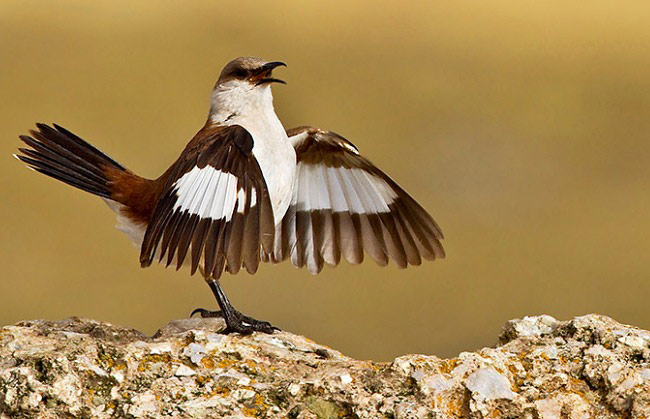
A great photograph of a displaying White-bellied Cinclodes at Marcapomacocha by Dubi Shapiro. This photograph won the Critically Endangered Birds category in the 2013 international photo competition run by The World’s Rarest Birds project which aims to support BirdLife International’s Preventing Extinctions Programme.
Peru - Southern (including Manu)
The richest region for birds on Earth with a tenth of the world's species, about a thousand, including macaws and parrots visiting clay licks, hummingbirds,
quetzals, jacamars, toucans, cotingas including Andean Cock-of-the-rock, manakins and multicoloured tanagers, as well as Giant Otters and monkeys, all in
some of the most pristine habitats left on Earth.
Peru - Northeastern (Iquitos)
A very rich area of Amazonia for birds including Nocturnal and Wattled Curassows, Collared and Rufous-necked Puffbirds, Black Bushbird, White-plumed and
many other antbirds, Black-necked Red Cotinga, and Orange-crested and Wire-tailed Manakins, as well as Uakari, Pygmy Marmoset, tamarins and Pink River
Dolphins.
Peru - Northern
About 45 regionally endemic birds including such extraordinary creatures as White-winged Guan, Grey-bellied Comet, Marvellous Spatuletail, Long-whiskered
Owlet, Scarlet-banded Barbet, Pale-billed Antpitta, Peruvian Plantcutter, Rufous Flycatcher, Lulu’s Tody-flycatcher, and Buff-bridled, Grey-winged and
Little Inca-finches, another large number of species shared only with Ecuador, including Royal Sunangel, Rainbow Starfrontlet, Black-crested Tit-tyrant,
Tumbes Tyrant, White-tailed Jay and Bar-winged Wood-wren, and more widespread specialities such as Torrent Duck, Oilbird, Grey-breasted Mountain-toucan,
Andean Cock-of-the-rock, Scaled Fruiteater, Olivaceous Piha, Chestnut-crested Cotinga and numerous tanagers including Flame-faced, Grass-green, Paradise,
Vermilion and White-capped, in awesome arid canyons and east Andean slope cloud forests with swirling flocks of multicoloured tanagers and other birds.
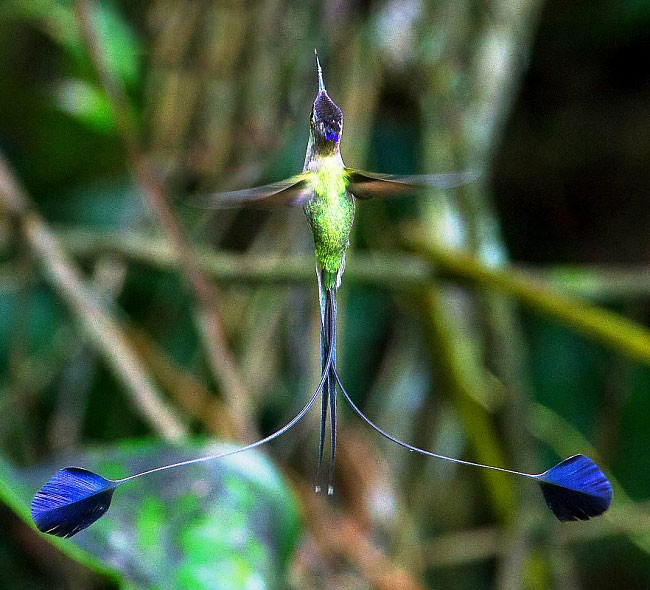
Marvellous Spatuletail by Ian Merrill, arguably the world's most spectacular hummingbird, found only in a few places in Northern Peru.
S
South Georgia
See Antarctica, South Georgia and the Falklands, above.
Suriname
The largest known lek of gorgeous Guianan Cock-of-the-rocks in the world, the easiest place to see Grey-winged Trumpeters, lots of other spectacular birds
such as Scarlet Ibis, Crimson and Ruby Topazes, Guianan Red Cotinga, Capuchinbird and Blue-backed Tanager, and monkeys and sloths in a small,
sparsely-populated country with a lot of its vast forests remaining.
T
Trinidad and Tobago
Some fine birds including the endemic Trinidad Piping-guan and Trinidad Motmot, the near-endemic White-tailed Sabrewing, and more widespread species such
as Red-billed Tropicbird, Magnificent Frigatebird, a large roost of Scarlet Ibises, a cave colony of Oilbirds, Ruby Topaz and Bearded Bellbird, as well as
nesting turtles and coral reef fish.
U
Uruguay
This country’s coastal wetlands, grasslands and forested low mountains support a wide range of birds, the rarest in global terms being Greater Rhea,
Buff-breasted Sandpiper, Straight-billed Reedhaunter, Black-and-white Monjita, Chestnut, Dark-throated and Marsh Seedeaters, Yellow Cardinal,
Pampas Meadowlark and Saffron-cowled Blackbird although the wider list includes Spotted Nothura, Great Grebe, Black-necked and Coscoroba Swans, Chilean
Flamingo, Maguari Stork, Southern Screamer, Cinereous and Long-winged Harriers, Red-legged Seriema, Giant Wood-rail, Wattled Jacana, Snowy-crowned Tern,
Nacunda Nighthawk, Guira Cuckoo, Gilded and White-throated Hummingbirds, White and White-spotted Woodpeckers, Sulphur-bearded Spinetail, Firewood-gatherer,
Curve-billed Reedhaunter, Streamcreeper, Southern Rufous-capped Antshrike, Spectacled Tyrant, White Monjita, Glaucous-blue Grosbeak, Black-and-rufous
Warbling-finch, Long-tailed Reed-finch and Scarlet-headed Blackbird, many of which can be seen within a day or two of the capital Montevideo along the
coast of the Rio de la Plata and Atlantic, especially at Laguna de Rocha which has the highest known wintering population of Buff-breasted Sandpipers in
South America, and the far eastern coastal strip and wetlands in a Ramsar Site known as Banados del Este where Black-and‐white Monjita, Yellow Cardinal,
Saffron-cowled Blackbird and several species of seedeater occur. Lying south of the equator the best time to visit is probably during October-November;
the southern spring. Most rain usually falls during the autumn and winter.
V
Venezuela - Eastern (Rio Grande-Escalera)
A chance of Harpy Eagle, a cave with thousands of Oilbirds, lots of cotingas including Guianan Cock-of-the-rock, Capuchinbird, Pompadour, Purple-breasted
and Spangled Cotingas, Bearded and White Bellbirds, and Handsome and Red-banded Fruiteaters, lots of other Guiana Shield Endemics such as Scarlet-horned
Manakin, and many other spectacular birds including macaws, hummingbirds, jacamars, toucans, antbirds and tanagers.
Venezuela - Western (Llanos)
One of the world's top bird spectacles, in the wetlands of the Llanos where numerous waterbirds include Scarlet Ibises and Sunbitterns, and the landbirds
Scarlet Macaws and Yellow-knobbed Curassows, as well as a superb selection of mountain forest birds, along the coast and in the Andes, including Andean
Cock-of-the-rock, over 30 of Venezuela's 58 endemics including White-bearded Helmetcrest and Ochre-browed Thistletail, and mammals such as Three-toed
Sloth, Red Howler Monkey and river dolphins.