
- 1
The fabulous Birds-of-paradise
of Papua New Guinea and West Papua, the most amazing birds on Earth, as well as many other extraordinary birds such as the bowerbirds. - 2
The sheer variety of birds
in Kenya,
including flocks of flamingos and the likes of Lilac-breasted Rollers, which, along with many mammals, help make this possibly the best overall wildlife experience on Earth. - 3
The incredible selection of spectacular birds
in Western and Eastern Venezuela,
including Scarlet Ibis, Scarlet Macaw, many cotingas and the best chance anywhere of Harpy Eagle, as well as the waterbird spectacle of the Llanos. - 4
The country with more birds per square mile than any other;
Ecuador, thanks to the close proximity of two of the world's richest avifaunas; those of the Andean temperate forest, with its flocks of tanagers, and the Amazonian tropical forest, full of antbirds. - 5
Asia at its best,
in Borneo, where the numerous gorgeous birds include broadbills and pittas, all of which may still not be 'bird-of-the-trip' if you see an Orang-utan! - 6
The amazing selection of spectacular birds
in Costa Rica,
including Resplendent Quetzal, Scarlet Macaw and Keel-billed Toucan. - 7
King Pengiun rookeries on
South Georgia,
hundreds of thousands strong, where there are also Wandering Albatrosses, and millions of other seabirds including Snow Petrels, and then the ship sails on, past many magnificent icebergs, to Antarctica! - 8
The seabird 'cities' of
the Scottish Islands, where puffins, gannets, guillemots, razorbills and kittiwakes grace giant cliffs in their hundreds of thousands. - 9 Bird migration in action in Texas, with shorebirds, raptors and over 30 dazzling warbler species, sometimes in spectacular numbers.
- 10
Shorebirds galore, mostly in spring plumage,
in Hong Kong,
arguably the greatest shorebird show on Earth, what with 40 species or so possibly including Spoon-billed Sandpiper.
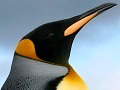
A King by Brian Field.
THE TOP TEN BIRDING EXPERIENCES?
WHAT DO YOU THINK?
Email us
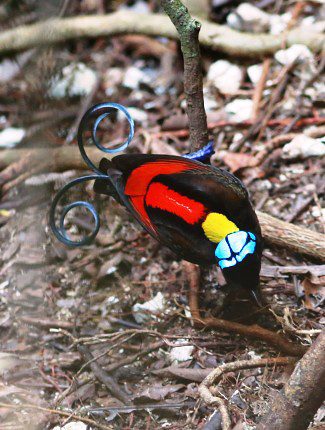
The fantastic Wilson's Bird-of-paradise attending to its court on the island of Waigeo in West Papua by Nick Cobb. Most of the few who have seen this bird say it is the best bird in the world but there are many contenders!
THE BEST BIRDS
IN THE WORLD
and where to see them
Lists such as this one are of course highly subjective but these 100 birds are the ones I believe are the best in the world. They have been chosen very carefully and for a multitude of reasons, but mainly based on personal experience of 90 of them and on dreams of seeing the rest, dreams resulting from what I have heard, read or seen.
They represent less than 1% of the 10,033 (Howard and Moore version 4.1, August 2018) to 10,989 (HBW and BirdLife International version 4, December 2019) species (the eBird/Clements Checklist v2019, August 2019, included 10,563 species and the IOC World Bird List version 11.2, 2021, listed 10,912), hence there are hundreds more which could have made this list, and just 75 of the 250 or so bird families are covered, with four hummingbirds and nine birds-of-paradise, when there are, according to HBW/BirdLife International, 379 hummingbirds and 44 birds-of-paradise, as well as 257 hawks and eagles, 374 pigeons and doves, 239 owls, 45 trogons, 66 hornbills, 130 kingfishers, 51 toucans, 257 woodpeckers, 337 ovenbirds, 48 pittas, 58 antpittas, 247 antbirds, 67 cotingas, 54 manakins, 199 honeyeaters, 185 thrushes, 353 old world flycatchers, 456 new world or tyrant flycatchers, 128 new world warblers and 408 tanagers to choose from!
In most of the species accounts below there is some information about the bird and the best destinations in the world to look for it. To find out more about the birds listed here and read about other amazing birds see the great book Animal Records by Mark Carwardine, an updated reprint of which was published by the Natural History Museum, London, in 2010.
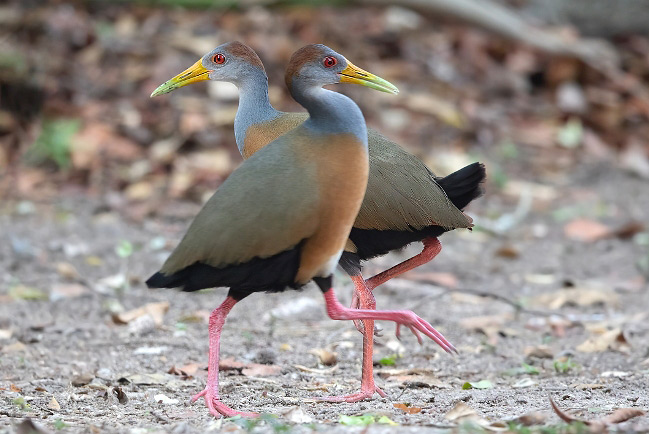
A couple of crazy Russet-naped, formerly Grey-necked, Wood-rails, one of many fantastic birds not to make this list, at Tikal in Guatemala by Dubi Shapiro.
Mongabay went as far as comparing data on amphibians, reptiles, fish, birds, mammals and vascular plants to compile a list of the most biodiverse countries. The biggest countries came out on top but on a per square mile basis the small country biodiversity champions were, in ascending order, Brunei, The Gambia, Belize, Jamaica, El Salvador, Costa Rica, Rwanda, Equatorial Guinea and Panama.
In 1758 the tenth edition of Linnaeus’s Systema Naturae was published. It described the natural world known to him and included 63 genera and 556 species of birds. In December 2019, 260 years later, the HBW/BirdLife International Checklist of the Birds of the World included 244 families and nearly 11,000 species of birds.
Avian taxonomy is moving fast and recent new families of birds include; Oceanitidae (Southern Storm-petrels) (as opposed to Hydrobatidae (Northern Storm-petrels)), Cnemophilidae (Satinbirds - four species formerly considered to be birds-of-paradise), Pnoepygidae (Cupwings - five species formerly wren-babblers), Hylocitreidae (Hylocitreas - two species formerly thought to be whistlers, endemic to Sulawesi), Teretistridae (two Cuban Warblers), Phaenicophilidae (four Hispaniolan Tanagers), Spindalidae (four former tanagers now called spindalises), Calyptophilidae (two chat-Tanagers, endemic to Hispaniola), and Mitrospingidae (four tanagers), while the 33 monotypic families are Magpie Goose, Kagu, Sunbittern, Oilbird, Hoatzin, Limpkin, Hamerkop, Shoebill, Magellanic Plover, Egyptian Plover, Ibisbill, Plains-wanderer, Crab Plover, Secretarybird, Cuckoo Roller, Sapayoa, Ploughbill (New Guinea), Berryhunter (New Guinea), Bristlehead (Borneo), Ifrit (New Guinea), Crested Jay, Stitchbird (New Zealand), Rail-babbler, Reedling, Donacobius, Palmchat (Hispaniola), Hypocolius, Spotted Elachura (formerly a wren-babbler), Olive Warbler, Przevalski's Rosefinch (or Pinktail), Thrush-tanager, Wrenthrush and Puerto Rican Tanager.
For a list of the Endemic and near-endemic birds of the world see The Endemic and near-endemic birds of the World.
For other wildlife see The Best Wildlife in the World.
The List
Ostrich (Common and Somali) Struthio camelus/molybdophanes
The largest birds in the world by far,
reaching an average height of about 2 m (6.6 ft) and exceptionally 2.75 m (9 ft). They also have the largest eyes for a bird (up
to 5 cm (2 in) in diameter) and can run up to speeds of 70 km/h (45 mph)! They occur in parts of Africa south of the Sahara. The
best places in the world to see ostriches include Ethiopia,
Kenya, Northern Tanzania and
Namibia.
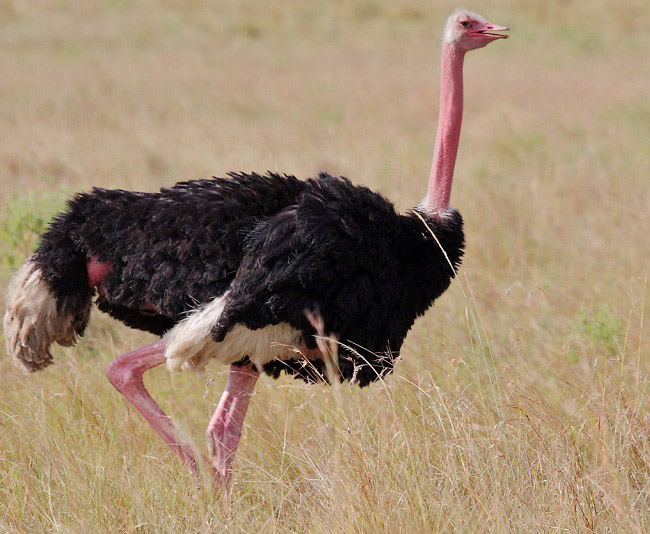
A male Common Ostrich in full breeding plumage in the Masai Mara, Kenya by Steve Garvie.
Southern Cassowary Casuarius casuarias
This extraordinary creature, the third largest bird after
the Ostriches and Emu, has a central claw up to 12 cm (5 in) long; a sharp blade used in self-defence and known to have badly injured
several humans and killed at least one! It occurs in New Guinea and Eastern Australia where the best places in the world to see
a Southern Cassowary are in Queensland, Eastern Australia, notably at
Cassowary House and the Mission Beach area. There are two other species of cassowary, Dwarf (bennetti) and Northern
(unappendiculatus), both of which occur on the island of New Guinea and both of which are very rarely seen.
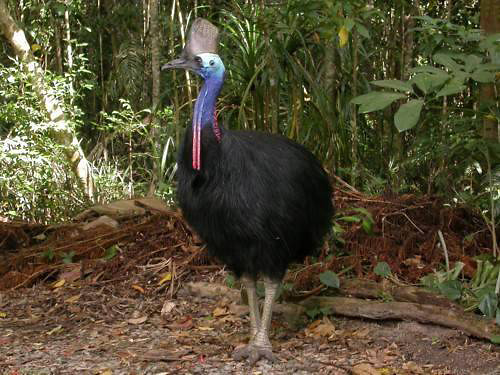
A Southern Cassowary at Cassowary House, Queensland, by Mark Harper.
Southern Brown Kiwi Apteryx australis
The flightless kiwis with feathers more like fur are the
strangest birds of all. There are five species, all of which are endemic to
New Zealand, and Southern Brown is one of the easiest to see. The best place to see Southern Brown Kiwi, which occurs in
southwest South Island and on Stewart Island, is Stewart Island where there are organised night walks. Great Spotted Kiwi
(haastii) occurs on northwest South Island and has been introduced to Little Barrier Island off North Island;
Northern Brown Kiwi (mantelli) occurs on several offshore islands and North Island where it can be seen in
Rangihoua Heritage Park near Kerikeri; Little Spotted Kiwi (owenii) occurs mainly on offshore islands where it
has been translocated, and can be seen on Kapiti and Tiritiri Matangi with overnight stays; and Okarito Kiwi (rowi)
can be seen in Okarito Forest near the central-west coast of South Island where all the birds are fitted with radio
transmitters and therefore trackable.
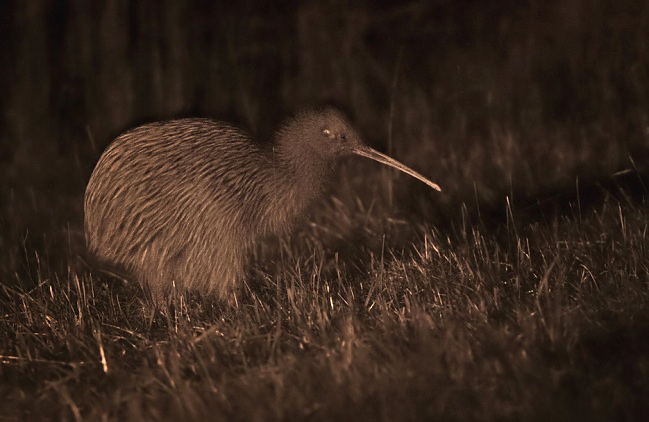
Southern Brown Kiwi on Stewart Island, New Zealand by Lars Petersson.
Harlequin Duck Histrionicus histrionicus
There are many colourful male ducks, some too colourful
for some, but none can match this one for subtle colours and pattern – it is one of nature’s finest works of art. The Harlequin
only occurs regularly in Europe on Iceland but otherwise has a wide distribution, down the opposite side of the northwest Atlantic
south to Long Island, on rivers and lakes in western North America as far inland as Wyoming during the northern summer nesting
season and, in the Pacific, from Alaska to Northern California, and south from the Bering Sea to Japan.
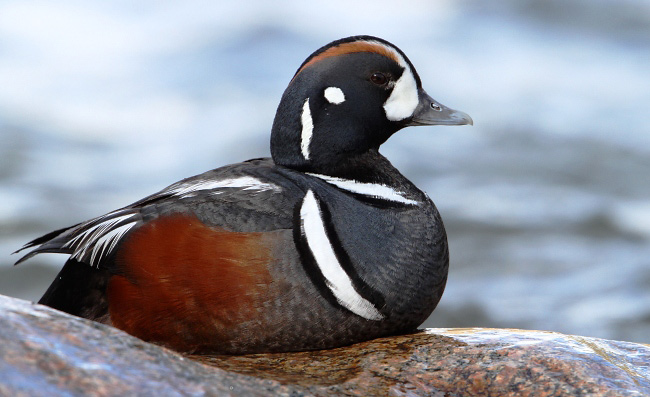
A beautiful drake Harlequin Duck, in Yellowstone National Park, Wyoming by Dubi Shapiro.
Indian Peafowl Pavo cristatus
Not the rarest or most difficult to see member of the large ‘pheasant’
family, amongst which there are many contenders for the 'best 100 birds', but the male peafowl or Peacock is arguably the most
incredible thanks to its train of elongated uppertail-covert feathers which forms a huge 'fan with eyes' when the bird displays. It
is perhaps just as famous for its incredibly loud and far-carrying 'kee-ow, kee-ow, kee-ow' call. It is native to the
Indian Subcontinent and the best places to see Indian Peafowls in the wild are Nepal,
Northern India, Western India and
Sri Lanka. The similar Green Peafowl (Pavo) occurs locally in South-East Asia and
on Java.
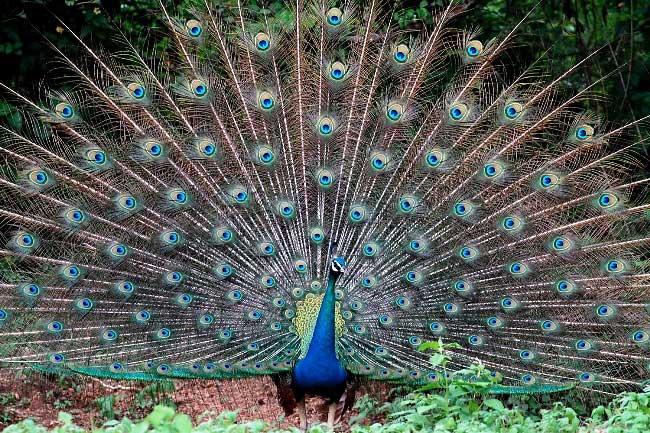
A displaying Peacock in Sri Lanka by Chris Townend.
Lesser Flamingo Phoenicopterus minor
It is possible to see flamingos in many places in southern Europe, Africa,
Central and South America, and some places in Asia, but it is the Lesser Flamingo which forms the largest gatherings of non-passerine birds,
sometimes numbering millions, on some East African lakes, and the best places in the world to see flocks of Lesser Flamingos include Lakes
Elmenteita, Nakuru and Bogoria in Kenya, and Lakes Manyara and Natron (largest breeding colony,
sometimes containing over a million pairs) in Northern Tanzania.
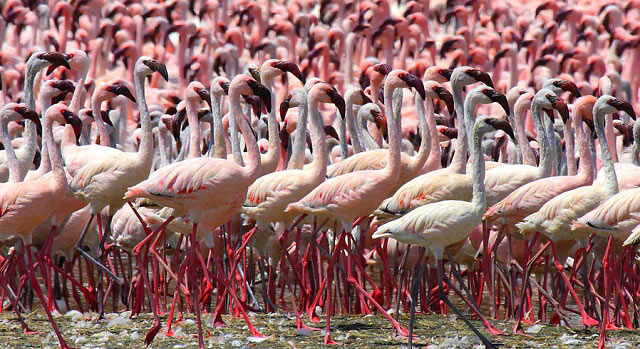
Lesser Flamingos at Lake Bogoria in Kenya by Steve Garvie.
King Penguin Aptenodytes patagonicus
This incredible bird is not as big or as hardy as Emperor
Penguin (Aptenodytes forsteri) but it is not much smaller, arguably better-looking and some of its rookeries are not only enormous
but also situated in some of the most spectacular settings in the world. Indeed, the best places in the world to see King Penguins
include the islands of South Georgia, which is visited on some cruises to Antarctica and on the
Atlantic Odyssey, and Macquarie in the
Subantarctic Islands of Australia and New Zealand in the Southern Ocean. There are also small
colonies on the Falkland Islands and at Bahia Inutil on Tierra del Fuego in
Chile.

King Penguins at a rookery on South Georgia by Nigel Wheatley.
'Wandering Albatross' Diomedea spp.
There are four or five species of ‘Wandering Albatross’ according to
different taxonomists, the bird, along with the two Royal Albatrosses, with the longest wingspan of any bird in the world, reaching up to
3.6 m (11 ft 11 in). They occur south of the Tropic of Capricorn where the best places in the world to see ‘Wandering Albatrosses’ include
their nesting places, on islands like those off South Georgia, and the
Subantarctic Islands of Australia and New Zealand. At sea they can be seen on cruises that
include South Georgia, such as the Atlantic Odyssey, off the coasts
of Southeastern Australia and
New Zealand, and on the
Western Pacific Odyssey.
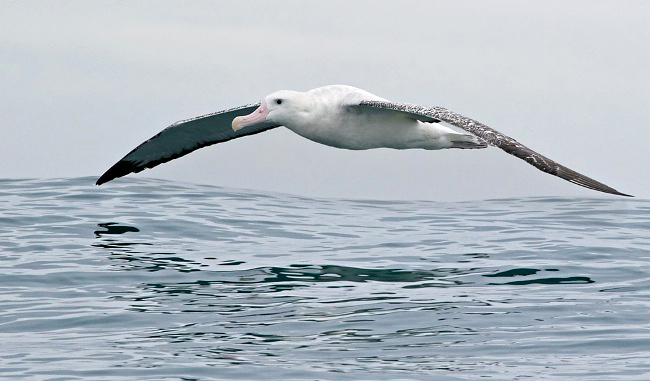
A magnificent Antipodean or Gibson's Wandering Albatross gliding over the sea off Kaikoura in New Zealand by Lars Petersson.
Light-mantled Albatross Phoebetria palpebrata
This is arguably the most elegant of the albatrosses. It graces
the islands and seas south of the Tropic of Capricorn from southern South America to the Subantarctic Islands of Australia and New Zealand and
the best places in the world to see Light-mantled Albatrosses include their nesting places, on islands like
South Georgia, where the birds can be seen on the cruises which visit there and Antarctica, as
well as the Atlantic Odyssey, and the
Subantarctic Islands of Australia and New Zealand. Where they nest pairs perform a beautiful,
balletic, synchronised flying display, one of the finest sights in the natural world.
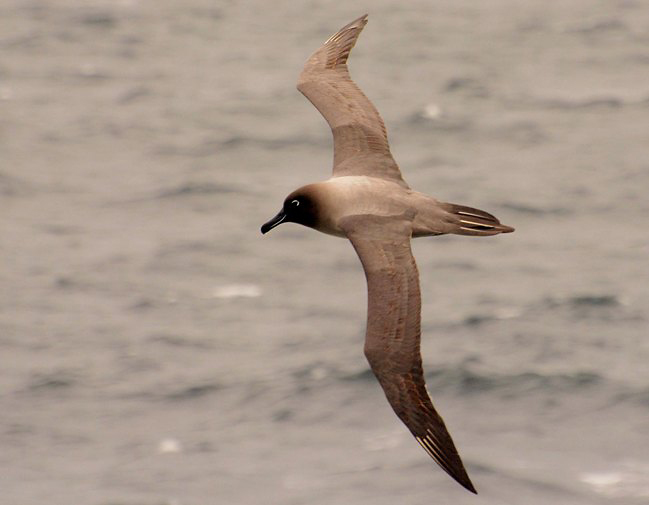
A superb Light-mantled Albatross riding the wind in the Subantarctic Islands of Australia and New Zealand by Jon Hornbuckle.
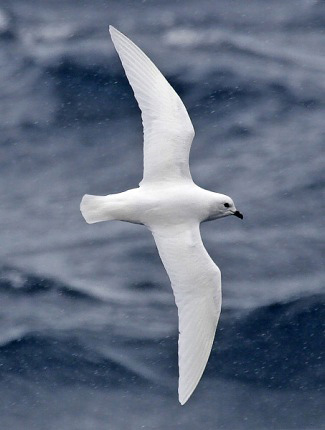
Snow Petrel by Alun Hatfield.
Snow Petrel Pagodroma nivea
'Seabirds are real birds' seabird enthusiasts say, partly because they are so
dynamic in flight. This is certainly the case with petrels and there are many with a good claim to be on this list, especially the many
pterodroma petrels but Snow Petrel does stand out as truly exceptional, and not only because it is the most southerly breeding
species of bird, with some pairs raising their young in mountains up to 240 km (150 miles) inland from the coast of Antarctica. The best
places in the world to see Snow Petrels include Antarctica and its surrounding islands, as
far away as South Georgia, which are visited on some cruises to Antarctica and on the
Atlantic Odyssey.
White-faced Storm-petrel Pelagodroma marina
One of the best-looking storm-petrels with what is arguably
the best action as well, 'bouncing' across the ocean on its long legs. It is widespread and may be seen in several places worldwide but the
best places in the world to see White-faced Storm-petrel include Madeira, off
Lanzarote in the Canary Islands,
a long way off Massachusetts, off
Eastern Australia and, best of all,
in the Hauraki Gulf near Auckland on North Island, New Zealand.
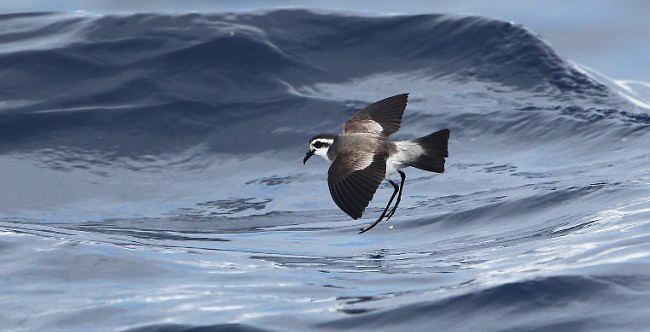
A great image of a White-faced Storm-petrel off Madeira by Simon Colenutt.
Red-billed Tropicbird Phaethon aethereus
There are three species of tropicbird, all of which are
wonderful flyers, but this is arguably the smartest. It occurs in the tropical east Pacific Ocean, Atlantic Ocean and Middle East
and may be seen in many places but the best places in the world to see Red-billed Tropicbird include Baja California, Central Mexico,
Tobago, Galapagos and
Senegal. The other two species of tropicbird are Red-tailed (rubricauda) which
ranges from off East Africa across the Indian Ocean to Indonesia, Australia and the Pacific, and White-tailed (lepturus)
which occurs throughout tropical seas and north through the Caribbean to Bermuda.
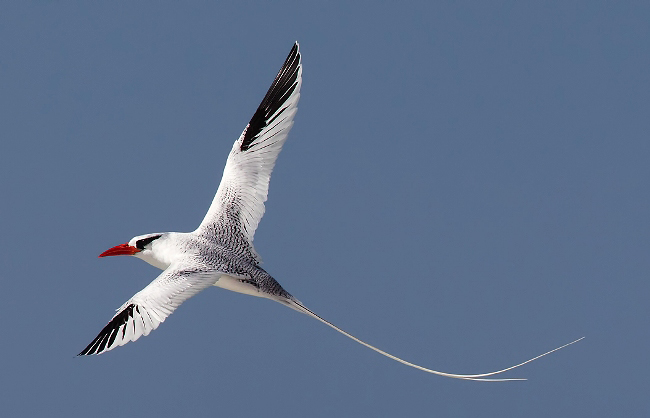
A fantastic image of a Red-billed Tropicbird in the Cape Verde Islands by Dave Barnes.
Magnificent Frigatebird Fregata magnificens
This is the largest of the five species of frigatebirds,
with a wingspan which may reach 2.5 m (8 ft). Frigatebirds have the lightest skeletons of any birds, just 5% of their total weight and
less than the weight of their feathers. This means they also have the lightest wing-loading (the ratio of wing area to overall weight),
enabling them to stay airborne with ease and they grace the skies throughout the tropics. The Magnificent Frigatebird is restricted to the
Pacific and Atlantic coasts of the Americas, including the Caribbean (with a few pairs on the Cape Verde Islands), where it is easily
seen south from Baja California and Florida
to Venezuela, the guianas and the east coast of Brazil, as well as Galapagos. The other four
species can be seen around Ascension Island in the mid-Atlantic, and from the Indian Ocean through Indonesia east to the Great Barrier
Reef and the Pacific Ocean.
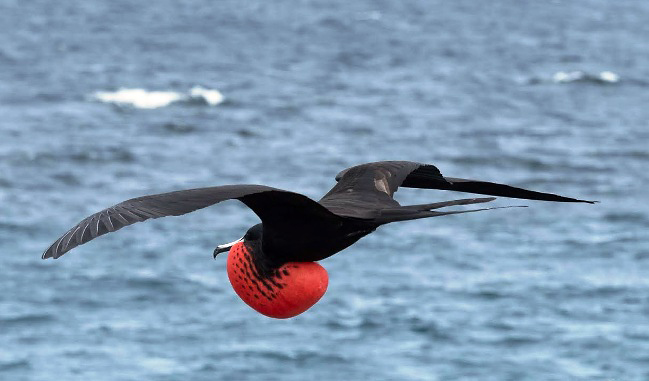
Nothing else looks quite like a frigatebird! This male Magnificent was gliding over North Seymour island in the Galapagos where its image was taken by Simon Colenutt.
Northern Gannet Morus bassanus
A big, striking bird with long, narrow wings and a fine sight over the sea,
but not as stirring a sight as ten or twenty or a hundred or more plunging into the sea like tridents, into a shoal of dazed and confused
fish; one of the greatest wildlife spectacles there is and one it is possible to see on both sides of the north Atlantic with this species
and elsewhere with the two other species: Cape (capensis) off the coasts of southwestern Africa; and Australasian (serrator)
off southern Australia and New Zealand. There are also seven species of similar boobies although they usually plunge-dive from lower
down and at more of an angle than the more robust gannets which dive more steeply from a height of 10 m (33 ft) to 40 m (130 ft)!
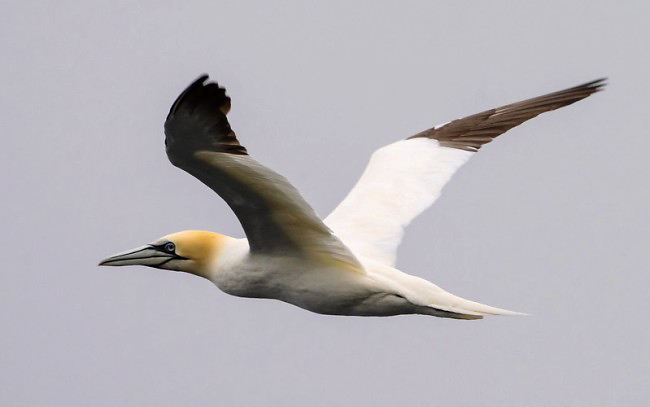
A Northern Gannet off the island of Fetlar, Shetland, by Paul Macklam.
Australian Pelican Pelecanus conspicillatus
All eight species of pelican are amongst the most
extraordinary of all birds, thanks mainly to their enormous bills and pouches, and the Australian Pelican has the longest bill of
any bird, growing to length of 47 cm (18.5 in). It is also one of the smartest pelicans thanks to its bold black and white plumage.
It occurs throughout Australia and is a regular visitor to New Guinea, and even occasionally wanders as far west as Java, and even south
to New Zealand. The other seven species of pelican occur almost throughout the rest of the world.
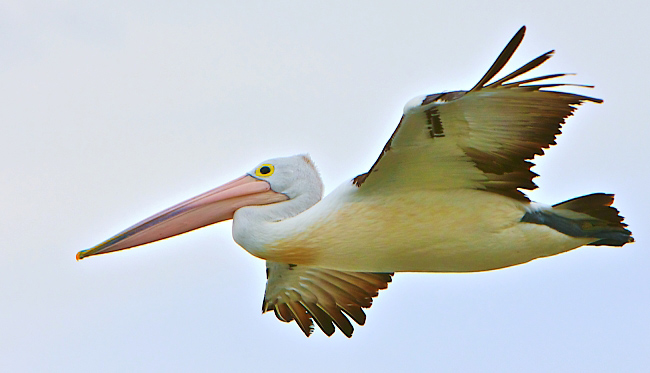
An Australian Pelican is an impressive beast. This fine image was captured by Michael Halliday.
Agami Heron Agamia agami
There are over 60 herons and many of them are beautiful enough to make this list but we have
chosen the unique Black Heron (see below) and the superb Agami Heron which lives in lowland primary forest from southeastern Mexico south to eastern
Bolivia in South America. This reclusive species prefers to fish on its own, along quiet backwaters, usually streams running through dense forest, and can
be very hard to find away from the few known nesting colonies, one of which, in French Guiana, has been known to attract about 2000 pairs. Another, much
smaller (200-300 pairs), but well-known colony is at the Pacuare Reserve in Costa Rica where May usually sees the peak of activity. Both sexes boast the
same almost unparalleled flamboyant plumage during the breeding season when it is the female that courts the male by shaking her fancy plumes, including
the long, silky white headdress, rocking on her legs and bowing while the bare skin on her face turns deep, bright red. The best places in the world to
see Agami Heron are the BFREE Reserve in Belize, several places in
Costa Rica including the Pacuare Reserve, the only nesting site in Costa Rica and one of only a few
accessible breeding colonies in the world (May-Sep), Hato Cedral and Hato Pinero in Venezuela,
Guiana Amazonian Park and the Natural Reserve of the Kaw-Roura Marshes in French Guiana, Cabo Orange National Park in Brazil, Yasuni National Park in
Ecuador, the Tapiche Reserve near Iquitos in
Northeastern Peru, and Manu and Explorer’s Inn in
Southeastern Peru, although the one below was seen in
Guyana.
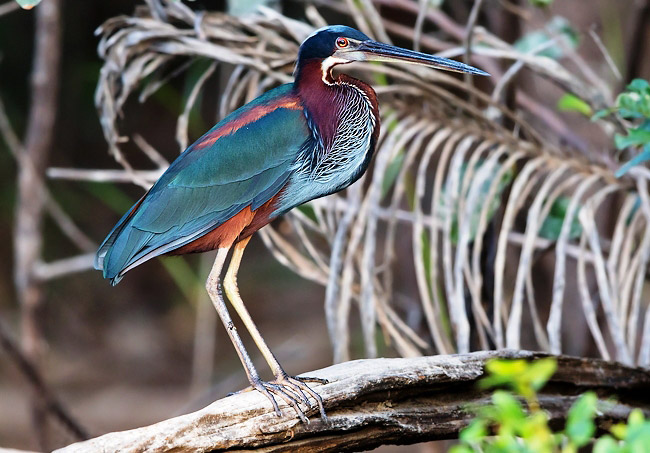
Agami Heron, Karanambu, Guyana, by Dubi Shapiro.
Black Heron Egretta ardesiaca
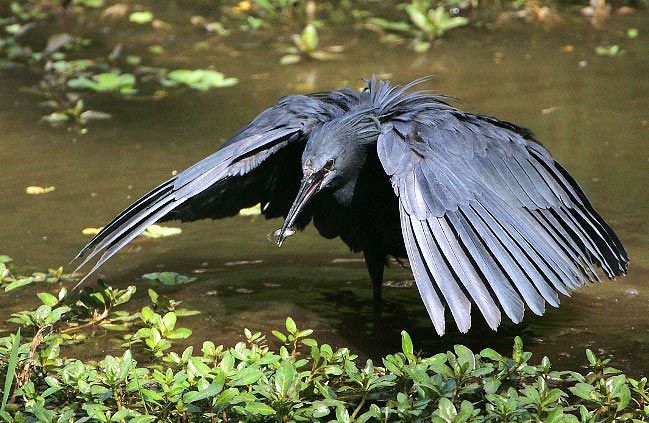
This is not the best-looking heron but it does have a unique fishing technique.
The bird is able to make an ‘umbrella’ with its wings, spreading and bending them into the shape of an umbrella over the water surface,
presumably in order to see its fish prey more easily with its head tucked below the canopy. It occurs in many wetlands south of the Sahara on
mainland Africa and on Madagascar and the best places in the world to see Black Heron include
Gambia, Kenya (where Lake Jipe is a
particularly good site), Northern Tanzania (where Lake Manyara is a particularly good
site) and Botswana.
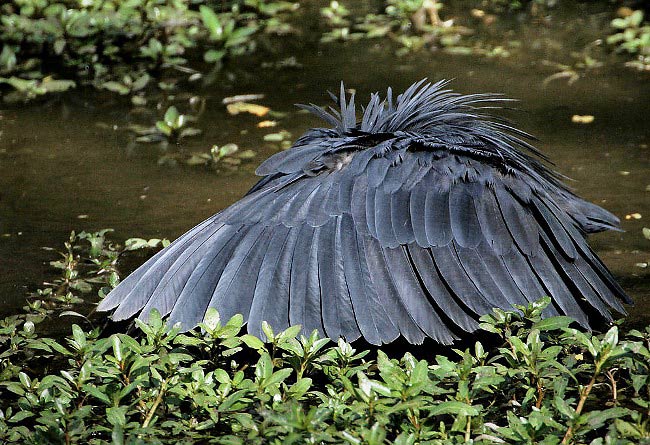
A Black Heron fishing at Abuko in Gambia by Steve Garvie.
Scarlet Ibis Eudocimus ruber
This astonishing bird really is scarlet and virtually from claw to beak. It
occurs from Northern Colombia to southeast Brazil and the best places in the world to see Scarlet Ibis include
Colombia, Western Venezuela, including the
Llanos, Eastern Venezuela, Guyana,
Suriname, Trinidad where there is a famous
roost of hundreds in the mangroves of Caroni Swamp, and Southeastern Brazil where there is another roosting site near Paranagua, east of
Curitiba.
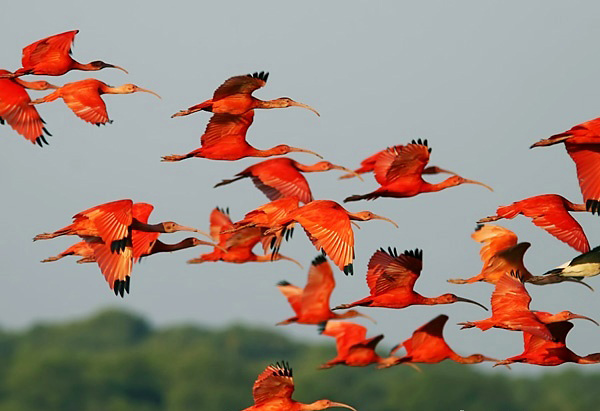
Scarlet Ibises at Hato El Cedral in the Llanos of Venezuela by Lars Petersson.

Saddle-billed Stork in the Masai Mara, Kenya by Steve Garvie.
Saddle-billed Stork Ephippiorhynchus senegalensis
This very tall stork with a very long bill, which is
black and red with a yellow 'saddle', occurs in Africa south of the Sahara and although uncommon can be seen in many places.
Shoebill Balaeniceps rex
Like a blue stone statue with an enormous bill up to 19 cm (7.5 in) long, evolved to
deal with its preferred prey, lungfish, this bizarre bird occurs in Africa from southern Sudan to Zambia, mainly in remote, extensive swamps
which are not easily accessible. However, there are a few places where seeing one is almost guaranteed and the best places in the world to
see Shoebill are Mabamba and Murchison Falls National Park in Uganda, and Bangweulu Swamp in
Zambia.
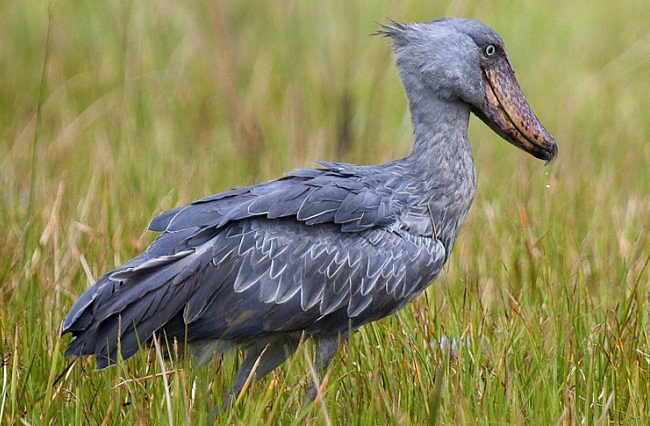
Shoebill at Mabamba in Uganda by Francesco Veronesi.
Andean Condor Vultur gryphus
This massive bird has a wingspan which may reach 3 m (10 ft) or even more
and its broad wings are ideally suited to soaring over the High Andes and some coasts from Colombia south to Tierra del Fuego. It may be
seen in many places but the best places in the world to see Andean Condors include Antisana National Park in
Northern Ecuador, Colca Canyon in southern Peru (where the birds are sometimes close
enough to hear the wind rushing past their outstretched wing feathers), Bolivia,
Northern Argentina, Torres del Paine National Park in
Chile and Los Glaciares National Park in Southern
Argentina.
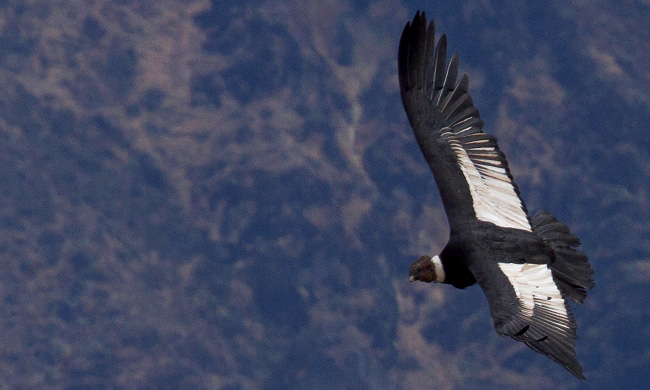
Andean Condor soaring over the Colca Canyon in Peru, by Dubi Shapiro.
Swallow-tailed Kite Elanoides forficatus
Few things look so beautiful in the air. This wonderful
thing has a wide distribution, from the southeast USA (northern summer) and Southern Mexico to Northern Argentina, and may be seen in most
destinations in Central and South America.
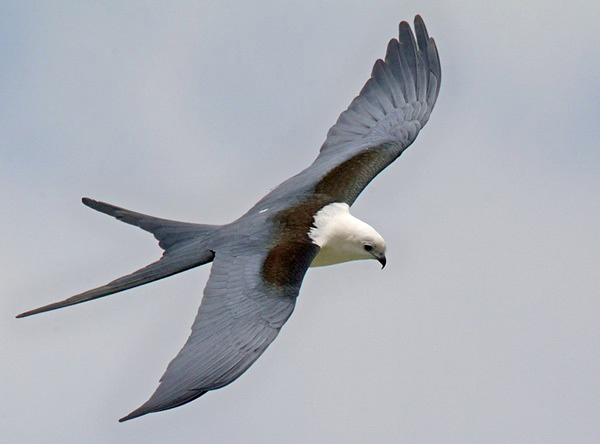
A terrific image of a Swallow-tailed Kite from above at Buenaventura in Ecuador by Lars Petersson.
Secretary Bird Sagittarius serpentarius
This four foot tall (49-59 inches (125-150 cm)) raptor is called a Secretary Bird
because the feathers sticking out from the back of the neck resemble the quill pens used by medieval ‘secretaries’, the equivalent of modern-day
book-keepers, or the name may be derived from an Arabic phrase meaning ‘hunter-bird’. It certainly is a hunter, walking steadily across the African
Plains with long strides, usually in pairs, on the lookout for large insects, small mammals and snakes including large venomous ones. It can kill insects
with a single stamp of its powerful feet but several sharp kicks may be needed to stun larger prey before the eagle beak is employed to finish it off. The
Secretary Bird has a wide range through the African savannah, from Senegal east to Somalia and south through East Africa down to South Africa, and may be
seen in many places.
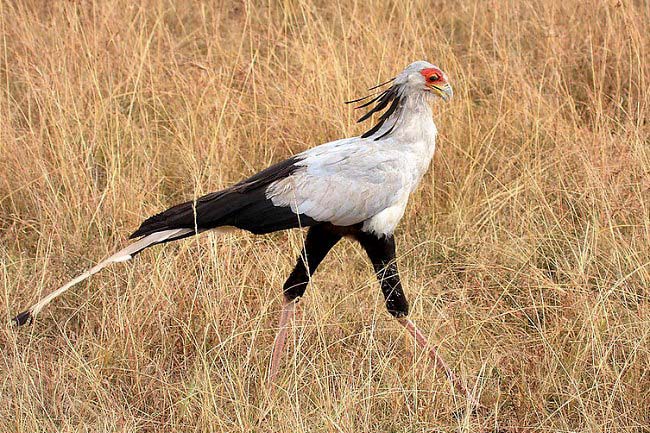
A Secretary Bird on the prowl in the Maasai Mara, Kenya by Steve Garvie.
African Fish-eagle Haliaeetus vocifer
This magnificent eagle gets the nod over Bald Eagle (Haliaeetus
leucocephalus) because its loud yodeling call is so evocative of Africa. Indeed, Africa would not be Africa without its fish eagles.
South of the Sahara that is, where it may be seen in many places, although it is less common in or absent from the remaining extensive
forested areas of West Africa and the drier regions of the southwest.
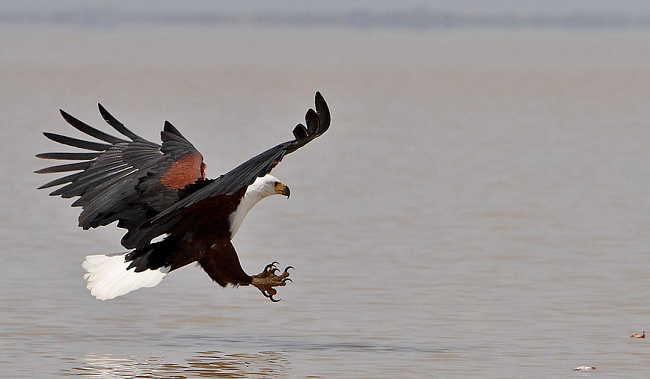
African Fish-eagle at Lake Baringo in Kenya by Steve Garvie.
Harpy Eagle Harpia harpyja
The ultimate raptor; this is the largest, heaviest and most powerful eagle, which may reach a
height of over a metre and weigh up to 9 kg (20 lb). It preys primarily on tree-dwelling mammals, which research has shown to be about 79% sloths and
11.6% monkeys, monkeys such as Capuchin, Howler, Saki, Spider, Squirrel and Titi, although it will also eat armadillos, peccaries, porcupines, curassows
and macaws. One bird has been recorded catching and carrying off a Red Howler Monkey (Alouatta seniculus) weighing 6.8 kg (15 lb). The Harpy Eagle
has a wide range, from Southern Mexico where it is very rare, south through Central America and lowland South America as far south as the far north of
Argentina. Harpy Eagles inhabit extensive forested areas occupying large territories up to about 15 square miles (nearly 40 square kilometres) in extent
where the huge accipiter-like birds with broad, rounded wings and long tails twist and turn with surprising agility through the trees and branches in
pursuit of prey. They are not only thinly distributed they rarely soar above the forest canopy and are therefore very hard to see but there are
a few readily accessible places where seeing one is possible, albeit usually only if a nest has been located by local people, because although
young birds normally leave the nest after about two months they usually stay near the nest, typically in the same tree, for at least a few months while
the parents continue to feed them. The most likely places for nests to be found and therefore the best places in the world to see Harpy Eagle are the
Darien in eastern Panama (two nests in early 2019, as well as two Crested Eagle nests), Imataca Forest Reserve,
El Palmar, Bolivar, in Eastern Venezuela, and Guyana (one
nest in early 2019), while in early 2019 an incredible 23 nests were located in an area of southern Amazonian rainforest in the state of Mato Grosso in
Central Brazil, and with the aid of viewing towers some can be viewed at eye level. There is also a much smaller chance of seeing Harpy Eagle in other
areas of Brazil and out of several lodges in Amazonia in Ecuador.
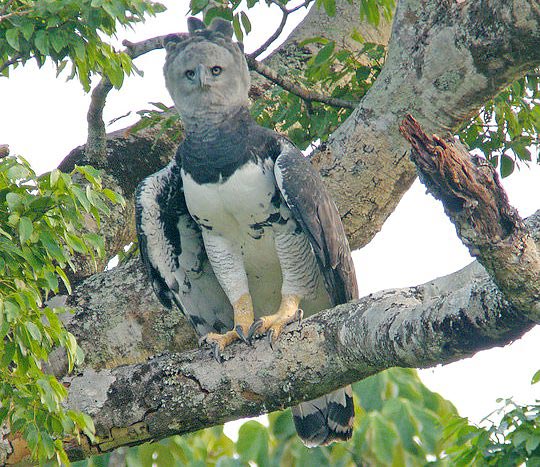
A magnificent Harpy Eagle in the Serra Das Araras of Southern Brazil by Chris Townend.
Peregrine Falcon Falco peregrinus
This is the fastest living thing. When stooping in pursuit of prey the Peregrine
can reach up to 180 km/h (112 mph) and possibly 300 km/h (186 mph). It pursues flying birds with incredible speed and agility, striking
them with its talons, although the prey is probably killed by the force of the impact. The Peregrine is also arguably the most widespread
bird, occurring from the Arctic to Australia, and may be seen virtually anywhere, including in the middle of some cities!
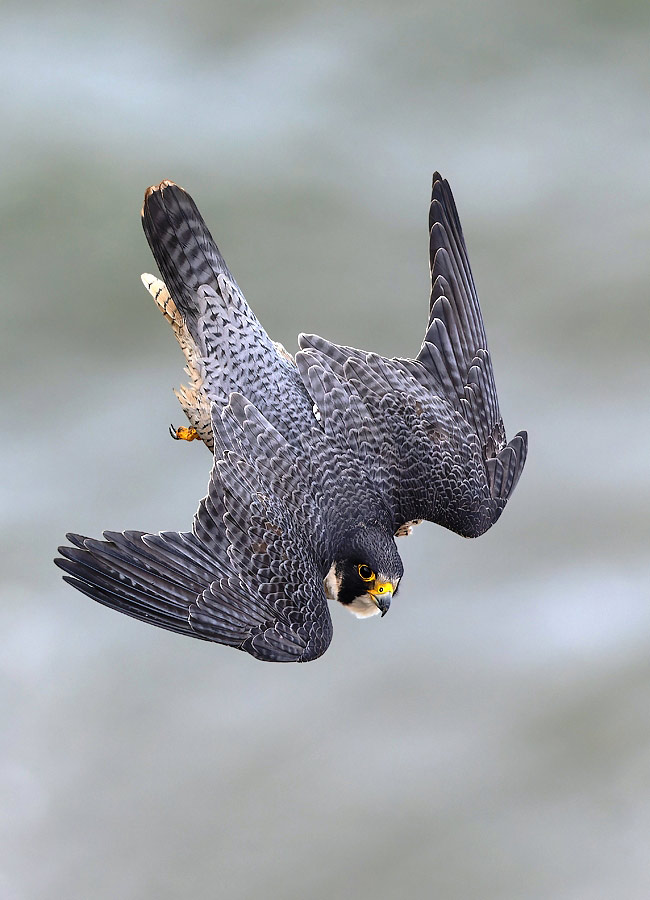
Peregrine Falcon, Point Fermin, Los Angeles, California, by Dubi Shapiro.
Kagu Rhynochetos jubatus
This strange bird, in its own family, is endemic to the island of New Caledonia in
the southwest Pacific, where it survives in small numbers in the remnant forests and is easy to see. It is a grey bird about the size of a
Cattle Egret and although flightless it has retained full-size wings which it uses for display purposes, as can be seen in the image on the
New Caledonia page. The island is easily accessible from Australia and is also visited on the
Western Pacific Odyssey.
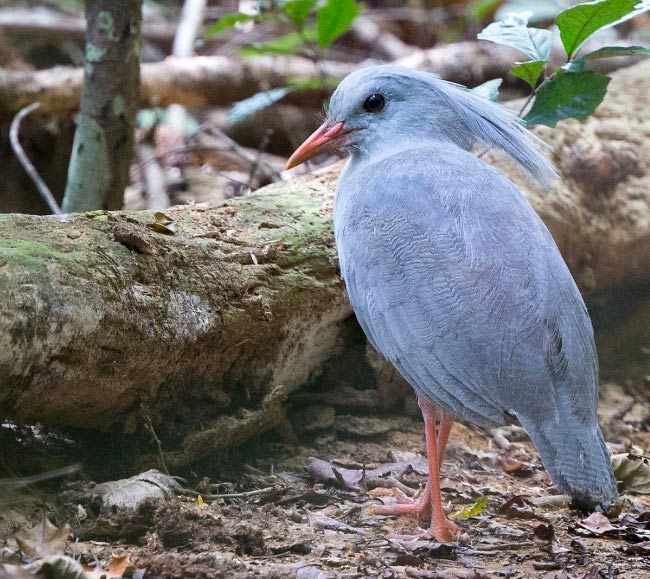
A confiding Kagu on the island of New Caledonia by Simon Colenutt.
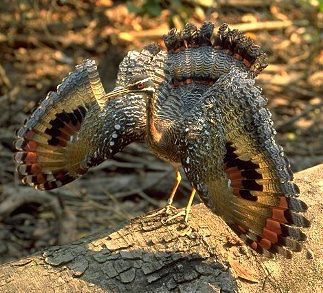
A displaying Sunbittern by Jon Hornbuckle.
Sunbittern Eurypyga helias
This terrific bird is so different to any other it’s in a family of its own. It is
a beautiful sight when hunting, stalking prey quietly along watercourses, but when threatened it looks stunning, because it spreads its broad
wings wide, faces them forward and displays what look like two giant eyes. It occurs from Guatemala south through Central America to Brazil
and may be seen at quite a lot of sites but the best places in the world to see Sunbittern include the Llanos in
Western Venezuela, the Iquitos area in
Northeastern Peru, Manu National Park in
Southern Peru and the Pantanal in
Southern Brazil.
Red-crowned Crane Grus japonensis
Arguably the most striking of the fifteen species of crane this one also
‘dances in the snow’ and may be seen doing so at the best place in the world to see Red-crowned Cranes - the island of Hokkaido in Japan, the same island where hundreds of Steller's Eagles also gather in winter. It also occurs from
eastern Siberia to Eastern China where up to 1000 (nearly 50% of the world population) spend
the northern winter at Yancheng Reserve in Jiangsu Province.
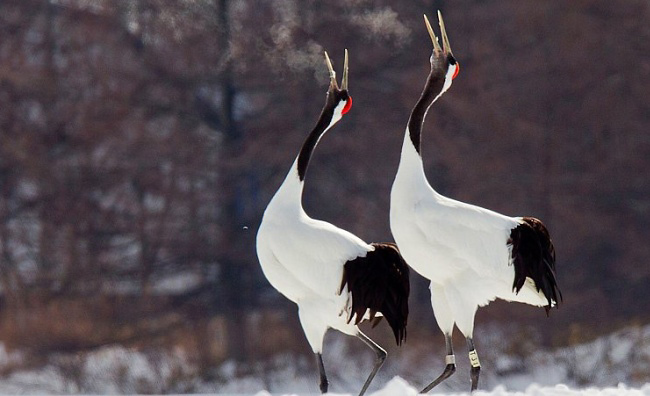
Red-crowned Cranes on Hokkaido, Japan, by Francesco Veronesi.
Ruff Philomachus pugnax
This unusual shorebird has the greatest variation in plumage among individual males of any bird
species, so great that no two individuals look the same. The exotic display-plumage includes ear tufts and a ruff that comes in combinations of plain
or coarsely barred, black, white, orange and rufous, and is used to impress females. The males, usually 5 to 20 of them, show off in communal leks at
traditional sites in April-June, normally where there is an open grassy area often with bare soil. The display is silent but eye-catching. When a female
visits the lek the males start wing fluttering, doing short jumps, crouching with ruffs extended and standing erect or leaning forward with ruff raised
and wings and tail drooped, even fighting briefly with bills, wings and feet. The males are considerably heavier and larger than the females; 29-32 cm
(11-12.5 inches) compared to 22-26 cm (8.5-10 inches), and the females are known as Reeves. During the northern summer they occur from the Netherlands
east to Siberia, nesting by taiga bogs, tundra, mountainside marshes and pools, and wet grass meadows before migrating south for the northern winter, to
western and southern Europe, Africa, the Middle East and the Indian Subcontinent. The best place in the world to see Ruffs displaying at a lek is probably
Scandinavia where there are hides to watch them from in places such as the Oulu region on Finland, and several, more remote, traditional sites in the
Varanger region of Norway.
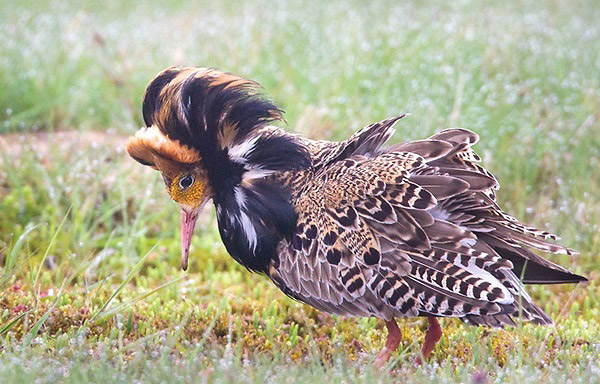
A displaying Ruff at Ottenby on the island of Oland in Sweden by Lars Petersson.
Ibisbill Ibidorhyncha struthersii
This smart shorebird is so different to any other it has been placed in a family of its
own although its territorial behaviour and young are most similar to that of oystercatchers, a relationship confirmed by DNA research. Ibisbills live
near slow-flowing water in stony riverbeds across southern Central Asia including China and the Himalayas, making nests on shingle banks and islets
between 1676 and 4267 metres (5500 and 14,000 feet) with some birds descending to lower elevations during the northern winter. They can be seen in many
places but the best places in the world to see Ibisbill include Kazakhstan, the Bai He River near Beijing
in Northern China, the Qinling Mountains in Central China, the edge of the Tibetan Plateau next to
Sichuan in China, Nepal,
Bhutan, Northeastern India,
Ladakh in Northwestern India and
Northern India.
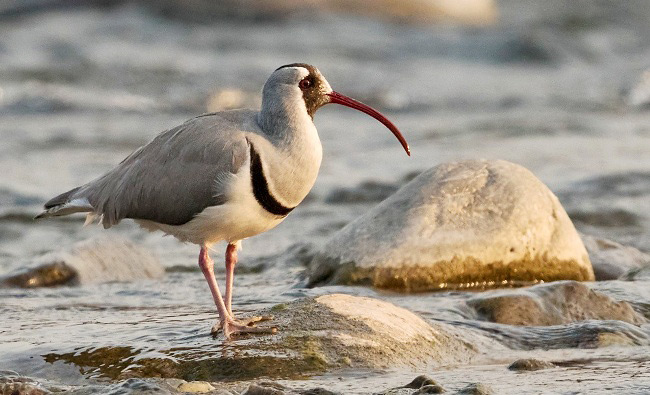
A classic Ibisbill image, in the rocky Kosi River, Corbett National Park, India, by Lars Petersson.
Black-winged Stilt(s) Himantopus spp.
The one to four species of ‘Black-winged Stilt’ have the longest legs
relative to body-length of any bird, legs that may reach a length of 24 cm (9 in). It is these red legs together with the bold black and
white body and long, thin bill that make this bird a unique and extraordinary sight. It occurs throughout the world, across Europe, Africa
south of the Sahara and Asia, to New Zealand, in the USA south through Central America to Southern Peru, and from north
Chile across to Argentina and southeast Brazil, and can be seen in numerous places.
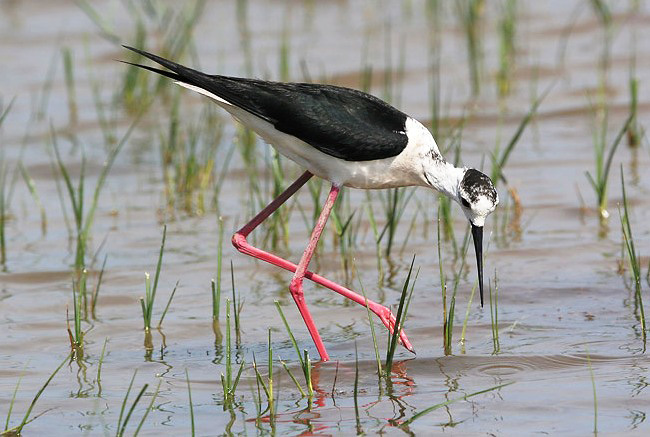
A fine image of the crazy Black-winged Stilt taken on the island of Mallorca by Michael McKee.
Spoon-billed Sandpiper Eurynorhynchus pygmeus
This unique and increasingly rare bird nests in far northeast
Siberia and spends the northern winter in eastern India, Bangladesh and east Asia where the best places in the world to see Spoon-billed Sandpiper
include the area around the small island of Shanyutan in the Minjiang Estuary near Fuzhou in southeast China, and Ban Pak Thale in
Southern Thailand. Another site where it has been known to winter is Xuan Thuy National Park in
Vietnam while less accessible wintering areas include the Lower Meghna Delta in Bangladesh and the Bay of
Martaban in Myanmar. On migration birds also occur near Fuzhou and especially at Dongtai Tiaozini near Shanghai, where 80 were counted in September
2020 (with 1150 Spotted Greenshanks, 96% of the world population!), and birds still occur at Mai Po Nature Reserve in
Hong Kong during their northbound spring migration but this species is much less regular there than it
used to be. During the northern summer Heritage Expeditions
operate a cruise which includes looking for Spoon-billed Sandpipers on their nesting grounds. The ship usually visits
Kamchatka and the Commander Islands as well as Meinypil’gyno, which is the main monitored breeding site,
and the Chukotka coastline, where the species is also known to nest.
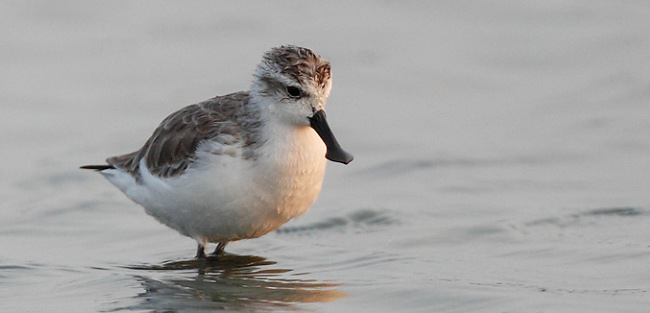
A superb image of the unique Spoon-billed Sandpiper taken by Michael McKee at Ban Pak Thale in Southern Thailand.
Egyptian Plover Pluvianus aegyptius
This is one of the most brilliant of all birds, in a family all of its own.
It occurs mainly along rivers in tropical West Africa where the best places in the world to see Egyptian Plover include Niokolo Koba National
Park and nearby lodges in Senegal, inland Gambia,
Tiwai Island in Sierra Leone, the White Volta River in
Ghana and Benoue National Park in Cameroon.
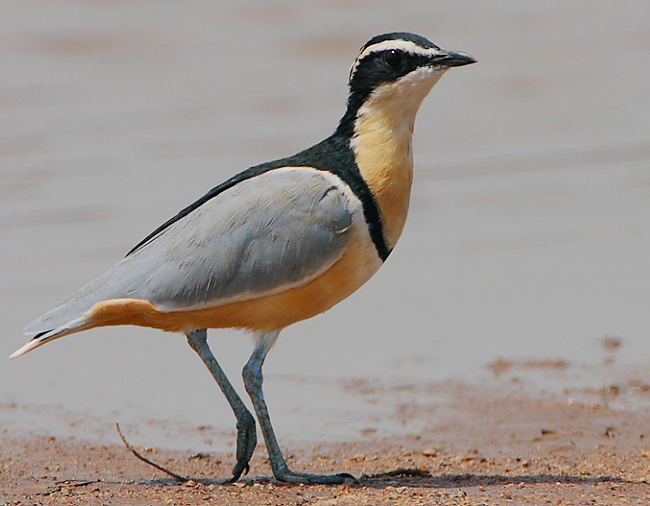
The beautifully coloured and marked Egyptian Plover photographed in Gambia by Steve Garvie.
Ross’s Gull Rhodostethia rosea
An exquisite bird which occurs only in the High Arctic, even in the northern
winter when it actually moves north from its nesting grounds to the pack-ice of the Arctic Ocean. The best place in the world to see Ross’s
Gull in all its glory (pink breeding plumage) is the Kolyma Delta in Arctic Russia, although
there is also a chance in Arctic Canada. During the autumn, especially in late September and
early October, Ross's Gulls migrate through Barrow in Alaska and often linger, sometimes thousands
of them! During the northern winter stray birds may wander south from the Arctic, some as far as northwest Europe where they are much
appreciated by the many birders.
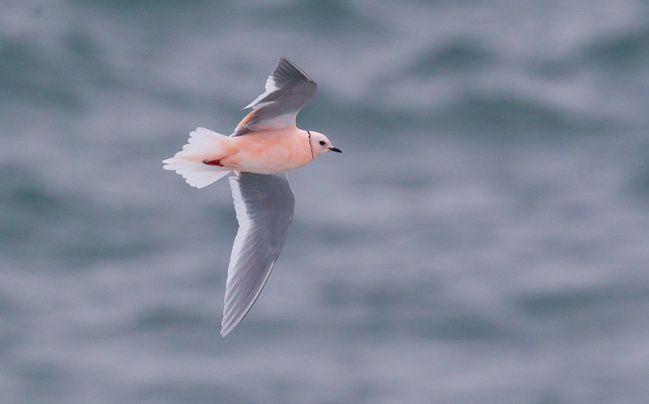
A stray Ross's Gull that was at Torbay on the Avalon Peninsula, Newfoundland for two days at the end of April 2014 by Bruce Mactavish. The extent and strength of pink in the underparts of some small gulls may be linked to diet, specifically a carotenoid called astaxanthin, and 'take up' may vary according to the metabolism of individual birds.
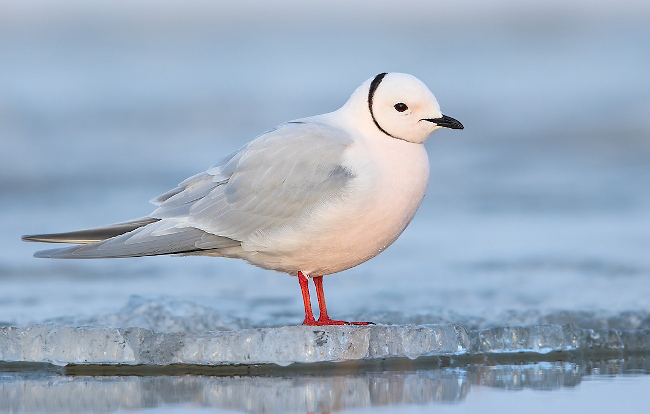
A Ross's Gull on ice, at Barrow in Alaska by Dubi Shapiro.
Arctic Tern Sterna paradisaea
This graceful beauty is the most widely travelled of all birds, covering about
70,000 km (43,000 miles) each year on its meandering migration between its mainly Arctic nesting grounds and its Antarctic wintering grounds. It is
the only bird which is regularly seen on or off all seven continents although the best places to see it are at its nesting colonies, from Alaska east
across North America, Northern Europe and Russia to the Bering Sea. These birds can be very aggressive when nesting though and are quite capable of
making repeated blows with their sharp beaks, especially to the heads of any observers who approach too closely.
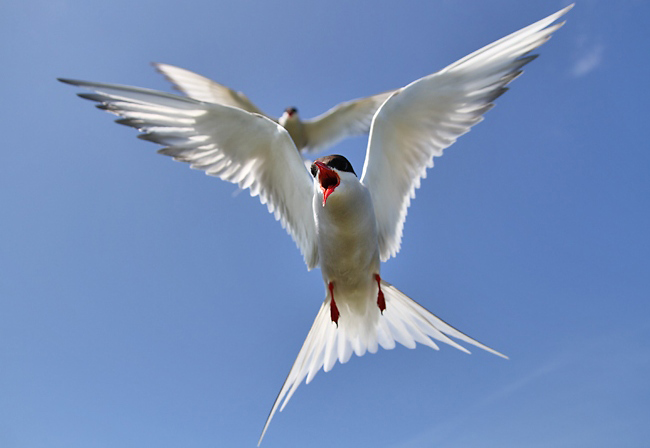
Arctic Tern attack on the Farne Islands, England, captured by the brave Lee Dingain.
Black, African and Indian Skimmers Rynchops spp.
The buoyant flight of smart black-and-white skimmers, especially when
they are skimming the water surface with their unique bills in search of food, is one of the finest sights in nature. The knife-like lower mandible of
the bill of the Black Skimmer (Rynchops niger) may be up to 3 cm (1.25 in) longer than the upper mandible. It slices through the surface of the
water until touching a fish then the bill snaps shut to capture the prey. The Black Skimmer is the most widespread, occurring down the east coast of
the USA and both coasts of Central America south and inland to northern Argentina, and may be seen at many places. The best places to see African
Skimmer (flavirostris), which is widespread but patchily distributed south of the Sahara, include the Kazinga Channel in Queen Elizabeth
National Park, Uganda, Botswana and
Namibia. Indian Skimmer (albicollis) is the rarest. It occurs from the Indus in Pakistan
east to Myanmar and the best places to see it are the National Chambal Sanctuary in Northern India and in
Western India.
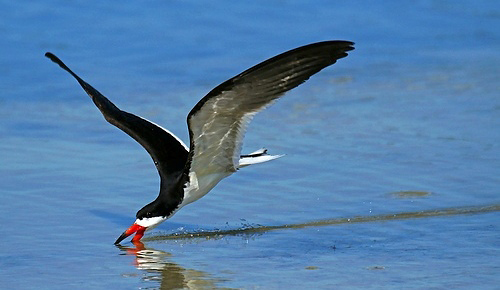
A superb image of a skimming Black Skimmer in Florida by Dave Irving.
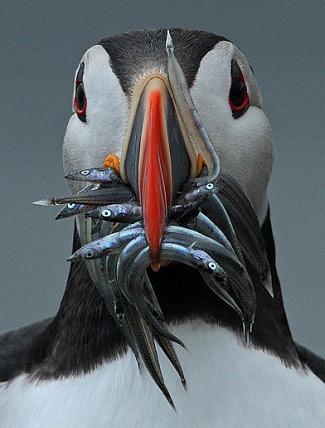
A fantastic image of an Atlantic Puffin returning to its young on the Isle of May in Scotland with a beak full of sandeels, by Steve Garvie.
Atlantic Puffin Fratercula arctica
This is arguably the most handsome of the three species of puffin, the other two
being Horned and Tufted, which occur, during the northern summer, in the northern Pacific where Alaska, and Kamchatka, and the Kuril and Commander
Islands, are good places to see them. The Atlantic Puffin occurs during northern summers on coasts and offshore islands in the north Atlantic, south
to Maine, New England in the USA, and islands off northwest France in Europe. It can be seen in many places, and is often confiding enough to be
seen at very close quarters. Where this numerous species spends the northern winters no one seems to know for sure, except it is rarely seen from
land and is therefore presumed to spend the season farther out to sea than other auks.
Palm Cockatoo Probosciger aterrimus
This enormous parrot with an amazing crest occurs on the island of New Guinea
and in far northeast Australia and the best places in the world to see Palm Cockatoo are West Papua,
Papua New Guinea and near Bamaga Resort, Cape York, far northeast Australia. They are shy birds
so one has to be very fortunate to see one well, let alone see a male 'drumming', which involves tapping a hollow trunk with its feet, a nut it has
collected, or, more often, a stick, which it brandishes with a foot and taps the tree from two to sometimes over a hundred times.
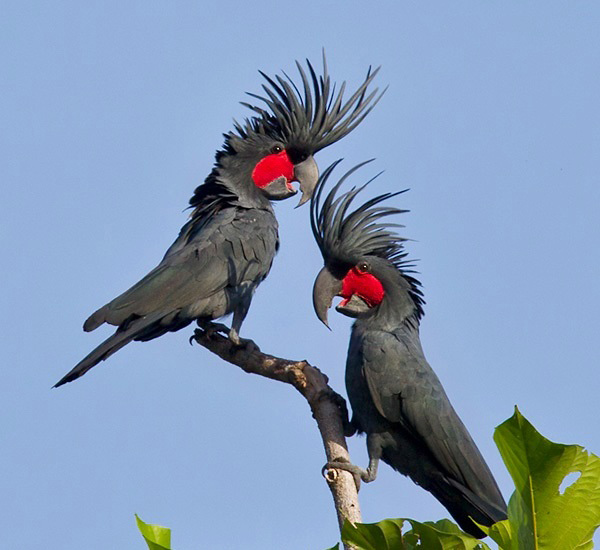
A rare image of a pair of shy Palm Cockatoos on the island of Salawati, West Papua, by Lars Petersson.
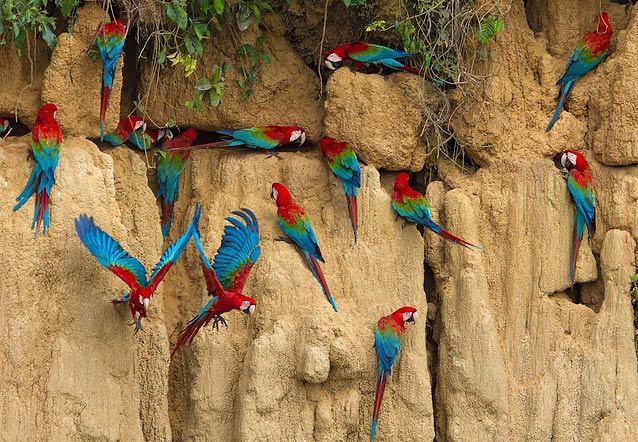
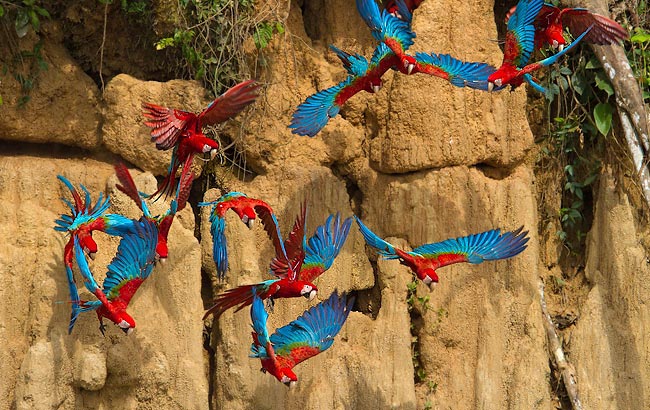
Red-and-green and Scarlet Macaws Ara chloroptera/macao
Arguably the most spectacular of the large macaws, the
brilliantly-coloured giants of the parrot family. Hyacinth Macaw (Anodorhynchus hyacinthinus), the largest of them all at up to a metre in length,
is mainly blue, whereas Blue-and-yellow (Ara ararauna) and Blue-throated (Ara glaucogularis) are blue and yellow, and Great Green
(ambigua) is mainly green, so I have, as usual, plumped for the most colourful two. Red-and-green and Scarlet Macaws, which measure up to 95 cm
and 89 cm respectively, have wide ranges across Central and South America and can be seen in many places, sometimes on the same trip and on some trips with
Blue-and-yellow as well. Red-and-green Macaws also like to visit clay licks such as those in
Southern Peru where the images below were taken by
Dubi Shapiro.
Hoatzin Opisthocomus hoazin
This bird is so strange it is not only in its own family, it is in its own (sub)order.
Also known as the 'Stinkbird' because it reeks of cow dung (the fermented leaves in the bird's crop) it is more famous for its young which have
'claws' on their thumbs and first fingers, enabling them to climb trees until their wings are strong enough for flight. These claws were once
believed to be evidence of the transition between reptiles and birds but they probably evolved separately, rather than being inherited from early
birds. Hoatzins occur in the Amazon and Orinoco river systems in Venezuela, the Guianas and Amazonia and may be seen in many places near water.
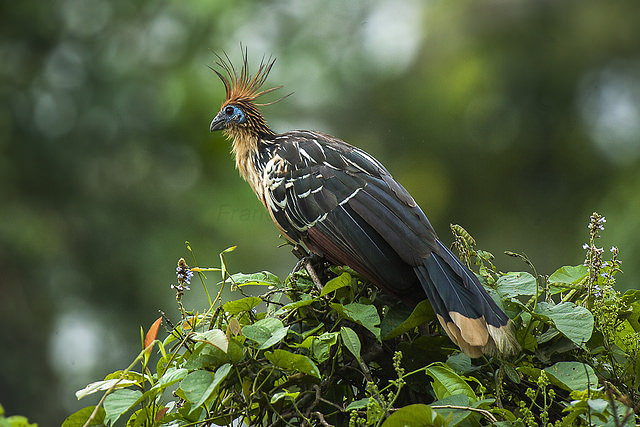
Hoatzin, Manu National Park, Peru by Francesco Veronesi.
(Greater) Roadrunner Geococcyx californianus
In 1948 two characters were created for an animated series for Warner Bros.
which was originally meant to parody chase cartoons like Tom and Jerry, but the series with Wile E. Coyote chasing the Road Runner became popular in its
own right. In each episode the Coyote attempts to catch the Road Runner, usually employing crazy contraptions which backfire and result in the Coyote
getting injured in a slapstick sort of way and never ever getting near the Road Runner, perhaps because the real Roadrunner is the fastest-running bird
that can fly, able to run at up to 18 mph (30 km/h), probably even faster when chasing down a snake, lizard, large insect, tarantula, small bird or other
prey. Alas, the real Roadrunner does not go ‘beep, beep’ all the time although it does have several calls the most common of which is more a descending
series of low coos. Inhabiting hot, dry terrain including deserts it lives rather like a reptile, turning down its body heat at night to save energy in a
sort of slightly torpid state and warming up quickly in the cold mornings with a patch of skin on its back heavily pigmented with heat-absorbing melanin.
After about half an hour basking in sunshine the Roadrunner can run again. It does so across the southern United States and south into northern Mexico
where it is replaced by the very similar Lesser Roadrunner (velox), the only other member of the genus in the cuckoo family.
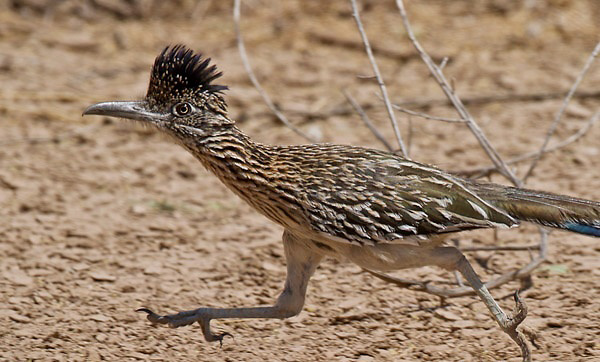
Roadrunner on the move at the San Xavier Mission in Arizona by Lars Petersson.
Barn Owl Tyto alba
There are so many weird and wonderful owls (about 250 species and rising) and yet this, one of
the commonest and certainly the most widespread, is arguably the most beautiful. It has incredibly sensitive hearing, good enough to locate prey
in total darkness; its eyes see just a little better than ours in the dark. The various forms of Barn Owl (American, Western, Eastern for starters)
occur on every continent except Antarctica but, although widespread, is largely absent from Canada, Russia, northern Asia, the Sahara, Indonesia and
the Pacific Islands. Nearly 50 different races, including eight across the Western Palearctic, may exist, from the largest which occurs in North
America to the smallest which is endemic to the Galapagos and less than half the weight of the North American form.
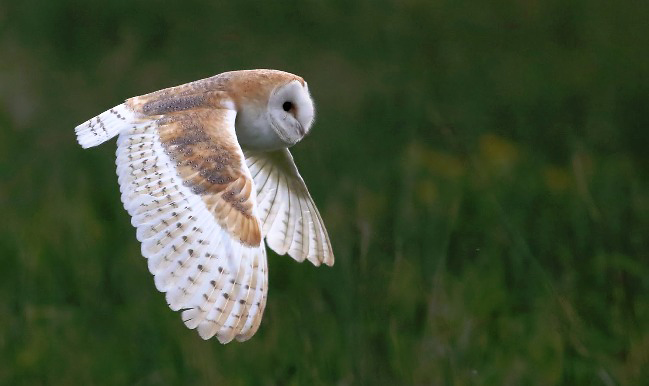
A Barn Owl out early in Devon, England by Chris Townend.
Snowy Owl Nyctea scandiaca
Another fantastic owl and a big one - some females may be as large as the largest
owl, the Eurasian Eagle Owl (Bubo bubo), some Siberian races of which may be as tall as 75 cm (29.5 in) and have a wingspan of 2m
(6.6 ft). It is certainly a fearsome sight when protecting its young, confident enough to attack Arctic Foxes (Vulpes lagopus) and even the
dreaded (Northern) Goshawk (Accipiter gentilis). It is a bird of the High Arctic and accessible nesting sites where it is regularly seen are
few and far between but the best places in the world to see Snowy Owl include the Barrow area in far north
Alaska and Wrangel Island off Russia, while there is a chance of seeing it on cruises in
Arctic Canada and in Lapland in Arctic Norway.
During the northern winter variable numbers of birds move south and may be seen anywhere in the northern USA, Scandinavia and, more rarely, northern
Europe (notably Scotland), but more reliably in Canada where northern Quebec, Ontario (including the Pearson International Airport area, Toronto) and
southeast Manitoba are particularly good areas.
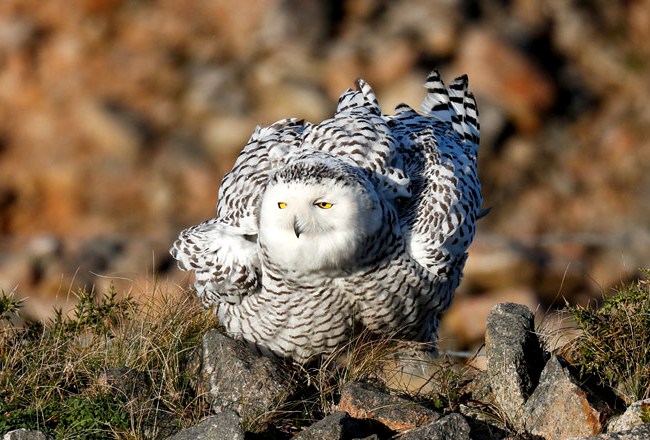
A wandering Snowy Owl on a brief visit to Carn Gloose near St Just in Cornwall, England, in December 2017 by Michael McKee.
Pennant-winged Nightjar Macrodipteryx vexillarius
There are several out-of-the-ordinary nightjar species, the
breeding-plumaged males of which mainly have fancy tails, and they include the Standard-winged Nightjar (Macrodipteryx longipennis) of
Africa south of the Sahara south to Cameroon and west Kenya which has two large standards at the end of elongated primary feather shafts. Pennant-winged
Nightjar is arguably even more spectacular, thanks to the over-sized black and white primary feathers at the end of each wing, two
of which form 'streamers' 48-78 cm long, so that the bird looks like it has wings attached to its wings! In the non-breeding season the 'streamers',
the second innermost primary wing feathers, are short or broken. The species spends the non-breeding season (Apr-Aug) in central Africa, from east Nigeria
to west Kenya, moving south to breed, mainly from September to March, across the lower half of the continent from Angola through
Zambia to southern Tanzania, and southern Malawi through
Mozambique to extreme north
Eastern South Africa where it can be seen in Kruger National Park. In the non-breeding season, when
the males may already have fully-developed streamers at the end of the period, the best places to see them include Murchison Falls and Lake Mburo
National Parks in Uganda, and Ngaoundaba in Cameroon.
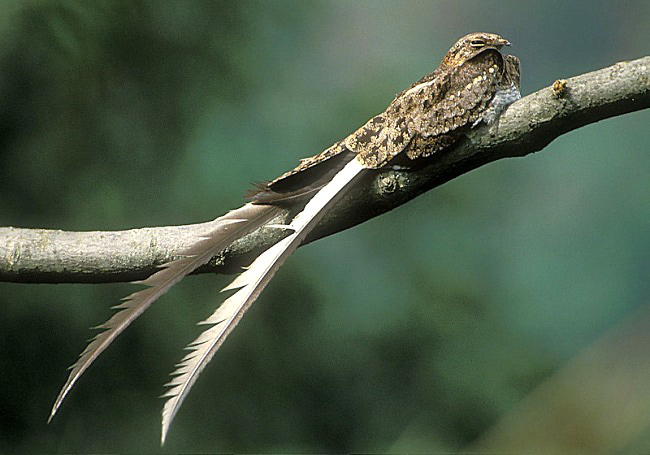
A roosting Pennant-winged Nightjar in Uganda by Jon Hornbuckle.
White-throated Needletail Hirundapus caudacutus
The fastest bird in level flight, reaching a top speed of 170 km/h
(105 mph) and, seen well, this large, handsome dark brown and white swift with a silvery back is arguably the most dashing of the swifts. Seeing
one well is difficult though because these birds are high-fliers. There are plenty of places to try, from the Himalayas through China to south
Siberia and Japan during the northern summer, to West Papua, Papua New Guinea and east Australia during the northern winter, as well as South East
Asia and Indonesia on migration. European birders might be better off waiting for one to appear in Europe, as has happened over twenty times, especially
in Britain and Scandinavia; vagrants seem to forage lower down, often affording spectacular views.
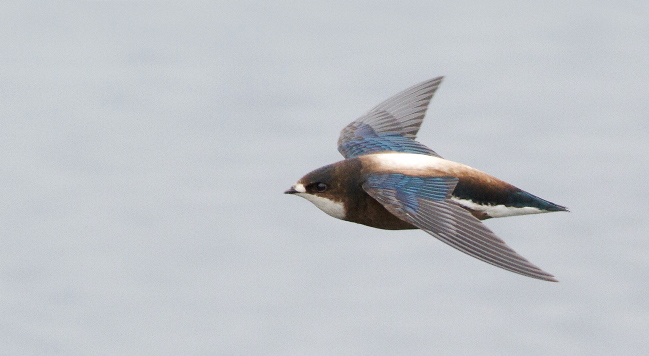
An almost unbelievable image of a vagrant White-throated Needletail which was in the Tarbert area on the island of Harris in the Outer Hebrides of Scotland from the 24th to the 26th of June 2013, by Josh Jones.
Sword-billed Hummingbird Ensifera ensifera
This may not be one of the most dazzling of hummingbirds but no other humming
or other bird has a bill up to 11 cm (4.5 in) long on a body averaging 13 cm (5.25 in) long - the longest bill in relation to body length of any bird
in the world, and one that is almost as long as the bird itself! So long in fact that the bird has to preen its feathers with its feet instead of its
bill. As is the case with many other hummingbirds the extraordinary bill has evolved to enable the bird to drink from flowers other, competing,
hummingbirds are unable to drink from, in this case those with long, hanging, trumpet-shaped flowers such as Daturas. This unique creature occurs
in the Andes, from Western Venezuela to Northern Bolivia and the best places in the world to see Sword-billed Hummingbird include
Colombia, Northern Ecuador (at feeders at Yanacocha and
Guango Lodge for example), Northern Peru and Southern
Peru.
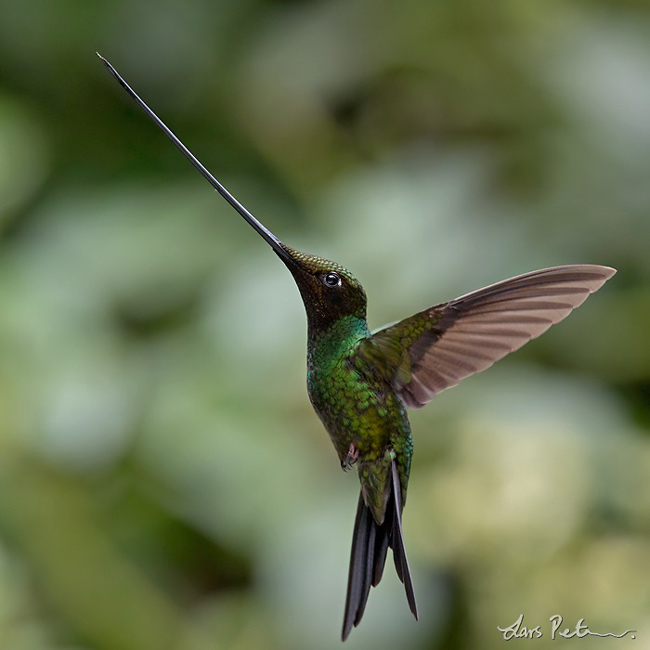
Sword-billed Hummingbird at Guango Lodge in Northern Ecuador by Lars Petersson.
Bearded Helmetcrests Oxypogon spp.
There are so many hummingbirds to choose from but the males of these four species
have astonishing head plumes. They occur in the high Andes of Western Venezuela and Eastern Colombia where the best places in the world to see Bearded
Helmetcrests include Pico Aguila (White-bearded lindenii) in Western Venezuela, and Sumapaz
National Park (Green-bearded guerinii) and Los Nevados National Park (Buffy stubelii) in
Colombia. The fourth species, Blue-bearded cyanolaemus occurs in the Sierra Nevada de Santa Maria,
also in Colombia.
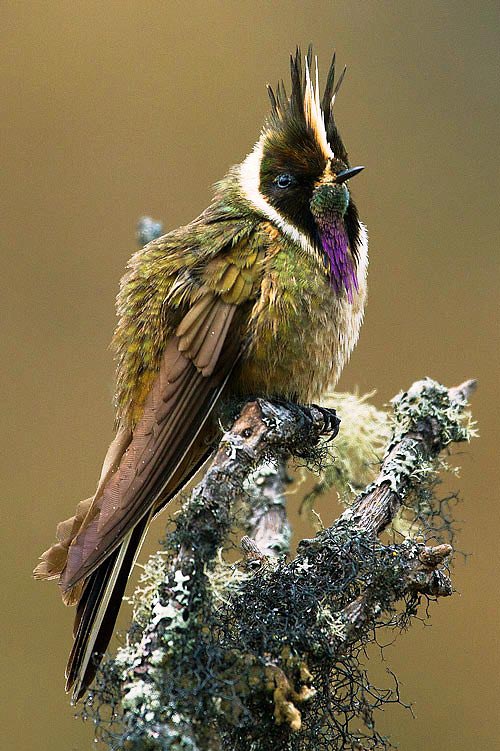
Buffy Helmetcrest in Los Nevados National Park, Colombia by Ian Merrill.
Marvellous Spatuletail Loddigesia mirabilis
Another less than dazzling hummingbird but male Marvellous Spatuletails
have got the most amazing tails; 'little hearts' on wires which they hold up above their heads in order to try and impress females. The best place
in the world to see Marvellous Spatuletail is the only place it occurs - a tiny area of
Northern Peru around Florida de Pomacochas where the Huembo Spatuletail Reserve is a good place to
start.
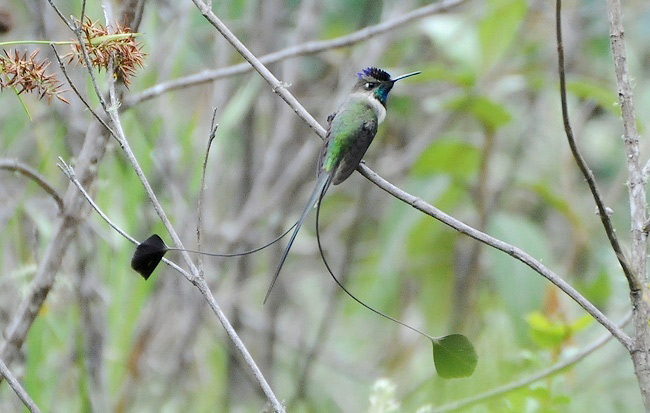
The amazing Marvellous Spatuletail at Pomacochas in Northern Peru by Christian Nunes.
Bee Hummingbird Mellisuga helenae
The male of this species of hummingbird is a dazzler and it’s the smallest bird on
our planet. Including the bill and tail this mind-boggling bird is 50-60 mm long. Not including the bill and tail it’s about 30 mm long, a bit more than an
inch! It weighs between 1.6 g and 1.9 g, which is believed to be the lowest possible weight limit for a warm-blooded animal, considerably lighter than the
familiar wren which weighs between 8 g and 12 g. The best place in the world to see Bee Hummingbird, which is endemic to
Cuba, is the Zapata area, where males are usually in full breeding plumage in March and April. Some other 'hummers'
are almost as small, including the Gorgeted Woodstar (Chaetocercus heliodor) of Venezuela to Ecuador at 58-64 mm, the Short-tailed Woodstar
(Myrmia micrura) of Ecuador and Peru at 60-65 mm, and the Snowcap (Microchera albocoronata) of Central America also at 60-65 mm.
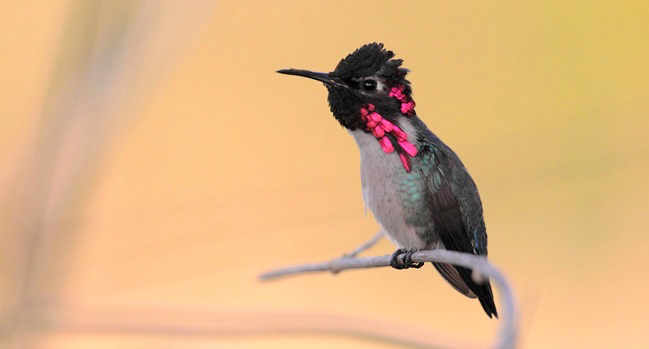
The tiny Bee Hummingbird by Simon Colenutt.
Many other hummingbirds could be listed here because this family has the second highest number of species of any bird family, behind Tyrant Flycatchers. At the beginning of 2020 HBW/BirdLife listed 106 genera comprising 377 species and some of the names give away their beauty; brilliants, comets, coquettes, coronets, emeralds, fairies, goldenthroats, hillstars, metaltails, mountain-gems, rubies, sapphires, starfrontlets, sunangels, sunbeams, sylphs, topazes and woodstars! The greatest diversity occurs in the northern Andes where it is possible to see well over 50 species on short trips to Colombia and Northern Ecuador. There are also plenty in Northern Peru and Southern Peru, as well as Central America where over 30 species may be seen on trips to Costa Rica and Panama, and over 20 species in Southern Mexico and Honduras.
Resplendent Quetzal Pharomachrus mocinno
Along with Wilson's Bird-of-paradise the Resplendent Quetzal is often considered to
be the most beautiful bird in the world, thanks to the male's metallic green upperparts, bright red underparts and elongated uppertail-covert feathers
which extend up to 65 cm (2 ft) beyond the rest of the tail. These feathers are slightly longer in the northern subspecies (mocinno) that occurs
from southern Mexico through Guatemala and Honduras to northern Nicaragua. The southern subspecies (costaricensis) occurs in Costa Rica and Panama.
The male's long feathers can take up to three years to reach the maximum length and these feathers are also lost after the breeding season, usually during
July and August. The breeding season varies slightly north to south but usually lasts from mid-February into June or July and at least in Costa Rica it
coincides with the fruiting of wild avocado and other trees in the laurel family (Lauraceae). There are many places where the bird can be seen but
some of the best places in the world to see Resplendent Quetzal include El Triunfo in south Mexico, several sites in Guatemala, Cerro de la Muerte and
Monteverde in Costa Rica, and Cabanas Los Quetzales in Panama.
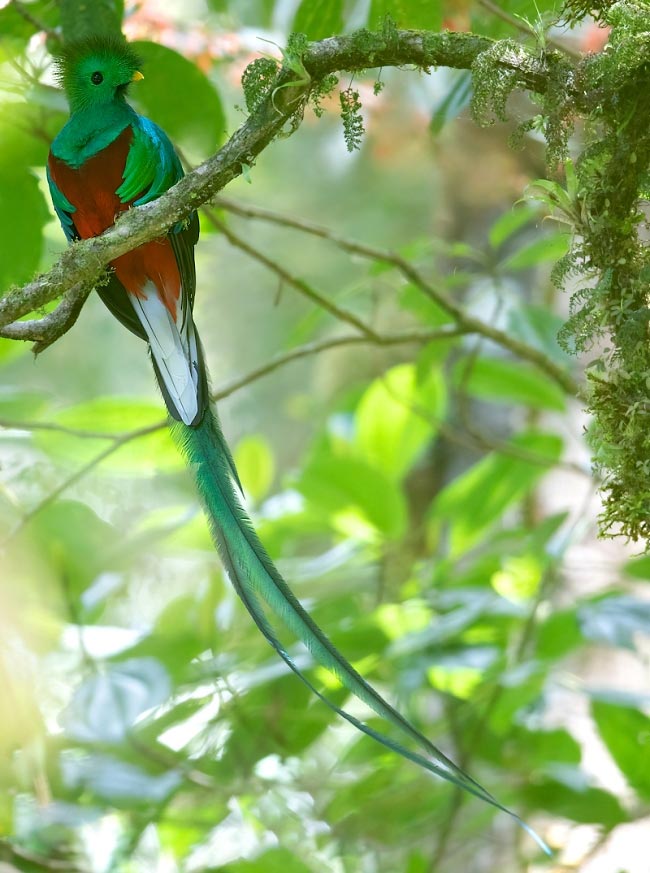
Resplendent Quetzal, Cabanas Los Quetzales, Panama, by Dubi Shapiro.
There are four other very similar Pharomachrus quetzals, albeit without the tail streamers: the widespread and regularly encountered Crested (antisianus) of the Andes from western Venezuela to western Bolivia; the also fairly easy-to-see White-tipped (fulgidus) of northern Venezuela and northern Colombia including the Santa Marta Mountains; the widespread and regularly encountered Golden-headed (auriceps) of mountains from eastern Panama to western Venezuela and western Bolivia; and the much harder-to-see Pavonine (pavoninus) of lowland and subtropical Amazonia including southern Venezuela, eastern Colombia, eastern Ecuador, northeast Peru and western Brazil. Three of the four (Crested, White-tipped and Golden-headed) all occur on one mountain in the Perija Mountains of Colombia!
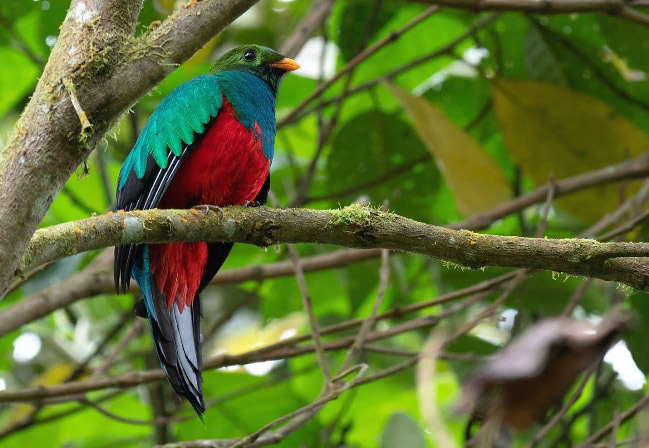
A Golden-headed Quetzal at Angel Paz's place in Ecuador by Simon Colenutt.
Cuban Trogon Priotelus temnurus
Trogons are long-tailed mainly tropical forest birds, the males of which are
brightly-coloured, often glossy-green above in the Americas and orange-buff in Asia, and red or yellow below. They perch upright for long periods in the
leafy, mid-canopy where they can be very inconspicuous but when they are calling or feeding by flying quickly to snatch insects and fruit from branches,
leaves and the ground they are much easier to locate and watch. The 45 species of trogons occur from southern North America to South America (about 25
species plus six quetzals), in sub-Saharan Africa (three species) and across Asia from India to Borneo and Java (about 12 species). Choosing one for
this list is virtually impossible but we’ve plumped for the Cuban Trogon which is unique amongst a tribe of actually very similar birds in having such an
oddly-shaped tail. In Cuba it is known as ‘Tocoloro’ or ‘Tocororo’, after the bird’s call. It is also the national bird, having the same colours as the
national flag; blue, red and white.
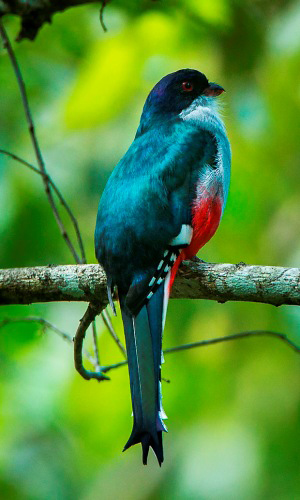
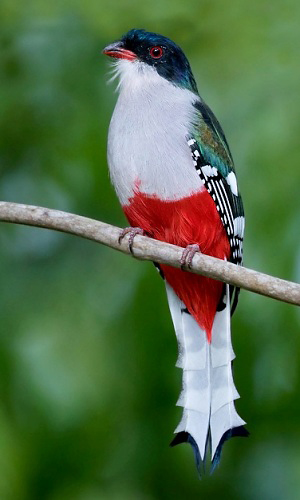
Cuban Trogons by Francesco Veronesi on the left and Dubi Shapiro on the right.
Turquoise-browed Motmot Eumomota superciliosa
This is arguably the best-looking of the fourteen species of motmot and
definitely one of the most beautiful birds in the world. It’s so good it could be a bird-of-paradise. The best places in the world to see
Turquoise-browed Motmot, which occurs from Southern Mexico to northwest Costa Rica, include the impressive Mayan remains of Chichen Itza on the
Yucatan Peninsula of Southern Mexico and a
few other sites there, Honduras, and Costa Rica.
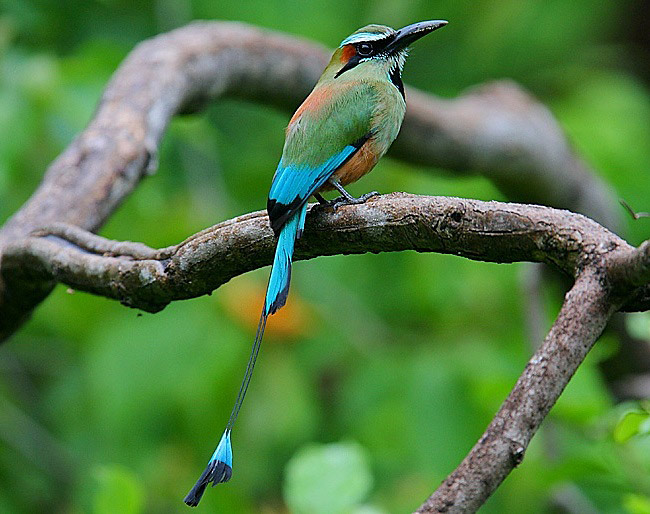
The absolutely stunning Turquoise-browed Motmot in Costa Rica by Steve Garvie.
Cuban, Broad-billed, Narrow-billed, Jamaican and Puerto Rican Todies Todus spp.
These tiny, tame and energetic little
beauties are all very similar and all endemic to the Caribbean islands of Cuba, Hispaniola (Haiti and the
Dominican Republic, two species), Jamaica and Puerto Rico, where there are many places to see them all.
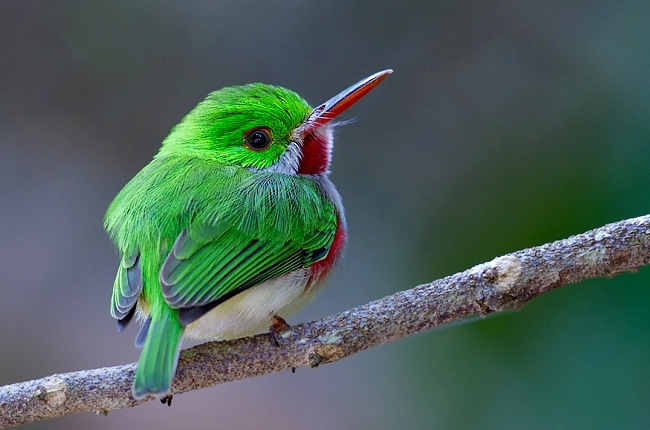
The incredibly cute Broad-billed Tody, in the Dominican Republic by Dubi Shapiro.
Malachite Kingfisher Alcedo cristata
This ball of brightness with a scarlet dagger for a bill is arguably the
most dazzling of the many small 'blue and red' kingfishers. It occurs in Africa south of the Sahara and can be seen in many places.
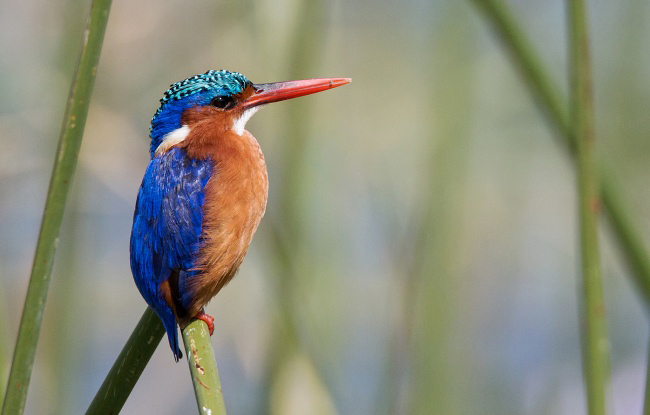
Malachite Kingfisher showing the malachite bars in the elongated crown feathers. This image was taken at Lake Awassa in Ethiopia by Ian Davies.
Surprisingly few of the 130 Kingfishers eat fish. The three subfamilies include the 35 or so species of ‘river kingfishers’ and about ten species of ‘water kingfishers’ but the third subfamily of ‘tree kingfishers’ contains many more species. The centre of kingfisher diversity is Australasia where there are many spectacular species but this is also true to a lesser extent of course in Asia and Africa so it has been very difficult to choose just three species out of the whole family for this list.
Black-capped Kingfisher Halcyon pileata
This is one of the largest kingfishers but no less brilliant for that,
being a striking combination of black, white, rufous and deep blue with a big red bill. It also has a wide distribution, being present during
the northern summer from India through China to North Korea and during the northern winter from Sri Lanka through South East Asia to Sumatra,
Borneo and the Philippines, and can therefore be seen at many places throughout Asia.
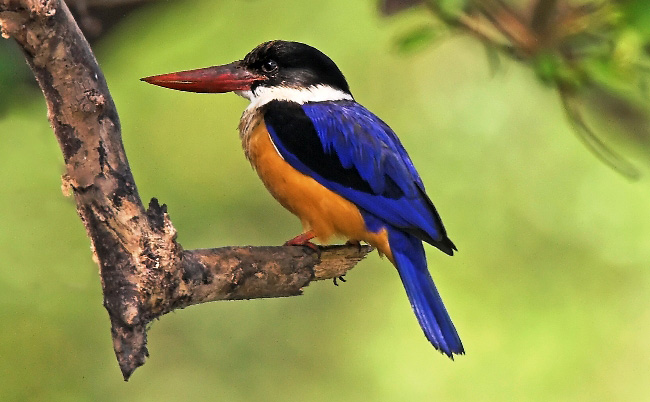
Black-capped Kingfisher in Goa, India, by Tom Tams.
Pied Kingfisher Ceryle rudis
A unique bird in its large family and one of the most striking of all birds thanks
to its pied plumage and foraging technique which involves hovering high above the water in search of fish, up to 3 km (2 miles) from land! It
is widespread and easy to see in most of Africa south of the Sahara, from as far west as Gambia to as far south as Cape Town in South Africa,
parts of the Middle East as far west as southern Turkey, and from the Indian subcontinent to mainland South East Asia.
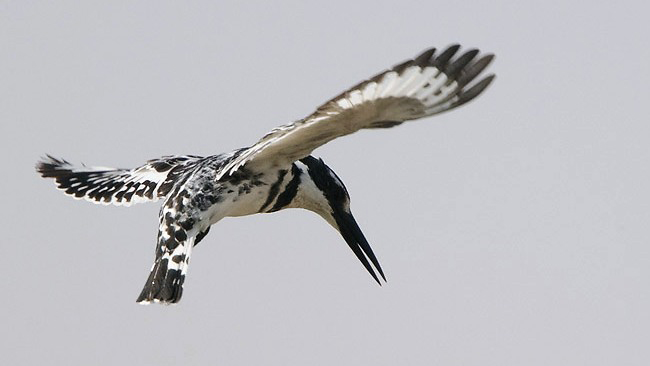
Pied Kingfisher in typical hovering mode in Jordan by Michael McKee.
Carmine Bee-eaters
Two astonishing members of an astonishing family - no other birds look anything like these! Northern
(nubicus) differs from Southern (nubicoides) in having a complete turquoise head with a black mask whereas in Southern the turquoise is
confined to the crown. They may be seen in many places in Africa south of the Sahara but the best places in the world to see Southern Carmine Bee-eaters
are at their nesting colonies in Zambia, Botswana and the Caprivi
Strip at the northeast end of Namibia, usually in October-November.
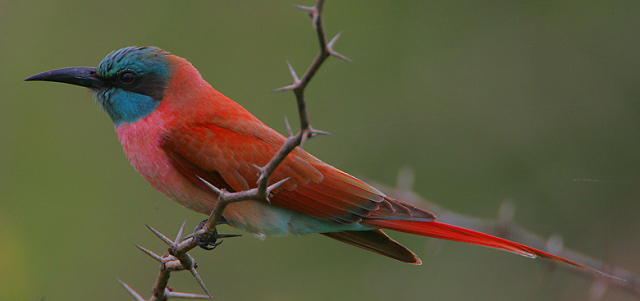
A gorgeous Northern Carmine Bee-eater in Kenya by Steve Garvie.
Golden (European) Bee-eater Merops apiaster
This gregarious bird is another very strong contender for the most beautiful
bird in the world, thanks to its colourful but not gaudy plumage, dynamic, dashing pursuit of flying prey and lovely purring call. It is better known
as European Bee-eater but the old Russian name of Golden Bee-eater is much more appropriate because it describes the bird so well, the eye-catching
scapular feathers being a gorgeous golden-yellow, and because this species, despite its commonly used name, not only spends the northern winter in
Africa south of the Sahara but nests there as well, in southwest Africa. These birds migrate to central Africa during the southern winter. Most Golden
Bee-eaters breed, usually in small colonies of up to eight pairs, in the northern hemisphere though, in North Africa, as well as Europe, western Russia
and the Middle East, and may be brighten up anyone's life in many places throughout its range.
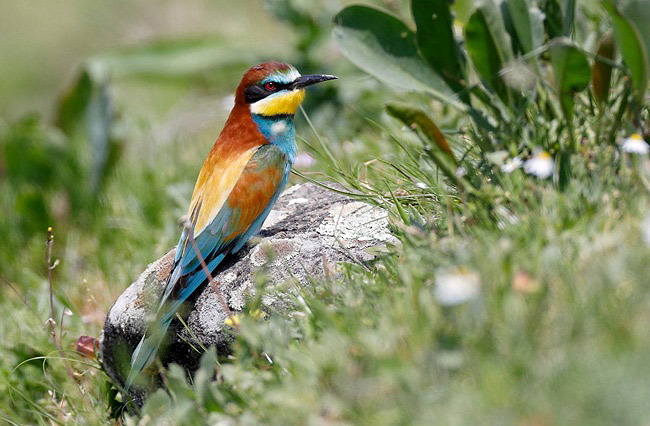
A Golden or European Bee-eater in the Evros Delta, Greece by Michael McKee.
Lilac-breasted Roller Coracias caudata
This brightly-coloured conspicuous creature, often seen perched atop an acacia,
is an iconic African bird, occurring in many places from East Africa south to eastern South Africa, and so good-looking every single one is worth
stopping for. The far northern lorti race which occurs in northern Kenya, Ethiopia and Somalia does not actually have a lilac breast; it is blue
and the lilac is confined to the throat, but both races are equally brilliant, with pale blue crowns and rumps, and, in flight, flashing pale blue
forewings contrasting with the dark blue/purple primaries and secondaries.
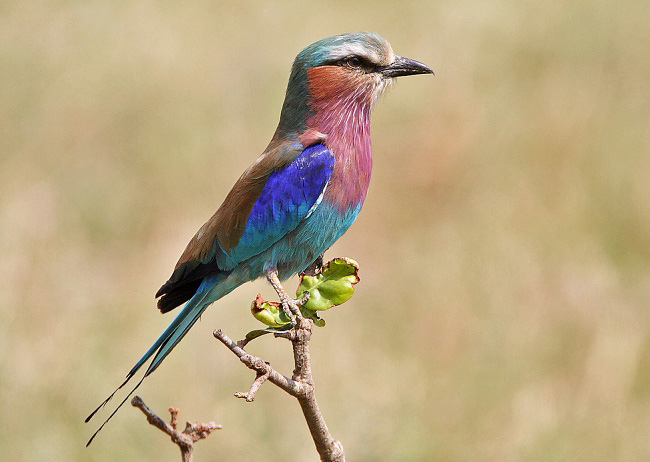
Lilac-breasted Roller at Nyanza in Kenya by Steve Garvie.
Hoopoe (Eurasian, African and Madagascar) Upupa epops/africana/marginata
Totally unique and great-looking to boot, the
Hoopoe looks particularly amazing in floppy flight when the broad, bold black and white wings are spread like a giant butterfly. The one, two or three
species occur in Africa, Madagascar, Europe, Russia, China, and from the Indian subcontinent to South East Asia, and they can be seen in many places.
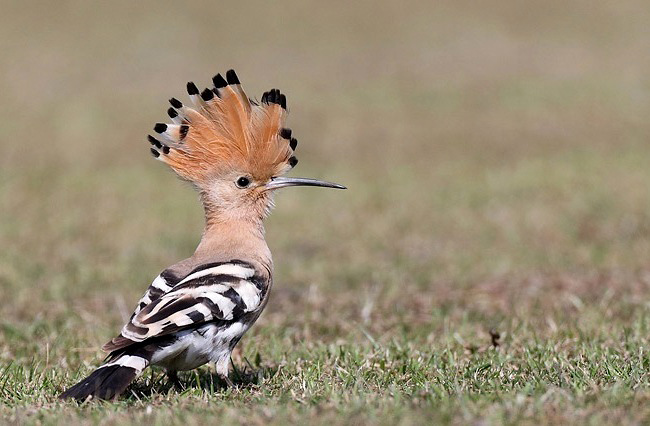
A migrant Eurasian Hoopoe in Cornwall, England by Michael McKee.
Rufous-tailed Jacamar Galbula ruficauda
This is one of the commonest and the most widespread of the nineteen mainly brilliant
jacamars, and arguably the most dazzling. It occurs from Southern Mexico through Central America and northern South America as far south as
Northern Argentina and may be seen in many places. All the other jacamars apart from Dusky-backed (Brachygalba salmoni) which just reaches western
Panama, are endemic to South America.
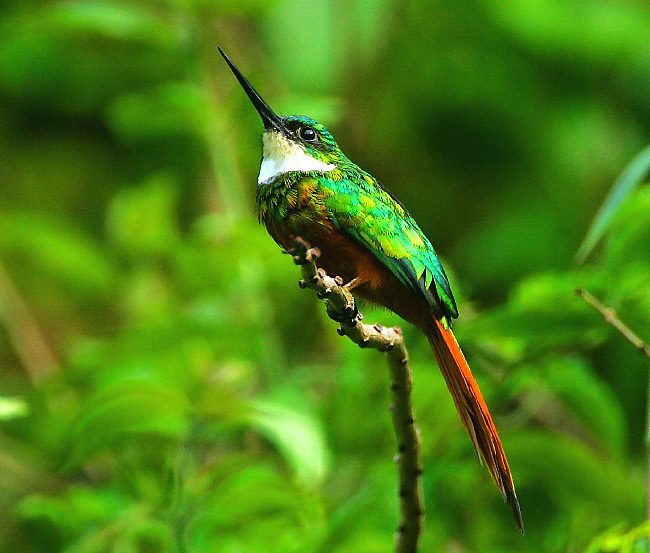
There sure are some pretty jacamars but Rufous-tailed Jacamar, one of the commonest and most widespread, is arguably the best of the lot. Image by Steve Garvie.
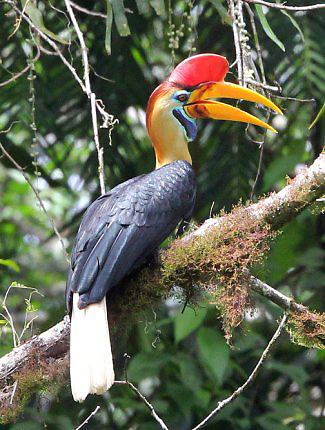
Knobbed Hornbill by Coke & Som Smith.
Knobbed Hornbill Aceros cassidix
There are lots of spectacular large hornbills, in Africa and especially Asia and Indonesia,
including Great, Helmeted, Plain-pouched, Rhinoceros, Rufous-necked, Wreathed and Wrinkled, while Papuan (Blyth's) occurs as far east as the Solomon
Islands, but Knobbed Hornbill is arguably the most impressive of all thanks to its particularly richly coloured head, bill, casque and pouch. It is endemic
to the island of
Sulawesi where it can be seen at several sites, singly, in pairs and in flocks of up to over fifty birds. It
is an active, conspicuous, noisy, sometimes confiding, bird, big (at up to over a metre long) and bold enough to drive Sulawesi Crested Macaques
(Macaca nigra) from fruiting trees!
Keel-billed Toucan Ramphastos sulfuratus
Most toucans are spectacular so choosing one to represent them is
very difficult. Toco Toucan (Ramphastos toco) is just about the biggest but Keel-billed Toucan is also very large and has arguably
the most beautiful bill in a family full of them. The best places in the world to see Keel-billed Toucan are many within its range, from
Southern Mexico through Guatemala (especially at Tikal),
Belize, Honduras,
Costa Rica and Panama into northern
Colombia and extreme northwest Venezuela. Toco Toucan takes over from there down to northern
Argentina but it is sparsely distributed and surprisingly elusive, and the best places to see Toco Toucan are northern
Bolivia and Southern Brazil, especially in
the Pantanal.
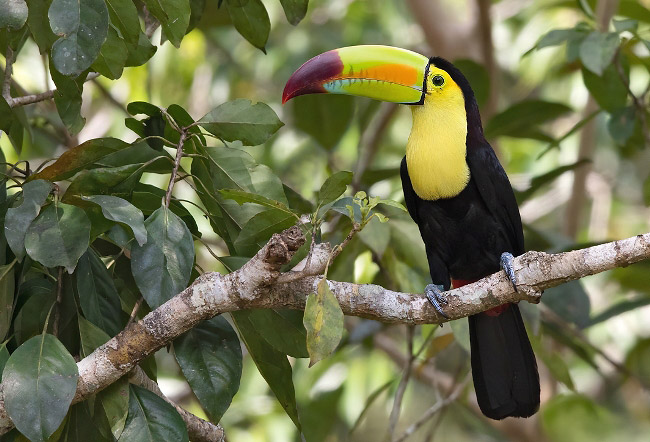
Keel-billed Toucan at Tikal in Guatemala by Dubi Shapiro.
Greater Flameback or Goldenback Chrysocolaptes guttacristatus
There are over 200 species of woodpecker in the world and
they enliven most of it, although they are absent from Madagascar, east of Wallace’s Line and in the polar regions. They are so different from other birds,
climbing up trees with the help of two toes pointing forward and two pointing backwards, sharply curved claws and four very stiff feathers in the
centre of their tails providing extra support, at least one has to be included in a list such as this. The world’s largest woodpecker is the Black
Woodpecker (Dryocopus martius) at 45-55 cm, although not so long ago the title was held by the now extinct Imperial Woodpecker of Mexico at 56-60
cm. Some, such as the Grey-and-buff Woodpecker (Hemicircus sordidus) of Malaya, Borneo and Sumatra are as small as 13 cm. Resisting the temptation
to go for the largest I have plumped for the Greater Flameback for this list. It is only 30-34 cm long but it has a bright red crest, boldly striped black
and white head, black and white spotted nape, black crescents on its white breast, a red rump and that eye-catching, golden, flame-coloured back and wings.
It occurs from northwestern India to South-east Asia and beyond as different races or species (according to your taxonomist) on Sri Lanka, the Philippines
and Java, and there are several very similar-looking woodpeckers called flamebacks or goldenbacks, although they are actually in a different genus,
Dinopium, and they occur from Pakistan through South-East Asia to Java. The White-naped Woodpecker, with golden-olive wings, is the only other
woodpecker in the same genus as Greater Flameback and it occurs in India and Sri Lanka.
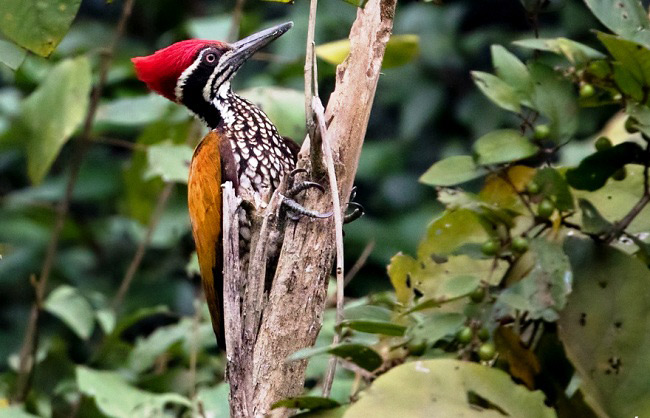
Greater Flameback in Kaeng Krachan National Park, Thailand, by Lars Petersson
Black-and-yellow Broadbill Eurylaimus ochromalus
There are more than ten species of colourful Asian broadbills but
this one has been picked out as the best because it is one of few small birds in the world which has some pink in its plumage. Added to the black
and yellow upperparts, large yellow eyes and big blue bill, it’s a cracking combination. It occurs in South East Asia, including
Southern Thailand and the Malay Peninsula, as well
as on Sumatra and Borneo, and may be seen at many places.
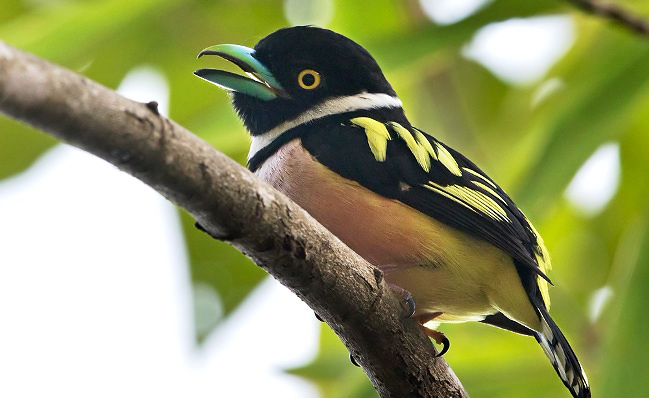
A close Black-and-yellow Broadbill at Kaeng Krachan in Thailand by Lars Petersson.
Pittas are very attractive big-eyed, plump, long-legged, colourful, pugnacious birds which hop over the forest floor flipping leaves in search of food but most are tough to see and even tougher to see well. For example the African Pitta has a wide range but is only seen regularly in Mozambique and Zimbabwe, while the other African pitta, Green-breasted, is only worth searching for at one site in Uganda. With the splitting of Blue-breasted/Red-bellied Pitta into 13 species across Indonesia and Australasia and various other taxonomic changes there are now nearly 50 species with all but the two aforementioned occurring in Asia and Australasia where in places such as Thailand, Malaya and Borneo it is possible to see at least five species on short trips. Choosingone for this list of the best birds in the world proved impossible but I have kept it to two ...
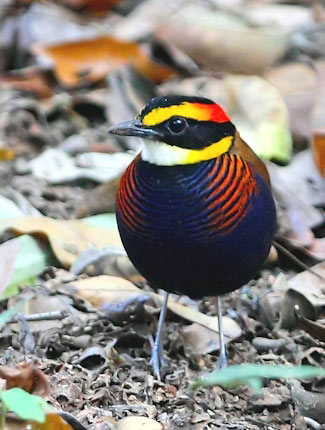
A brilliant male Malay Banded Pitta, at Khao Nor Chuchi in Southern Thailand by Roger Wyatt.
Malay Banded Pitta Pitta irena
Many males of pitta species could be described as ‘jewels’ but the one that stands out as the
brightest and most brilliant of them all is Malay Banded Pitta, thanks to its broad, flame-coloured supercilia and fiery-striped deep purple-blue
underparts. It occurs from Peninsular Thailand south through the Malay Peninsula to Sumatra and the best places in the world to see it include Khao Nor
Chuchi in Southern Thailand, Taman Negara in the
Malay Peninsula and Way Kambas in Sumatra. The other banded pittas
are Javan guajanus of Java and Bali, and Bornean schwaneri of
Borneo where the best place to see it is Danum Valley (where Blue-headed Pitta, below, also occurs).
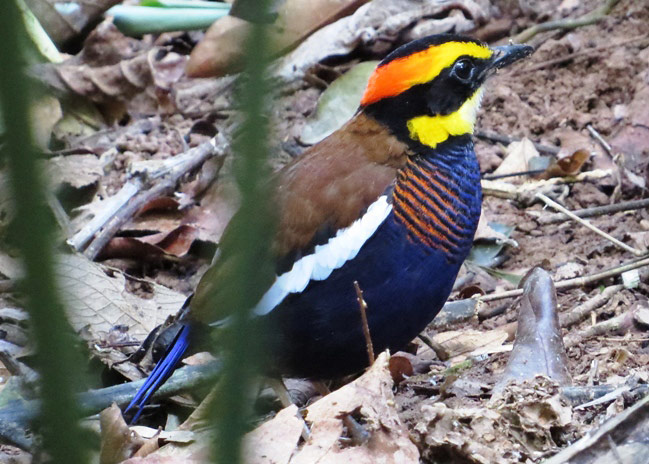
Another image of Malay Banded Pitta at Khao Nor Chuchi in Southern Thailand, this one by Paul Hindess.
Blue-headed Pitta Pitta baudii
When a male of one of these bounds out of the rainforest gloom it certainly looks
like a jewel, thanks to its azure-blue crown and nape. What with a black mask, white throat, rich red-brown back and purple-blue underparts it
is also an all-round attractive bird, one of the most gorgeous in the world. It is endemic to Borneo
where the best places to see Blue-headed Pitta include Danum Valley, Sukau and Gunung Mulu National Park.
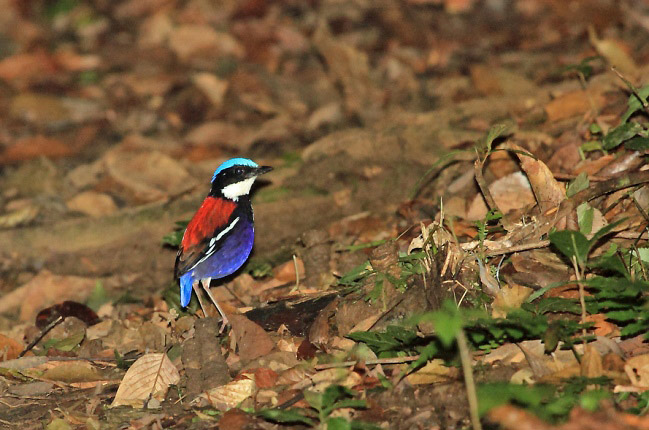
The proverbial 'jewel in the rainforest', the ultimate Asian birding experience, captured by Nigel Voaden at Danum Valley, Borneo.
White-plumed Antbird Pithys albifrons
This is the stand-out bird in a massive family and one of the most
extraordinary of all birds thanks to its outrageous white facial plumes which form a long upright crest and beard. It occurs in northern South
America north of the Amazon and is usually seen following army ant swarms only. The best places in the world to see White-plumed Antbird
include Imataca Forest Reserve, El Palmar, Bolivar in Eastern Venezuela,
Guyana, Suriname, the
Amazon of Brazil, the Amazonian region of
Northern Ecuador, and the Iquitos area in
Northeastern Peru.
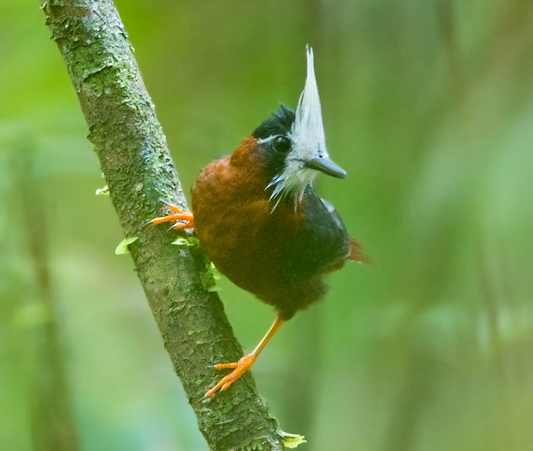
A crazy White-plumed Antbird at Surama in Guyana by Dubi Shapiro, not one of the easiest birds to capture such a great image of.
Pompadour Cotinga Xipholena punicea
The cotingas is yet another family full of gorgeous birds but the male of
this one really is special thanks to its claret-coloured plumage. The best places in the world to see Pompadour Cotinga, which occurs in
northern South America from extreme eastern Colombia through southern Venezuela to the Guianas, the Amazon region of Brazil, northeast Bolivia and
northeastern Peru, include the Mitu area of Colombia, Imataca Forest Reserve and the Escalera in
Eastern Venezuela, Guyana,
Suriname, the Amazon, and the Iquitos area in
Northeastern Peru.
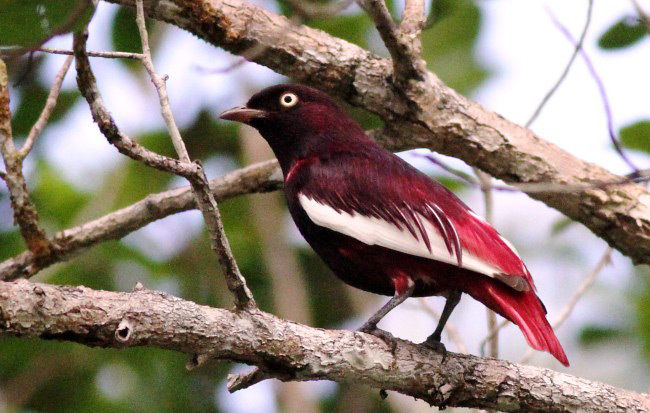
A rare image of a male Pompadour Cotinga captured by Phillip Hill near Manaus on the Amazon in Brazil where it was feeding in the same fruiting tree as a male Purple-breasted Cotinga!
Bare-throated, Bearded, Three-wattled and White Bellbirds Procnias
'Bok!', as in a hammer striking an anvil, that is the main call of the male bellbirds, an extraordinary ear-splitting explosion of sound, the
loudest of any birds, and which can be heard up to 3 km away! Three-wattled Bellbird (Procnias tricarunculatus) occurs in Central America from
Honduras through Costa Rica to western Panama. Bearded Bellbird (averano) occurs from northeastern Colombia through Venezuela and Trinidad
to northeastern Brazil. The different 'Klong-Klang!' of the White Bellbird (albus), the loudest of them all, can be heard from
southeastern Venezuela through the Guianas to northeastern Brazil. The fourth member of the genus is Bare-throated Bellbird (nudicollis)
which occurs in southeast Brazil, eastern Paraguay and northeastern Argentina. The calls of the White Bellbird have a sound pressure about three times
that of the Screaming Piha, the next loudest bird documented, and they are much louder than the much larger Howler Monkeys.
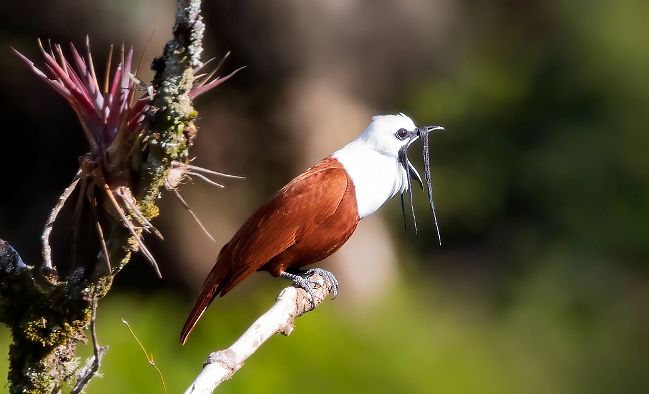
Three-wattled Bellbird, Sendero Los Quetzales, Panama, by Dubi Shapiro.
Cock-of-the-Rock Rupicola
There are two equally extraordinary cock-of-the-rocks; Andean (Rupicola
peruviana) and Guianan (Rupicola rupicola), the only two birds of this ilk on planet Earth. The best places to see the incredibly bright red
Andean Cock-of-the-Rock, which occurs from Western Venezuela to Northern Bolivia, include the few known leks: at Jardin in
Colombia; in the Santo Domingo Valley in Western
Venezuela; at Refugio Paz de las Aves in Northern Ecuador; and near Cock-of-the-Rock Lodge in
Southern Peru. The best places in the world to see the orange Guianan Cock-of-the-Rock, which occurs
from eastern Colombia to the Guianas and Brazil north of the Amazon, include the Mitu area in Colombia; the
Escalera in Eastern Venezuela; at leks in Guyana, at a lek
near Manaus in the Amazon and, best of all, at the largest known lek, at the Voltzberg in Raleigh Falls National
Park, Suriname.
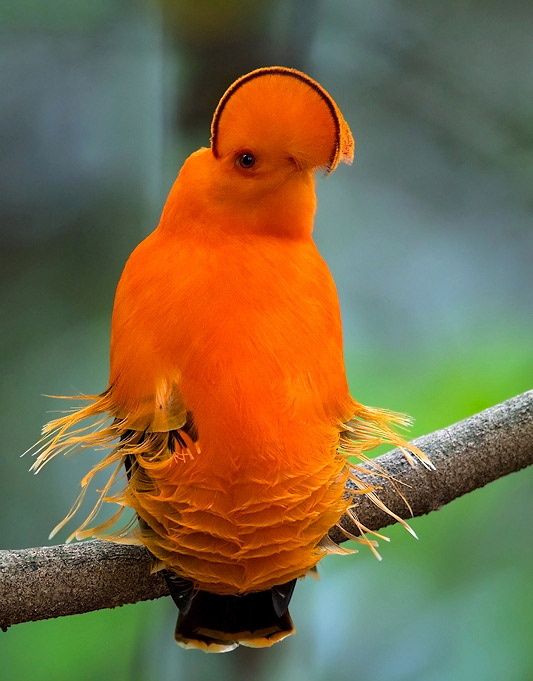
A fabulous male Guianan Cock-of-the-rock at Surama in Guyana by Dubi Shapiro.
Superb Lyrebird Menura novaehollandiae
The male of this species has a shimmering veil of a tail with lyre-shaped
outer tail feathers but it is its song which is even more amazing, for it is a superb mimic, even copying the shutter and motor-drive sounds of
SLR cameras. It occurs near Sydney in Eastern Australia, notably in Royal National Park
where there is usually at least one confiding male along Lady Carrington Drive, and Minna Murra Rainforest Park,
and near Melbourne in Southeastern Australia, notably in Sherbrooke Forest and other
places in the Dandenong Ranges, and at Badger Weir, and is most likely to be heard singing and seen displaying in the southern autumn and winter,
which is also true of the only other lyrebird, Albert’s Lyrebird (Menura alberti), which is just as good at mimicry and also has almost as
impressive a tail. It also occurs in Eastern Australia but has a much smaller distribution and is best looked for near O'Reilly's Rainforest
Retreat in Lamington National Park near Brisbane, although even there it is tough to see a singing and displaying male.
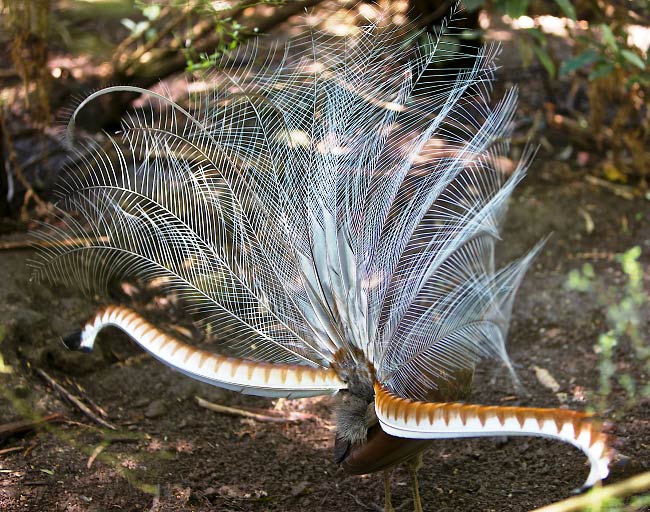
A displaying male Superb Lyrebird at Healesville near Melbourne by Michael Halliday.
Flame Bowerbird Sericulus ardens
The male of this species is quite possibly the brightest bird in the world; deep, lush,
shocking yellow-orange all over! It occurs in New Guinea of course where the best place in the world to see Flame Bowerbird is the Kiunga/Elevala River
area of Papua New Guinea. The very similar Masked Bowerbird (aureus) which has a black face, can
be seen in the lower Arfak Mountains of West Papua, although both species are very shy and elusive.
Splendid Fairy-wren Malurus splendens
Of the 16 pretty fairy-wrens the male Splendid is the most colourful. It is endemic to
western, central and southern Australia, mainly in the arid interior of the south and southeast but in inland and coastal areas in Western Australia as
well. The best places to see Splendid Fairy-wren include Hattah-Kulkyne National Park and Gluepot Reserve in
Outback Australia, and in many places in
Western Australia, including Perth, Dryandra State Forest and Stirling Range National Park.
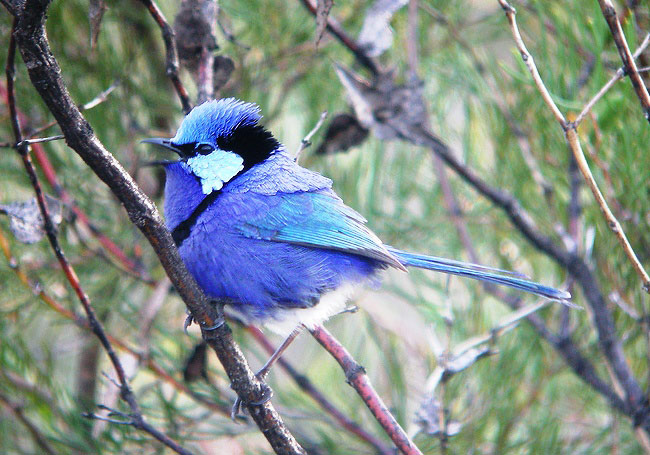
A fabulous male Splendid Fairy-wren of the western splendens form in Stirling Range National Park, Western Australia, by Mark Harper.
Eurasian Golden Oriole Oriolus oriolus
The male is so richly coloured, its song is so beautiful and the nest, attached to
the underside of a lofty fork like a hammock and built chiefly by the drabber female, so exquisite, this fabulous bird has to be placed in such a list,
although it is without doubt somewhat eurocentric to do so, especially bearing in mind the many similar-looking orioles which also occur in Africa,
Asia and Australasia, and the even more brightly-coloured, some might say rather gaudy, 'orioles' (really icterids) of the Americas. The Eurasian Golden
Oriole is a shy, restless bird, always on the move and despite being so brightly coloured very difficult to see in the sunlit canopy it prefers to
frequent, so when one does get a decent prolonged view it is a very special moment in one's birding life! The beautiful, loud, fluting whistles which
make up the song are the most tropical sound imaginable in a summertime European woodland. To some they sound like a rolling, liquid, 'ori-ori-ori-ole'
and yet the bird is not named after its song; the latin name for the genus Oriolus comes from aureolus which means 'little golden (one)'.
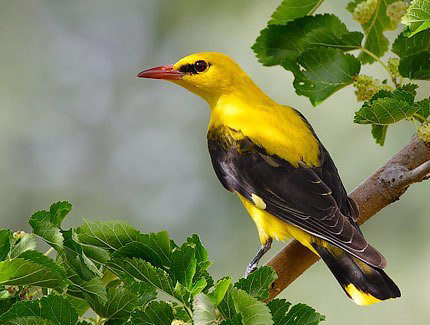
A very-hard-to-get image of a male Eurasian Golden Oriole, captured in Spain by Steve Fletcher.
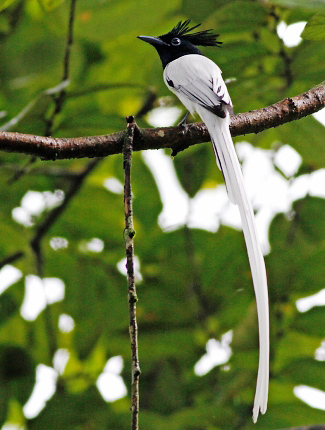
There can be few more fantastic sights than a fairy-like white paradise-flycatcher dashing about the forest. This image of an Asian one was taken in Sri Lanka by Chris Townend.
Paradise-flycatcher Terpsiphone spp.
All the long-tailed male paradise-flycatchers are beauties but it is the white morphs
that stand out the most. These birds can be seen in many places in Africa south of Sahara, and from Asia to Indonesia.
Black-and-white Shrike-flycatcher (Vanga Flycatcher) Bias musicus
This small and stocky bird has a spiky crest, bright
yellow eyes, a short tail and broad rounded wings, and no other bird looks anything like it. The male is black and white, the female grey, rufous and
white. It has a patchy distribution in Africa south of the Sahara but can be seen with some ease in Gabon and
Uganda. It also has a rather long name, perhaps because the word Vanga is associated with a sometimes violent
initiation ceremony of the former Ndembo secret society of the Lower Congo.
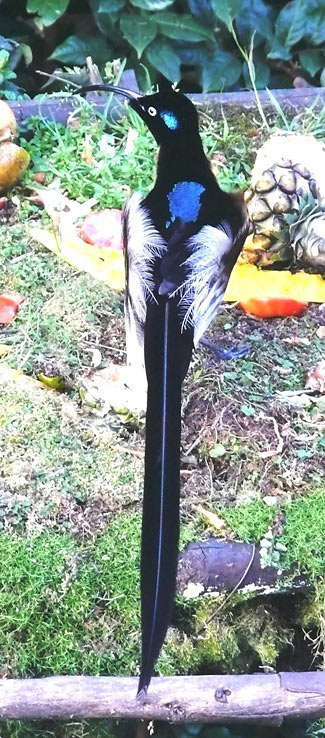
A fabulous male Brown Sicklebill on the 'bird table' at Kumul Lodge, Papua New Guinea, by Paul Macklam.
Brown Sicklebill Epimachus meyeri
This is not the best name for this species. The females may be brown-ish but the
much rarer males are something else; truly birds-of-paradise, what with a slim, down-curved bill, pale blue eyes, metallic blue head and back, and a
long, narrow, black, down-curved tail, making it look rather like a cross between a pheasant and a massive hummingbird. To top it all when it fires its
unique machine-gun call, which rattles through the forest, the extraordinary creature fans its mauve breast plumes and white flank plumes. The
species can be seen along the Pondok Tiga-Yabogema Trail on the Lake Habbema Trek in West Papua and in
the highlands of Papua New Guinea although virtually every bird seen is likely to be a shy and
elusive female or an immature. To see one well and to stand a chance of seeing a male Brown Sicklebill in all its glory it is best to visit Kumul
Lodge in Papua New Guinea where females, immatures and sometimes males visit the massive 'bird table'! The other large sicklebill, over a metre long,
is the rather imposing Black Sicklebill (Epimachus fastuosus) which is even more elusive and only likely to be seen at known display posts in
the Arfak Mountains of West Papua and the Tari Valley in Papua New Guinea.
Ribbon-tailed Astrapia Astrapia mayeri
A large, shimmering blue and green male bird-of-paradise with two very
long silky white tail streamers, the longest feathers relative to body length of any bird, which may grow to 90 cm (3 ft) long. This fabulous
creature occurs only in Papua New Guinea and although full adult males are rare they can
usually be found at the best places in the world to see Ribbon-tailed Astrapia; Kumul Lodge and the surrounding area, and especially the Tari
Valley above Ambua Lodge.
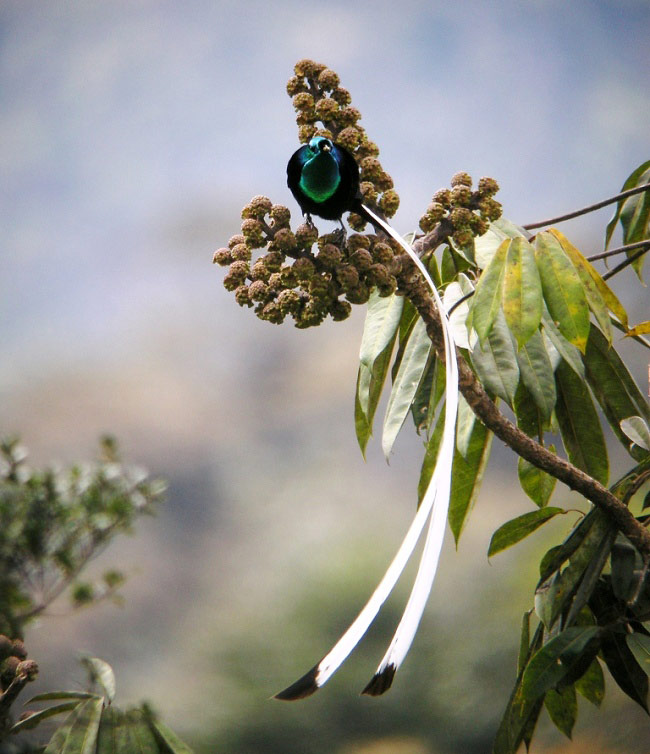
A full-tailed male Ribbon-tailed Astrapia, above Ambua Lodge in the Tari Valley, Papua New Guinea, by Mark Harper.
King Bird-of-paradise Cicinnurus regius
The ‘blood-and-snow bird’, as males may be described, is an astonishing
sight. Just 16 cm (6 inches) long, it has the most incredible soft but glossy, deep ruby-red upperparts, and two long tail ‘wires’ tipped with
shimmering emerald discs. It’s so amazing it’s hard to imagine such a thing exists and even those who have seen it well can hardly believe it.
Seeing one is quite easy, seeing one well, displaying in their favoured vine tangles, is another matter, but possible at the best places in the
world to see King Bird-of-paradise, which are the northern lowlands of West Papua, and along the
Elevala River and near Karawari Lodge in Papua New Guinea.
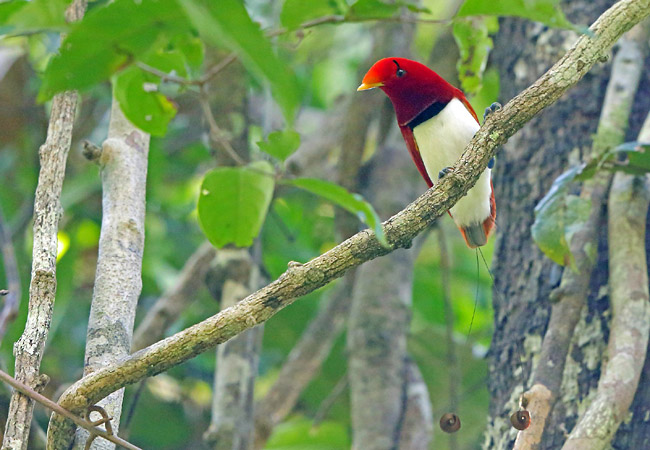
A rare image of a very shy bird, a male King Bird-of-paradise at Nimbokrang in the northern lowlands of West Papua, by Nigel Voaden.
Twelve-wired Bird-of-paradise Seleucidis melanoleuca
Another stunning member of the incredible birds-of-paradise
family, males of this species have candy-floss-like yellow plumes and twelve recurved ‘wires’ stretching from them which they stroke the female
with while'dancing' up and down the tops of tall dead stumps in forest clearings. The best places in the world to see the fabulous Twelve-wired
Bird-of-paradise are the northern lowlands of West Papua, and along the Fly and Elevala Rivers, and
near Karawari Lodge in Papua New Guinea.
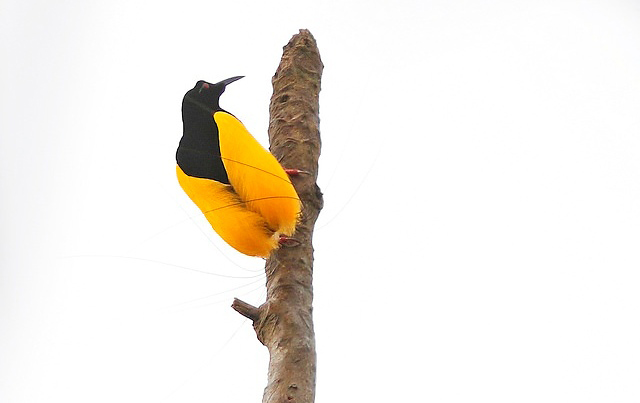
A great image of another very shy, male Twelve-wired, Bird-of-paradise, on his display stump at Nimbokrang in West Papua by David Beadle.
Wilson’s Bird-of-paradise Cicinnurus respublica
Along with the Resplendent Quetzal of Central America this
bird is often considered to be the best bird in the world, especially by the relatively few birders who have been fortunate enough to have
seen a fully-adorned male displaying. The best and only places in the world to witness such a fantastic sight are the islands of Batanta and
Waigeo off the west coast of West Papua, the only islands in the world where this bird occurs.
There are known display courts with palm-fringed viewing screens on both islands, where it is possible to watch this wonder at very close
range for hours on end.
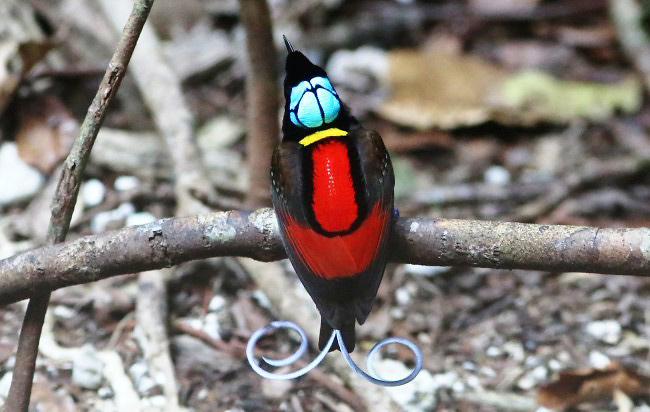
A male Wilson's Bird-of-paradise on full alert for a visiting female above its court below a carefully-placed hide or screen on the island of Waigeo off West Papua, by Nick Cobb.
Western Parotia Parotia sefilata
This astonishing bird used to be known as the Six-wired Bird-of-paradise thanks
to the male’s six head ‘wires’ which end in small spatules, but it is now better known as the bird-of-paradise that 'dances' with its legs taut,
body feathers held out like a tutu, and head and wires waving from side to side at what seems like a hundred miles an hour. The best place in the
world to see a male Western Parotia displaying is the Arfak Mountains of West Papua where there are
known display courts with palm-fringed viewing screens from which it is possible to watch them at very close quarters. The very similar Lawes’s
(lawesii), Eastern (helenae) and Wahnes’s (wahnesi) Parotias occur in Papua New Guinea, but as is the case with Carola’s
Parotia (carolae) which occurs in West Papua and Papua New Guinea, display courts are rarely if ever found or at least made known to the
general birding tourist. The sixth parotia, Bronze (berlepschi), is confined to the remote Foja Mountains of West Papua.
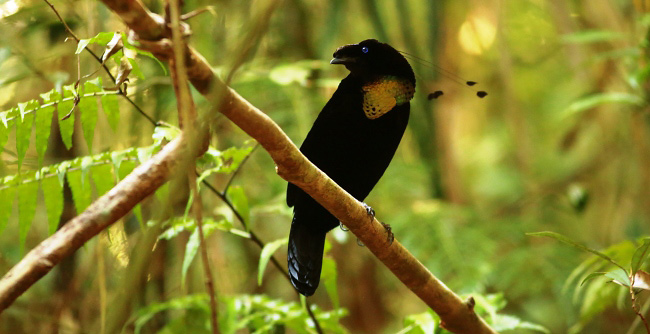
A male Western Parotia above its court in the Arfak Mountains of West Papua, by Nick Cobb.
King-of-Saxony Bird-of-paradise Pteridophora alberti
A small and relatively subdued bird for a male
bird-of-paradise but it more than makes up for it with its amazing head plumes which grow to 40 cm (16 inches) long, nearly 20 cm (8 inches)
longer than the bird itself, and which it is able to move in any direction, and despite its subtle colours it is the sight of the waving plumes
which often leads to it being voted bird-of-the-trip by birders completing their New Guinea experience. Bearing in mind the birds it has to
compete with for such an honour it must also be considered as possibly the best bird in the world. The best places in the world to see
King-of-Saxony Bird-of-paradise include the Pondok Tiga-Yabogema Trail on the Lake Habbema Trek in
West Papua and better still the Tari Valley and Kumul Lodge area in
Papua New Guinea.
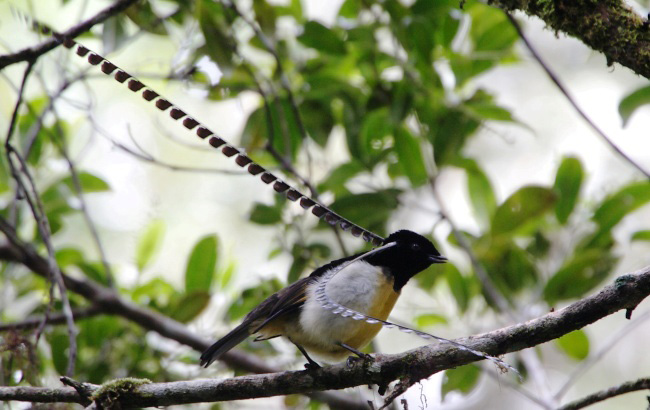
The incomparable King-of-Saxony Bird-of-paradise, in West Papua, by Simon Colenutt.
Raggiana Bird-of-paradise Paradisaea raggiana
The shivering veils of salmon-pink plumes, presented by displaying
males of this species at their communal leks, is one of the most beautiful sights in the natural world. The Raggiana Bird-of-paradise is just one
of six very similar species with males that have flamboyant flank plumes: they are red in Raggiana which occurs in southeast West Papua and mainly
Papua New Guinea; red in Goldie’s (decora) of the D’Entrecasteaux archipelago off Papua New Guinea; red in Red Bird-of-paradise
(rubra) of the islands Batanta, Waigeo, Gemien and Saonek off West Papua; white in Emperor Bird-of-paradise
(guilielmi) of the Huon Peninsula in Papua New Guinea; and yellow in Lesser (minor) and Greater
(apoda) which both occur in West Papua and Papua New Guinea. The males of these species are elusive away from
their display trees which themselves are few and far between, at least as far as is known. However, the best places in the world to see Raggiana
and other, similar, birds-of-paradise, where there are known display trees, include the northern lowlands of
West Papua and near Kumul Lodge in Papua New Guinea for
Lesser; near Kiunga in Papua New Guinea for Greater; on the Huon Peninsula of Papua New Guinea for Emperor; on the islands of Batanta and Waigeo in
West Papua for Red; and in Varirata National Park in Papua New Guinea for Raggiana.
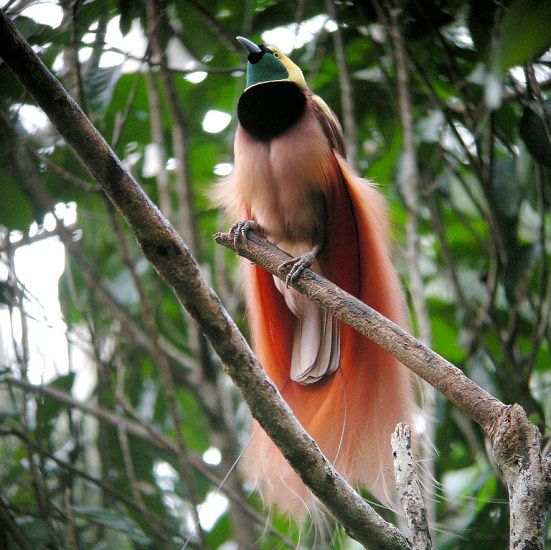
A male Raggiana Bird-of-paradise in its display tree in Varirata National Park, Papua New Guinea, by Mark Harper.
Blue Bird-of-paradise Paradisaea rudolphi
The last but not least of the nine birds-of-paradise in this list, and
another strong contender for the best bird in the world, thanks to the male's beautiful bone china blue wings and tail, and the shimmering blue,
black and red breast shield. It occurs only in Papua New Guinea where the best places in the world
to see Blue Bird-of-paradise are the Tari Valley and near Kumul Lodge.
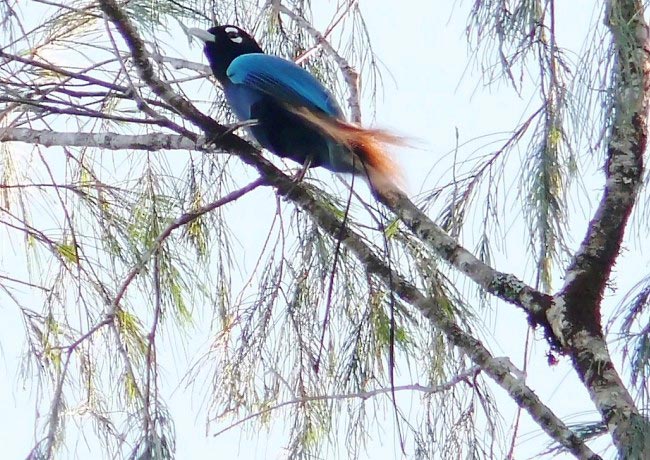
A male Blue Bird-of-paradise in a 'garden' in the Tari Valley, Papua New Guinea, by Paul Macklam.
Grey-necked and White-necked Rockfowl (Red-headed and Yellow-headed Picathartes) Picathartes spp.
These two extraordinary
species are in a unique family. They are terrestrial birds with distinctive brightly coloured bare heads, long necks, strong, long legs and long
tails, and their plumage is immaculate, as can be seen in the image below. They occur only in West Africa where the best places to see White-necked
Rockfowl (Picathartes gymnocephalus), which occurs from Guinea to Ghana, include
Sierra Leone and especially Ghana, and the best places to see
Grey-necked Rockfowl (Picathartes oreas), which occurs from southeast Nigeria to Gabon (and the island of Bioko in the Gulf of Guinea), include a
couple of sites in Cameroon, Lope National Park in Gabon and
Dzanga-Sangha National Park in the Central African Republic.
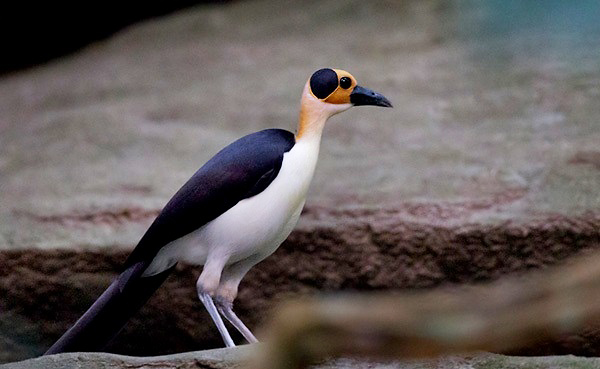
The extraordinary White-necked Rockfowl or Yellow-headed Picathartes in Ghana by Lars Petersson.
Rail-babbler Eupetes macrocerus
This is a stand-out bird! A bit bigger than large thrushes and babblers it is a
rich brown beauty with bold black and white stripes on its head, a longish neck and quite long legs, and it walks about on the forest floor like
a small chicken. It is usually extremely shy but rarely flies and normally runs from a potential predator or observer at great speed. In its small
range, the best forest patches left from Southern Thailand through the Malay Peninsula to Sumatra and Borneo, the best chances of seeing a
Rail-babbler are in the Khung Chin Waterfall area in Khao Laung National Park in Southern Thailand
which is very popular with photographers who queue up to photograph the birds from mobile screens, and in Taman Negara and Panti Forest Reserve in the
Malay Peninsula.
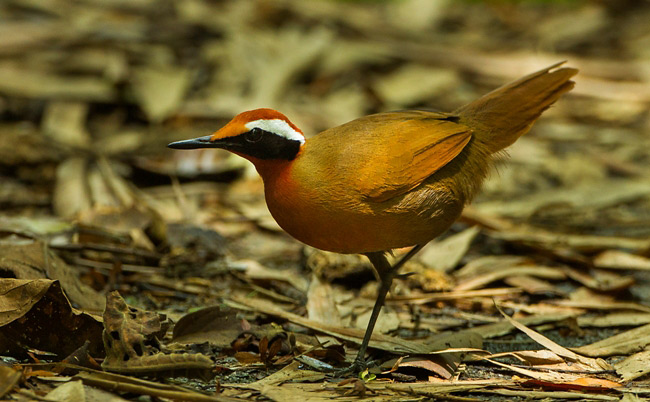
A close-up of a rare Rail-babbler at Krung Ching in southern Thailand by Francesco Veronesi.
Barn Swallow Hirundo rustica
There can be few more uplifting sights than that of the first Swallow to sweep past in
the spring. It happens every year, of course, and long may it be so, but a year is just long enough for it always to be a wonderful moment. One
Swallow may not make a summer but it certainly means spring is under way and summer is not far off. This is especially true in the northern
hemisphere across which the Swallow spends the northern summer, breeding in North America, Europe and across Asia. It is the most widespread
swallow species, migrating south during the northern autumn up to 10,000 km to spend the northern winter in Central and South America, Africa south
of the Sahara, the Indian subcontinent, South-East Asia and across Indonesia to New Guinea, with a few reaching northern Australia. Different races
migrate to different regions; for example, British breeding birds winter mainly in eastern and southern parts of South Africa. The young make the
journey only a few weeks after leaving the nest, without any guidance from their parents, and, all the more remarkable, they then return to the area
where they were born the following spring!
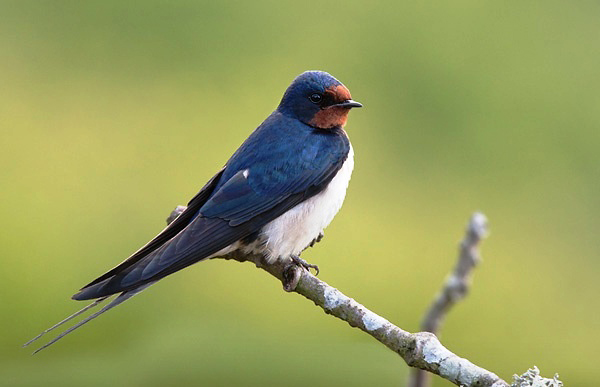
The eagerly-awaited Barn Swallow by Lars Petersson.
Blue Nuthatch Sitta azurea
All nuthatches are a bit special but this exquisite little black, blue and white bird
is arguably the most amazing. The best places in the world to see Blue Nuthatch, which occurs from the Malay Peninsula to Sumatra and Java,
include Fraser’s Hill in the Malay Peninsula, Kerinci Seblat National Park and the Tapan Road in
Sumatra, and Gunung Gede-Pangrango National Park in Java.
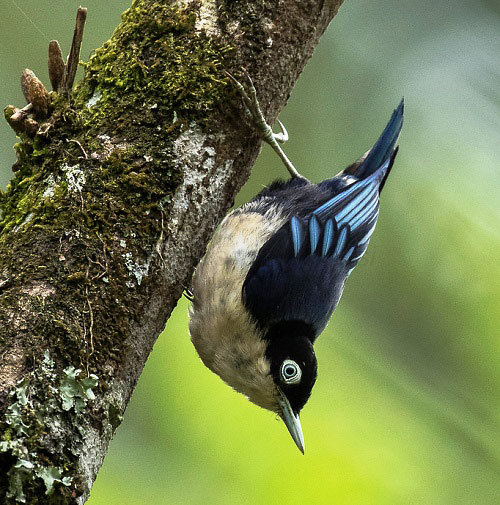
Another close-up by Francesco Veronesi, this time of a Blue Nuthatch at Cibodas Botanical Gardens next to Gunung Gede-Pangrango National Park in Java.
Wallcreeper Tichodroma muraria
The Chinese name of this bird, which translates as ‘rock flower’, says it all, and
this ‘avian flower’ can fly! The unique Wallcreeper constantly flicks its wings open when climbing vertical rock faces or foraging amongst river
rocks, revealing its red wing patches and when it flies it does so with broad wings flashing red and white and looks more like a giant butterfly than
a flying flower! It has a wide range and can be seen in many places although it is much harder to find during the breeding season when it inhabits
steep high-altitude terrain. The range extends from southern Europe to the Himalayas and central China and the best places in the world to see
Wallcreeper during the northern summer breeding season include above Gavarnie in the Pyrenees of Southern
France, the upper Hecho Valley in the Pyrenees of Northern Spain, the high Picos de Europa in
Northwestern Spain, Bekas Gorge in Transylvania, Romania,
the Trigrad Gorge in Bulgaria and, in late winter/early spring,
Georgia. The best places to see Wallcreeper during the northern winter, when the birds move to lower
altitudes, include Les Baux near the Camargue in Southern France, Riglos and the Sierra de Guara
region of the Pyrenees in Northern Spain, Bhutan and
Northern India.
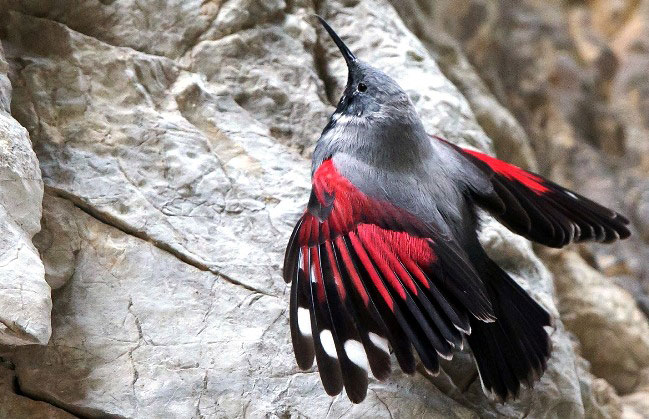
A fantastic image of a Wallcreeper in the Trigrad Gorge, Bulgaria by Simon Colenutt.
Musician Wren Cyphorhinus aradus
This small brown bird may not be much to look at but it sure is worth listening to, for
it has, arguably, the most beautiful and beguiling song of any bird and there are an awful lot of such songs to choose from. Researchers have found that
the intervals in the song of the Musician Wren are calm and stable, and fit well together. Such consonant intervals are the basis for keys in Western
Music hence the aptly-named bird sounds musical to human listeners, and the fact that it also prefers to sing perfect consonances over imperfect
consonances means some passages may sound to human listeners as if they are structured around a tonal center. Such passages are very similar to those of
composers such as Bach and Haydn, and the song of the 'Uirapuru' (the Portuguese name for the Musician Wren) has often been used as a part of Brazilian
music. To listen to the song visit the species' page on the brilliant website
xeno-canto. There are many places to listen to it for real, and maybe
even see this shy singer which occurs in low densities in primary forest up to 1400 metres across Amazonia, from southeast Venezuela and the Guianas
across Brazil to southern Colombia, eastern Ecuador, eastern Peru and northwestern Bolivia.
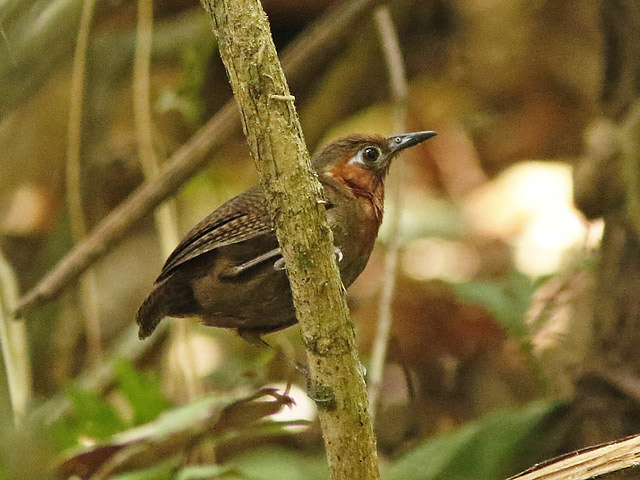
The Song Wren is very similar to the Musician Wren but has a fractionally more extensive area of bare, pale blue skin around the eyes and a slightly less complex and elaborate song. This one, by David Beadle, was along the Pipeline Road in Panama.
White-throated Dipper Cinclus cinclus
All five species of dipper, which can swim, dive, and ‘walk’ underwater, are
special, even the three mainly brown ones, but this is arguably the best-looking. It may be seen on numerous rivers and streams from North Africa
and Europe east to the Himalayas and western China.
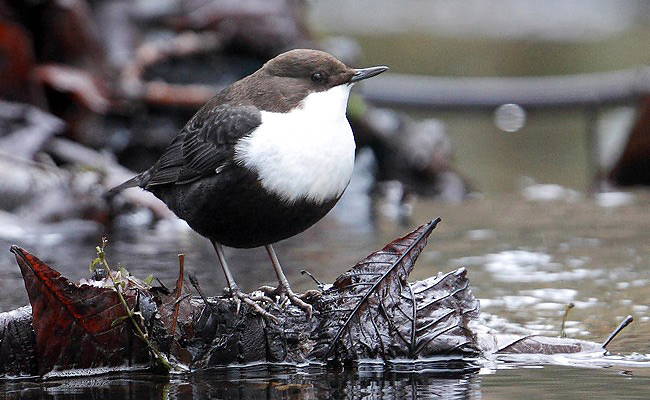
White-throated Dipper, here of the 'black-bellied' form, in Norfolk, England, by Michael McKee.
White-crested Laughingthrush Garrulax leucolophus
There are so many laughingthrushes to choose from but this one, with
its amazing big fluffy snow-white crest and black mask is arguably the most striking. It occurs in the Himalayas from northwest India to South East
Asia and may be seen in many places.
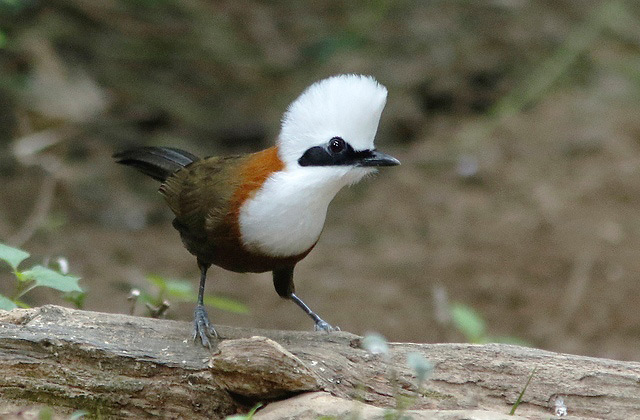
The vivacious White-crested Laughingthrush in Yunnan, China, by David Beadle.
Golden-breasted Starling Lamprotornis regius
There are a lot of good-looking starlings but this is arguably the
best-looking. It occurs from Somalia and southern Ethiopia to northeast Tanzania and the best places in the world to see Golden-breasted Starling
include Samburu and Tsavo East National Park in Kenya.
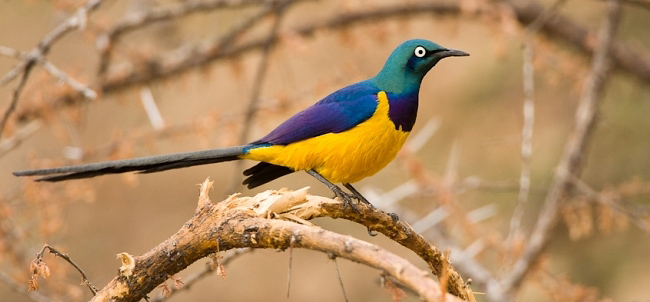
Golden-breasted Starling in Samburu, Kenya, by Francesco Veronesi.
Golden-winged Sunbird Nectarinia reichenowi
A male sunbird which stands out amongst the many stunning
members of this family, thanks to its iridescent fiery-copper and bronze head, breast and back, black underparts and golden-yellow wings and
tail, complete with elegant streamers. A full-plumaged male seen at close quarters in good light is so good it has to be one of the best birds
in the world. It occurs from the eastern Congo through southern Uganda and Kenya to northern Tanzania, usually between 1800 and 3400 metres or
down to 950 metres during rainy seasons, sometimes gathering in numbers at Leonotis flowers, even in gardens, and the best places in the
world to see Golden-winged Sunbird include the Aberdares and Mount Kenya in Kenya, and the rim of the
Ngorongoro Crater in Northern Tanzania.
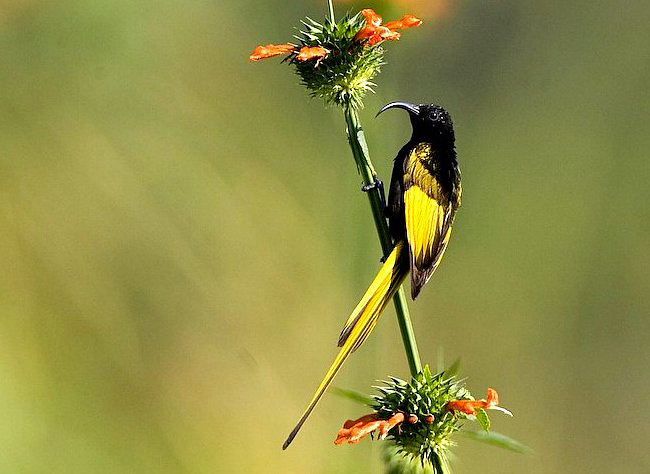
A dazzling Golden-winged Sunbird at Leonotis flowers near Mumias in Kenya by Francesco Veronesi.
Black-and-white Warbler Mniotilta varia
There are nearly 130 species of New World Warblers and many of them are
colourful and stunning but many birders would argue that the most stunning of all is black and white. Some of course prefer at least some colour
so we have also included a black and white warbler with an orange sorbet throat; the fabulous Blackburnian Warbler (Dendroica fusca). Both
species raise their young in North America, the more widespread Black-and-white Warbler from southwestern Northwest Territories to the Gulf States
and the Blackburnian Warbler from central Saskatchewan to the Appalachians of eastern Tennessee. During the northern winter Black-and-white Warbler
occurs from Florida south through Central America and the Caribbean to northwest South America, mainly in the Andes south to northern Peru, whereas
Blackburnian Warbler winters from southern Central America south to central Bolivia. They can both be seen in many places of course, not
forgetting on their northbound migration in spring at places such as High Island in Texas,
Point Pelee in Ontario and the nearby Crane Creek SP and Magee Marsh WA on the opposite side of Lake Erie
in Ohio.
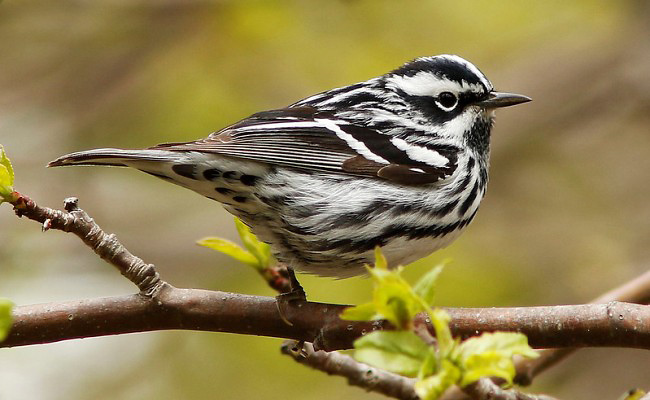
A great image of a male Black-and-white Warbler on the Toronto Islands by David Beadle. This bird behaves a bit like a Nuthatch, foraging by creeping along branches, as well as up and down tree trunks.
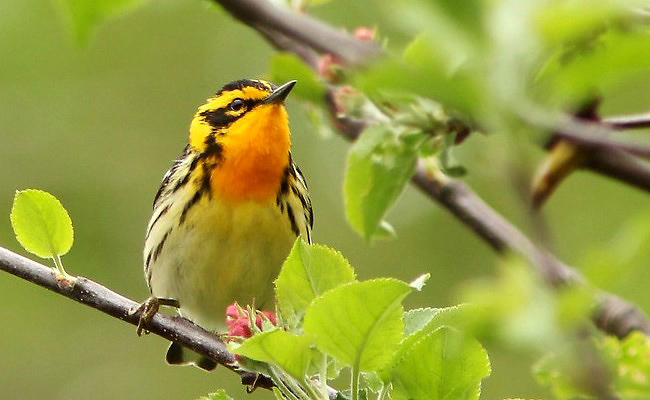
A male Blackburnian Warbler, also on the Toronto Islands, by David Beadle, showing the fabulous throat.
Bohemian Waxwing Bombycilla garrulus
It’s not just the red waxy tips to the secondaries that make this bird
special, it’s the soft plumage, the subtle colours, the black mask, the fluffy crest and the delicate wing and tail markings. The two other
species of waxwing also possess the waxy tips, and the Grosbeak Starling (Finch-billed Myna Scissirostrum dubium) which is endemic to
Sulawesi and nearby islands also has such tips to its rump feathers. The drabber Cedar Waxwing occurs from Canada and the northern USA during
the northern summer south as far as Panama in the northern winter, the almost as beautiful (the tail tip is red instead of yellow) but
mis-named Japanese Waxwing occurs in North East Asia during the northern summer and south to southern China in the northern winter but it is
irregular in Japan, and Bohemian Waxwing occurs in Alaska and northwest Canada, as well as north and east Scandinavia, and across Siberia
during the northern summer, and south to Canada and the northern USA, as well as central Europe to Japan and southern China during the northern
winter, although the numbers of birds which move away from the nesting range varies from year to year so it is difficult to pinpoint the best
places to see this species away from there.
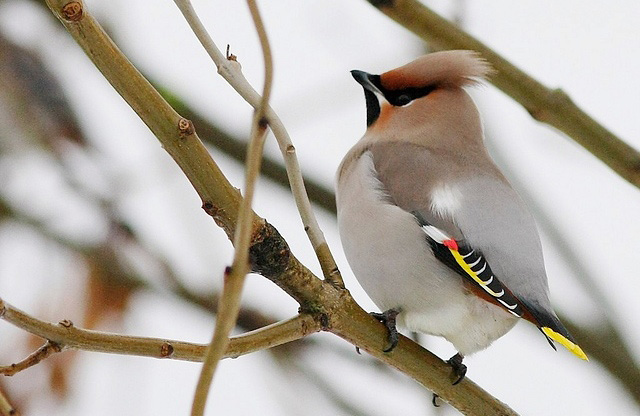
Bohemian Waxwing in Kent, England by David Beadle.
Orange-breasted Bunting Passerina leclancherii
There are hundreds of pretty little passerines, including numerous
tanagers, but few if any are as pretty as this green-crowned and electric-blue-backed beauty with bright yellow underparts intensifying to golden
orange across the breast. It is endemic to west Mexico, from near the Monarch Butterfly roost sites in
Central Mexico to the southwest coast where in the Tapanatepec and Arriaga foothills it is possible to
see it alongside one of its major contenders for a place on this list; the even more electric blue Rose-bellied (Rosita’s) Bunting (Passerina
rositae) with white eye-rings and rosy-pink underparts, a bird so beautiful François Sumichrast, a Swiss-Mexican naturalist (1828-1882), named it
after his wife, Rosita.
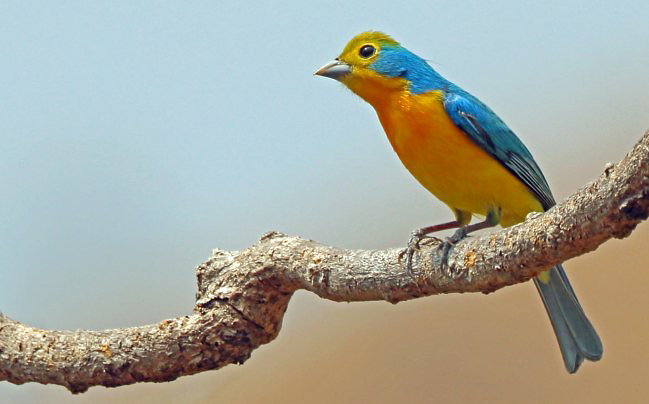
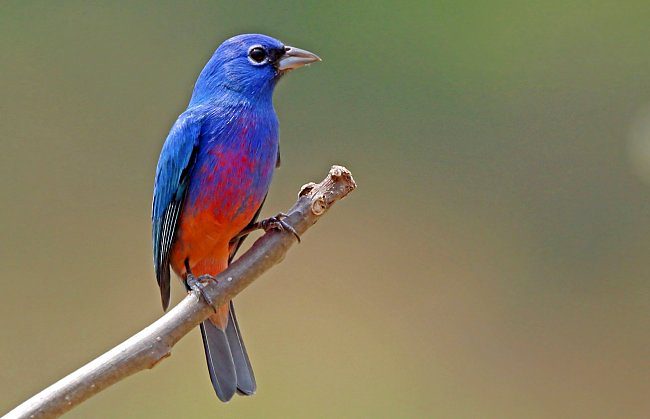
Blue, blue, electric blue, that's the colour of a Rose-bellied or Rosita's Bunting. The superb image of this one, as well as the Orange-breasted Bunting above, was captured in the Tapanatepec Foothills of Oaxaca, Mexico, by Nigel Voaden, where the two endemics occur together. It is even possible to see both species perched side-by-side in the same bush or tree!
As far as the bird species which are not widespread or relatively easy to see throughout their range are concerned the top destinations where the highest number of the Top 100 Birds occurs on a regular basis are West Papua and Papua New Guinea (9 species each), Eastern Australia (5), Antarctica and the Atlantic Odyssey (4), Kenya, Southern Thailand, the Malay Peninsula, Sumatra, Borneo, New Zealand and the Subantarctic Islands (all 3), the Arctic, Cuba, Western Venezuela, Sierra Leone, Cameroon, Northern Tanzania, Arctic Russia, Japan, Southeastern Australia and Western Pacific Odyssey (all 2), and single species for many more.
- The 800-page book, A Mind-blowing Birding Trip to a Planet called Earth, is Nigel Wheatley's attempt to capture what birding, and life, is all about. It was published in September 2021 and is available from Amazon for under £20/$25.